
The Great Scottish Road Trip, Part 2
After three relatively slow days in Inverness, it was time to get going again on our ambitious road trip. As you can see from the map, we had a lot of ground still to cover! And only four days to do it in. So we piled into our Peugot 2008 and headed out. (Luckily, I had finally figured out how to get Google Maps working on the dash display.)
Inverness to Fort William
From Inverness, we followed the River Ness south to Scotland’s most famous lake: Loch Ness. It’s also Scotland’s largest lake by volume (apparently, it contains more water than every lake in England and Wales combined), and one of the deepest, reaching a shocking depth of 755 feet. It takes only a passing glance at a map to see that Loch Ness is a great, long gash down the country, and together with Loch Oich, Loch Lochy and Loch Linhe to the south, this row of lakes nearly cleaves the country in half. Not coincidentally, they also follow the Great Glen Fault, and it’s not hard to imagine that Scotland has been sliding in two directions along this fault for quite some time.
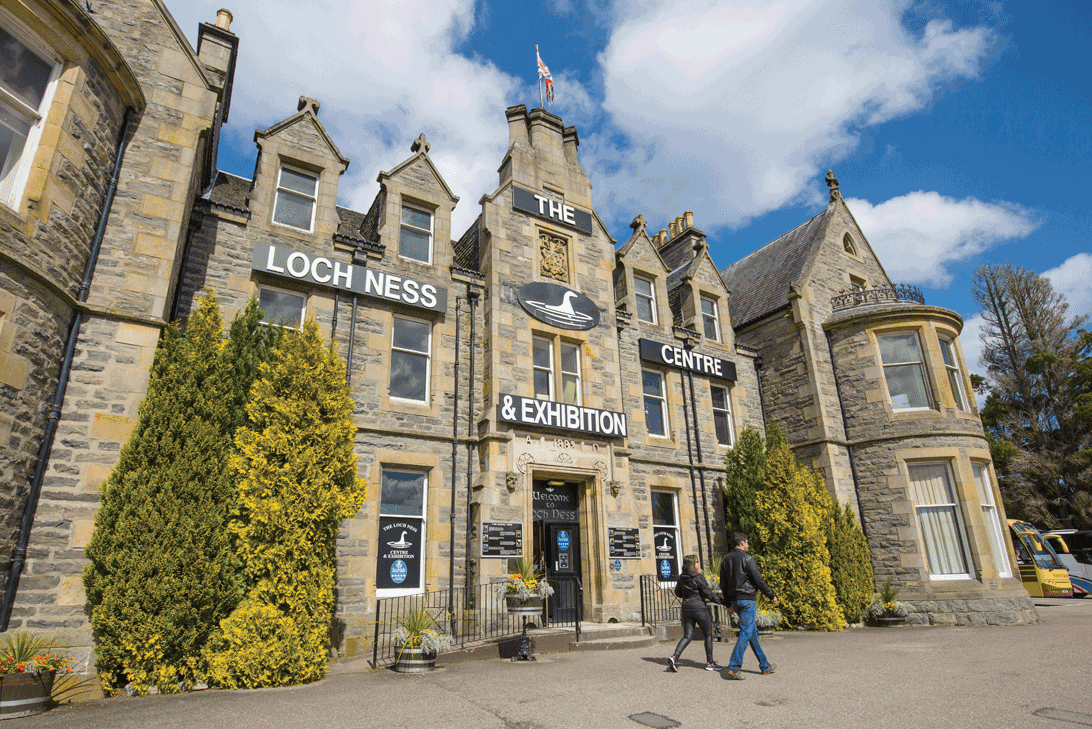
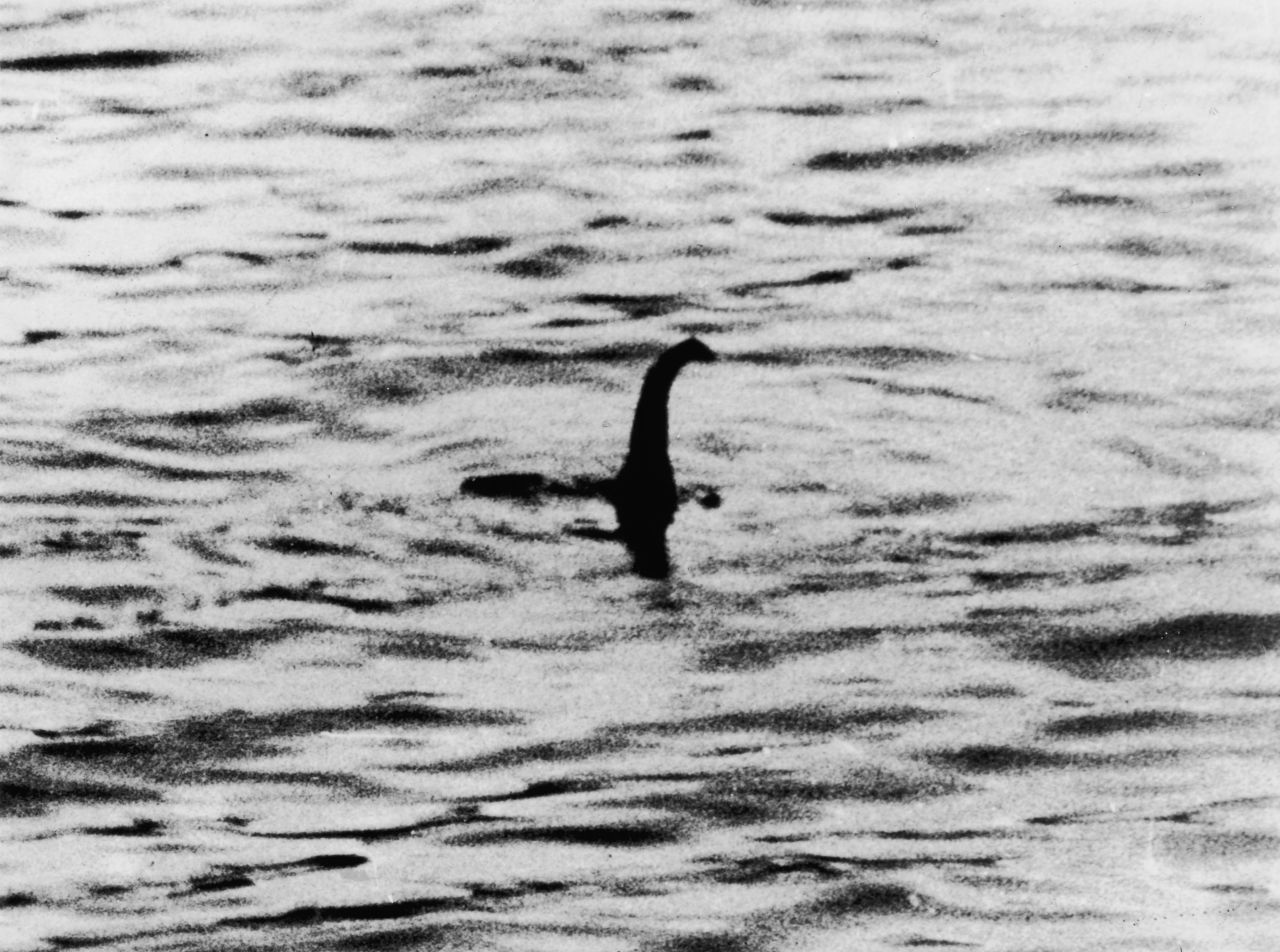
But you could care less about geology. Ever since I mentioned “Loch Ness”, you’ve been thinking about only one thing: the elusive monster who is rumored to inhabit this deep, dark lake. Is it a water horse? A serpent? A lonely dinosaur? Whatever it is, the legend of “Nessie” is as synonymous with Scotland as bagpipes and kilts (as you’ll discover at any souvenir shop). To learn more about the legend, one of our first stops was at the Loch Ness Centre & Exhibition, a popular roadside attraction on the west side of the lake. Housed in a lovely old stone building, it’s a (somewhat low-budget) multimedia experience that brings together all the history and stories about this creature and then lets you decide for yourself whether you believe it exists. The exhibition creators have their own thinly veiled opinions, and the more you learn about the history and the characters involved, it’s difficult not to see the whole thing as an elaborate hoax executed in 1933–34, inspired by some dubious earlier sightings—and inspiring many more dubious sightings over the following decades. I doubt the original perpetrators could have imagined how the legend would persist and grow well, beyond Scotland’s borders. Never mind that the Loch has been scoured by radar surveys that have turned up nothing resembling the monster. Or that a creature this size would find little to eat in this nutrient-poor lake. But regardless of how skeptical the creators might be, they were only too happy to cash in with their exhibition…and a massive gift shop with every conceivable Nessie souvenir! Sigh.
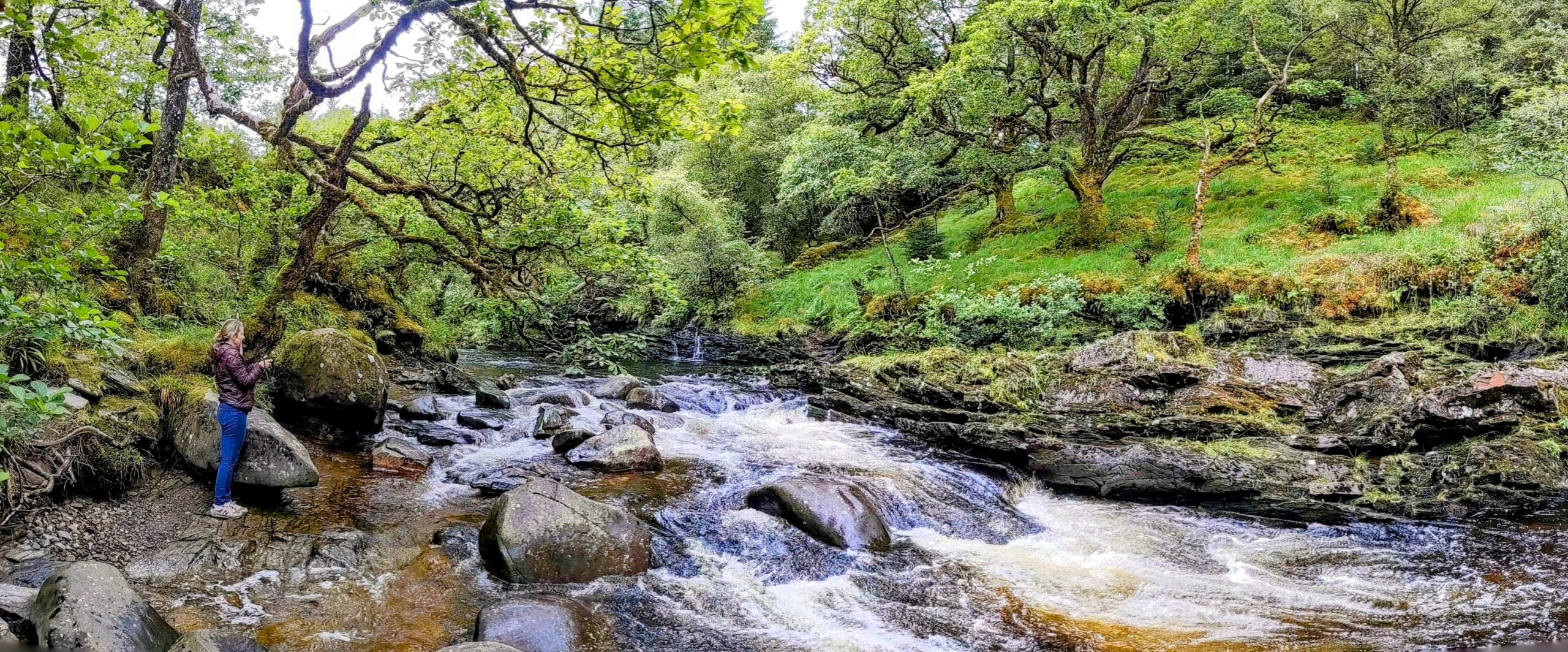
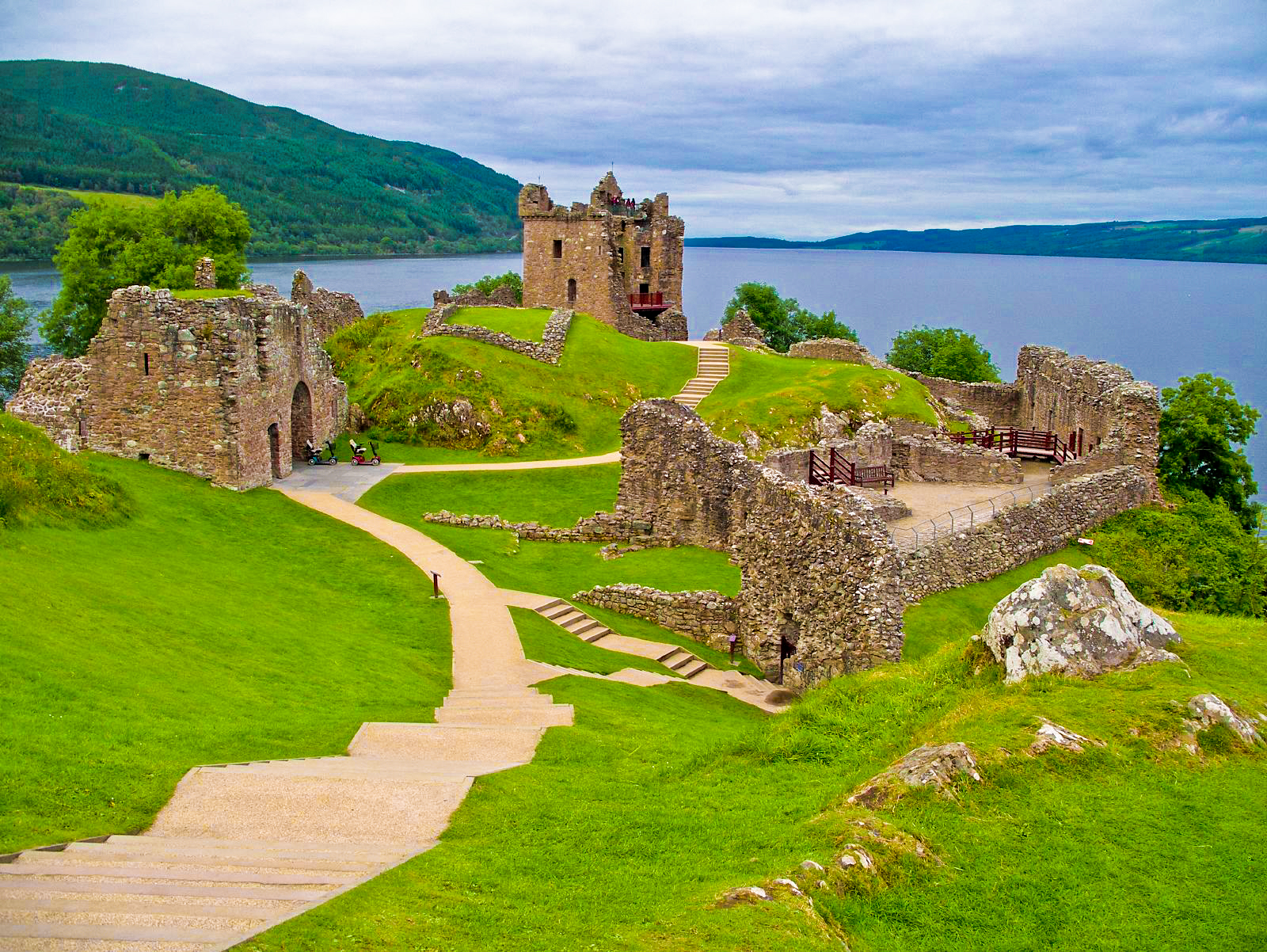
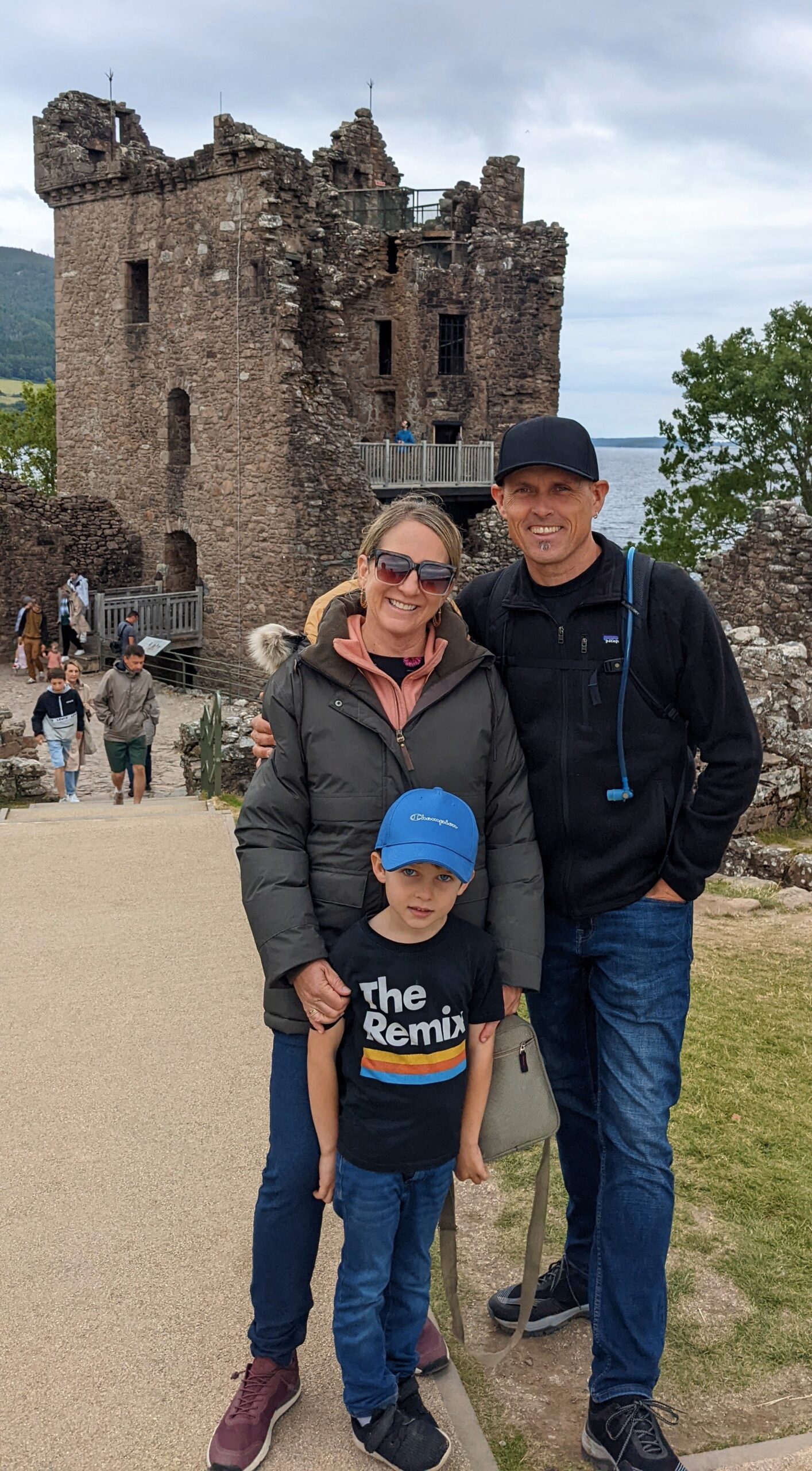
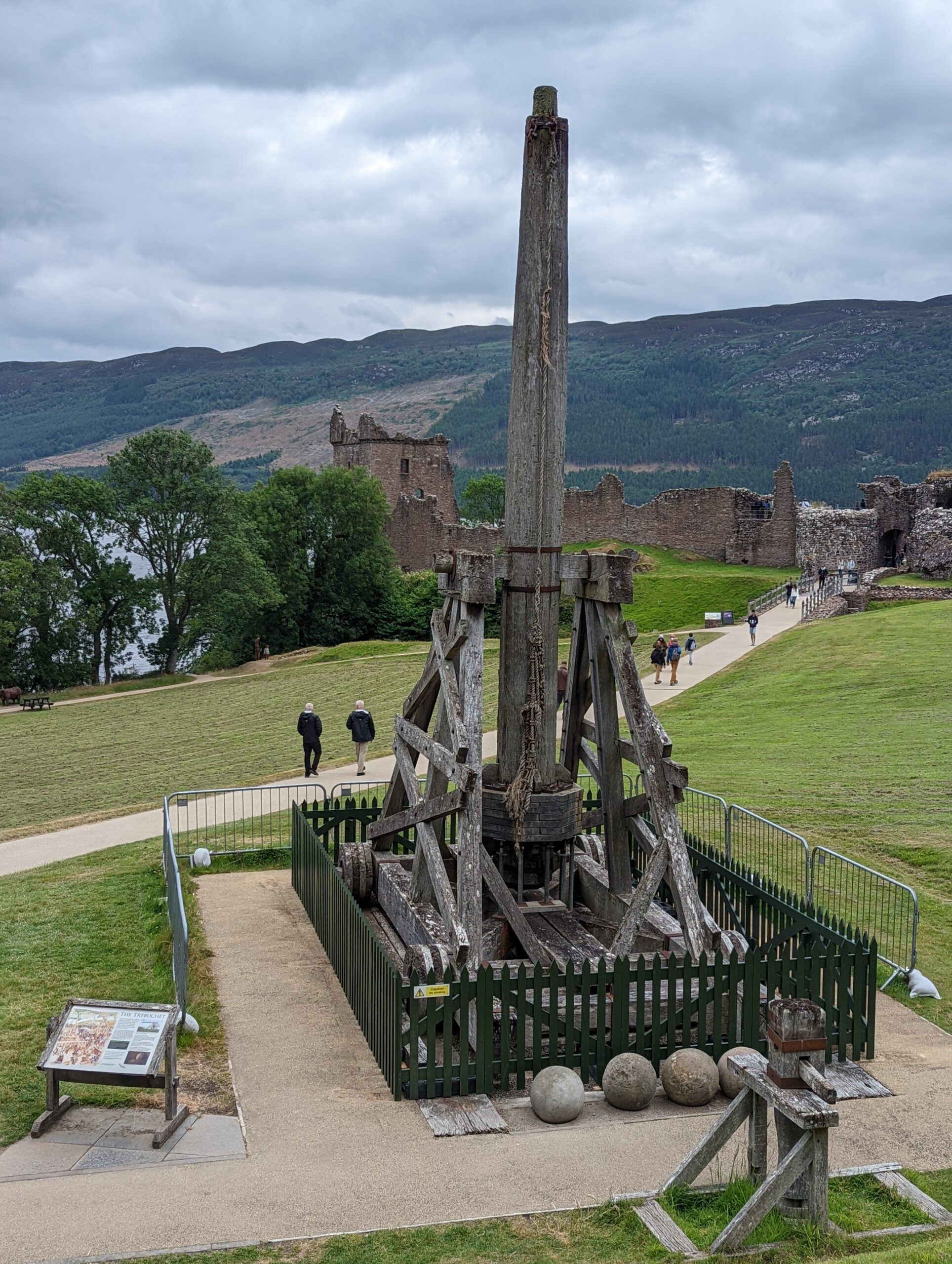
Nearby, we got a chance to stretch our legs with a brisk walk through the Urquhart Woods, following a small river to the lakeside. Our next stop was Urquhart Castle. Perched on the shore of Loch Ness next to its deepest trench, Urquhart is one of the most famous and photographed castles in Scotland, though certainly not the best preserved. It has seen a fair number of ignominious defeats, one involving a fantastic explosion that destroyed much of the front gate, and the rest of it hasn’t fared much better. But the one tower that still stands cuts a handsome figure against the loch. The current owners seem to be doing a far better job of managing the place than past ones. From the car park, the castle is cleverly obscured. You follow a circular staircase into an underground visitor center, where you are first directed into a small theater to watch a short movie on the castle. As the credits roll, the screen slowly rolls up to reveal huge windows perfectly angled for a breathtaking panoramic view of the castle. The effect is so magical (and blinding) that it takes a moment to realize you’re looking at the real thing. Inside the visitor center, we also learned about the many jobs involved with running a castle and a lord’s household, and you’re challenged to decide which you’re best suited for. (Griffin, of course, decided he would have been the lord’s baker.) Outside, a massive replica of a wooden catapult sits facing the castle, as if threatening to give it another drubbing. We spent a good long time wandering through the ruins, probably too long considering how many better castles we would see in the coming weeks!
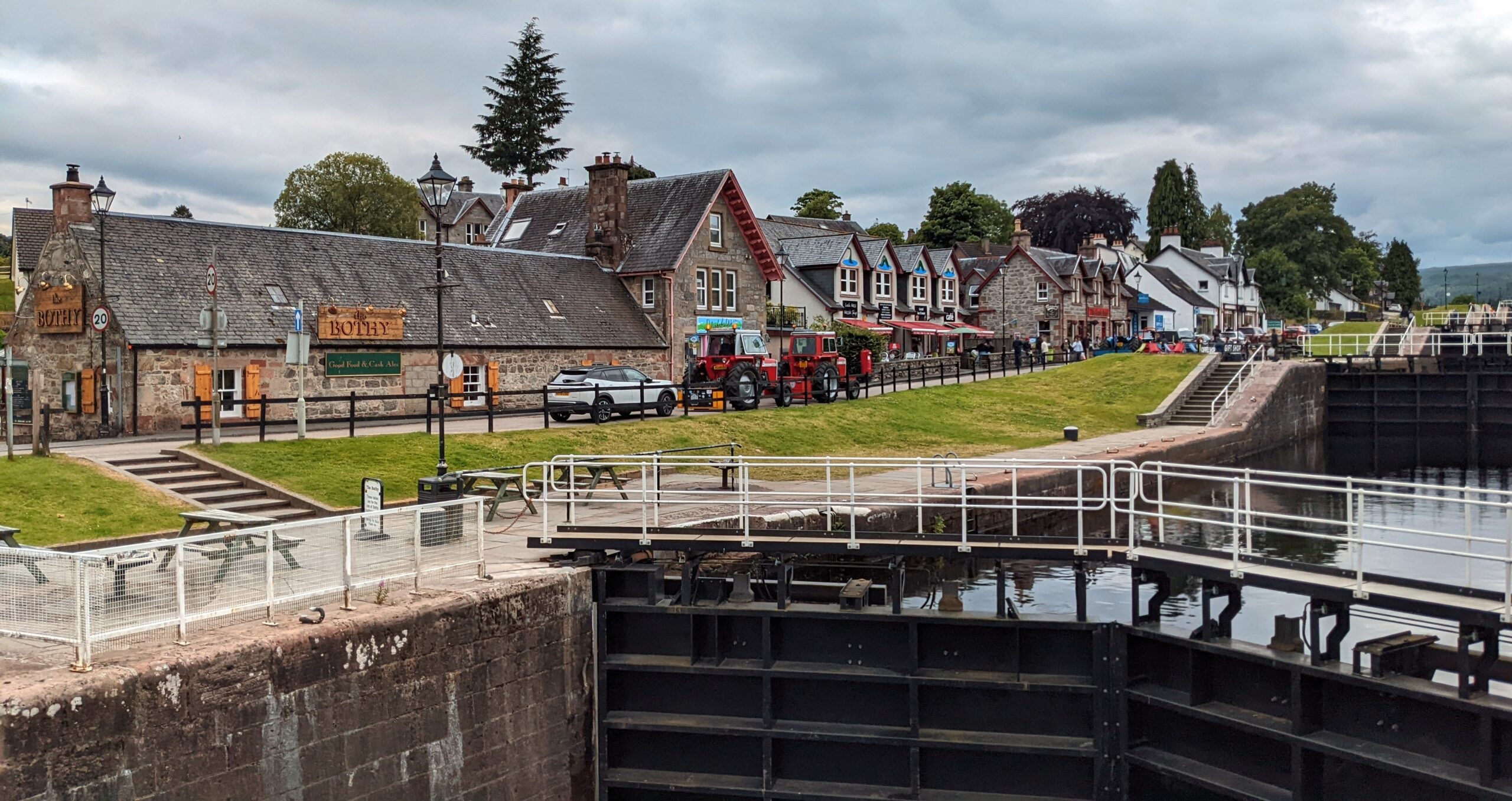
We carried on down the side of the lake to its southern end and the town of Fort Augustus. The main sight here is a series of locks on the Caledonian Canal, which deserves some explanation. I mentioned that Loch Ness and a few other lakes nearly slice the country in half. Some clever folks in the 18th century realized that if they could link these, it would create a much shorter and safer route between the North Sea and the Atlantic, Scotland’s own Panama Canal, while also providing some much needed work for struggling Scots. In 1803, they went ahead and built it. The finished route is just 60 miles long, but only about 20 of it is man-made. Like so many canals built in the 19th century (we’ve seen plenty throughout our travels), the well-intentioned Calendonian was never a commercial success, but it did eventually become a popular tourist attraction, these days attracting a half a million visitors a year. That day, in Fort Augustus, we were some of them, watching in fascination as a few pleasure craft from Loch Ness utilized the locks. The alarm was rung, the swing bridge we had just driven over was swung open, the boats entered the lock and tied up, the gates were closed, and the lock filled with churning water until the boats were high enough to move into the next one. And so on. There are five locks at Fort Augustus. Later that day, we saw a series of eight at Fort William, called Neptune’s Staircase. In total, the Caledonian has 29. Navigating through locks like these is a tediously slow process, but I suppose anybody who lives on a sailboat or barge is in no hurry!
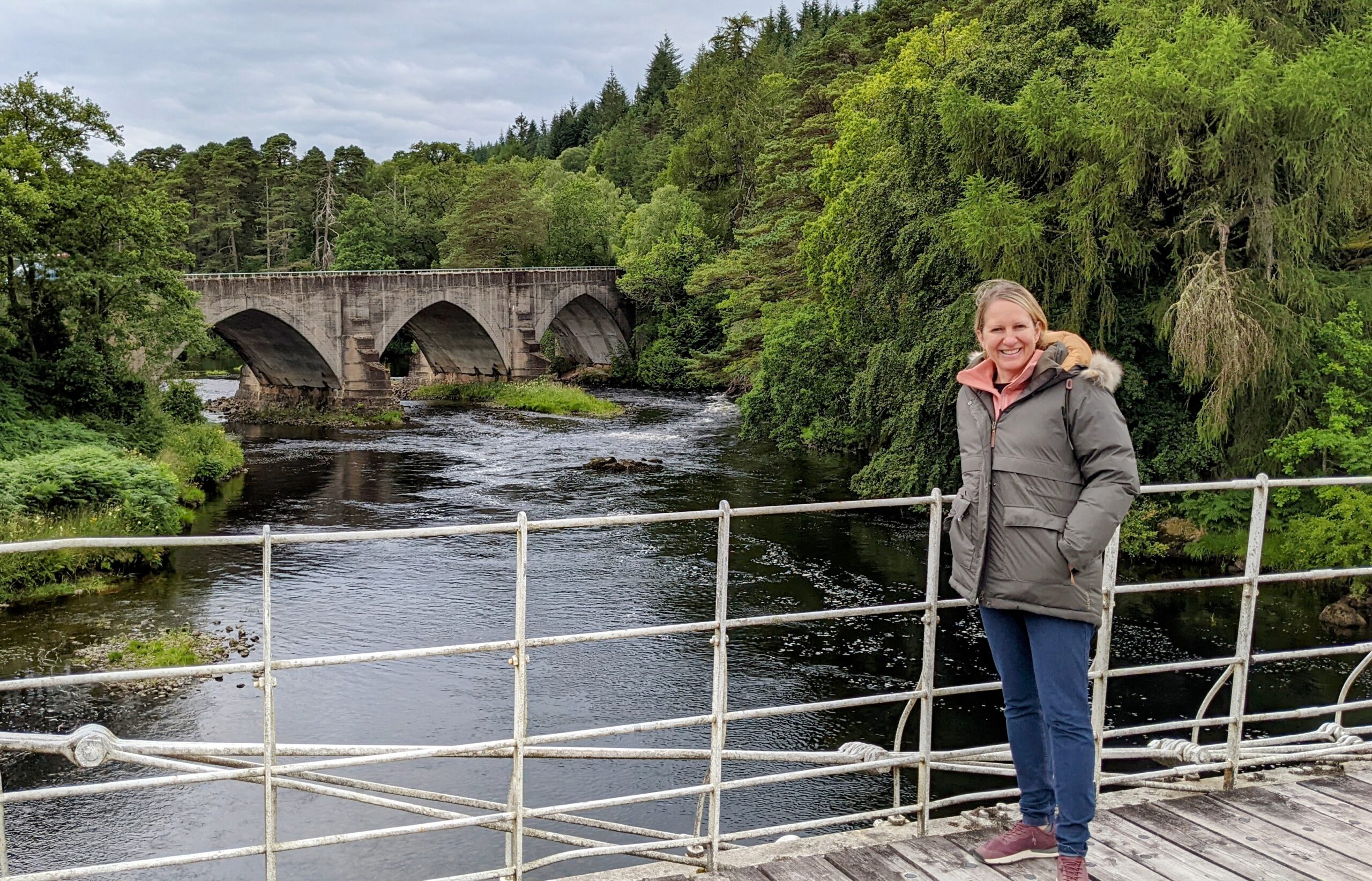
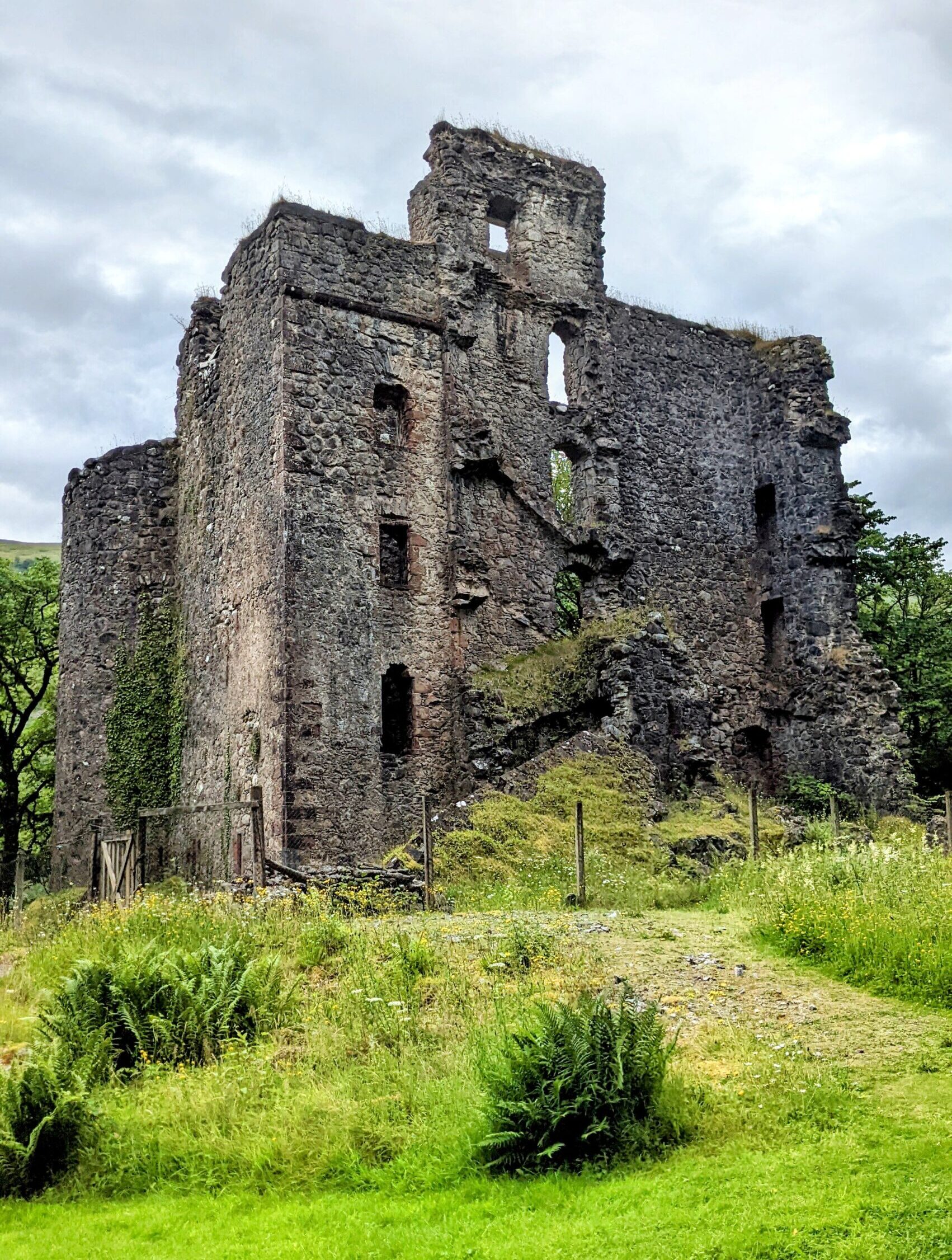
We grabbed a cheap lunch and moved on, following the canal to the picturesque Bridge of Oich for some photo ops. Then onto another of the ubiquitous, crumbling castles that I kept finding in Google Maps, this one Invergarry Castle on Loch Oich. Unlike Urquhart, this one isn’t famous and doesn’t have a visitor center, or even a signpost on the road. Someone has half-heartedly fenced off what’s left of the thing to prevent anyone from hurting themselves, but we still managed to get a few photos of the brooding ruins.
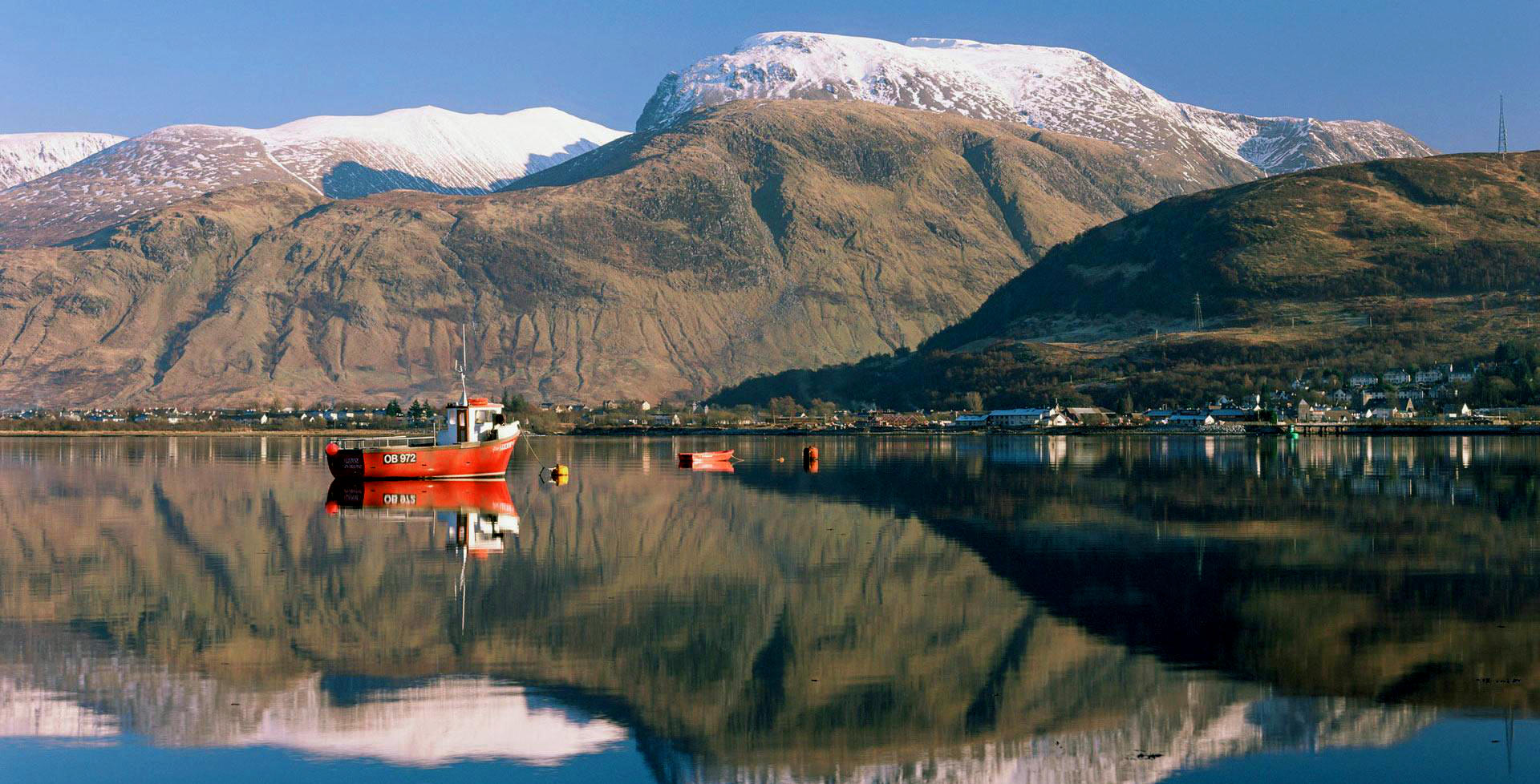
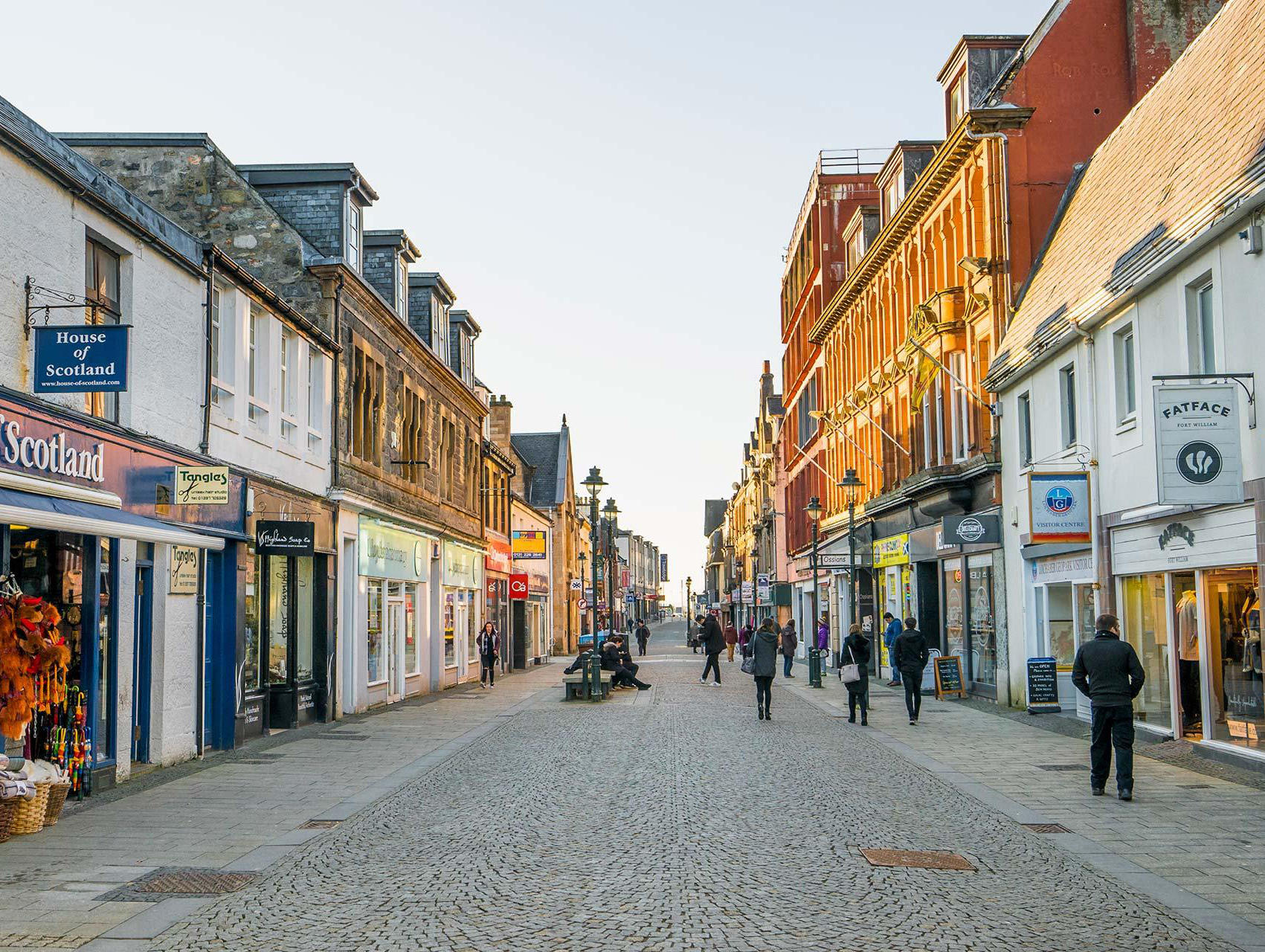
Our final destination that day (which is also the end of the Caledonian) was Fort William. This was once an actual fort named for King William which played an important role both in Outlander and the history of the Highlands. Today, you’ll be hard-pressed to find any trace of the fort; it was knocked down to make room for the railway, and all that remains now is a small field sandwiched between Loch Linnhe and the motorway with a few scattered stones. But around it, a booming little town has grown up that bills itself as the adventure capital of Scotland and the gateway to Ben Nevis, Britain’s tallest mountain. The small but lively main street is filled with cafés, pubs, and outdoor clothing shops, which Griffin and I explored briefly. It’s by no means the most quaint or charming Scottish town we visited, but it did have a fair number of beautiful buildings and an energetic vibe. Meanwhile, Amy was back at the modest four-room B&B we were staying at, literally the only affordable lodgings I could find when I had booked a month earlier. It was a bit old and shabby, but we didn’t mind—it was a comfortable place to lay our heads after a long day of driving. Plus, the good weather we had enjoyed in Inverness was coming to an end, as dark clouds moved in and a light, steady rain started to fall. In other words, typical Scottish weather.
Fort William to Tobermory
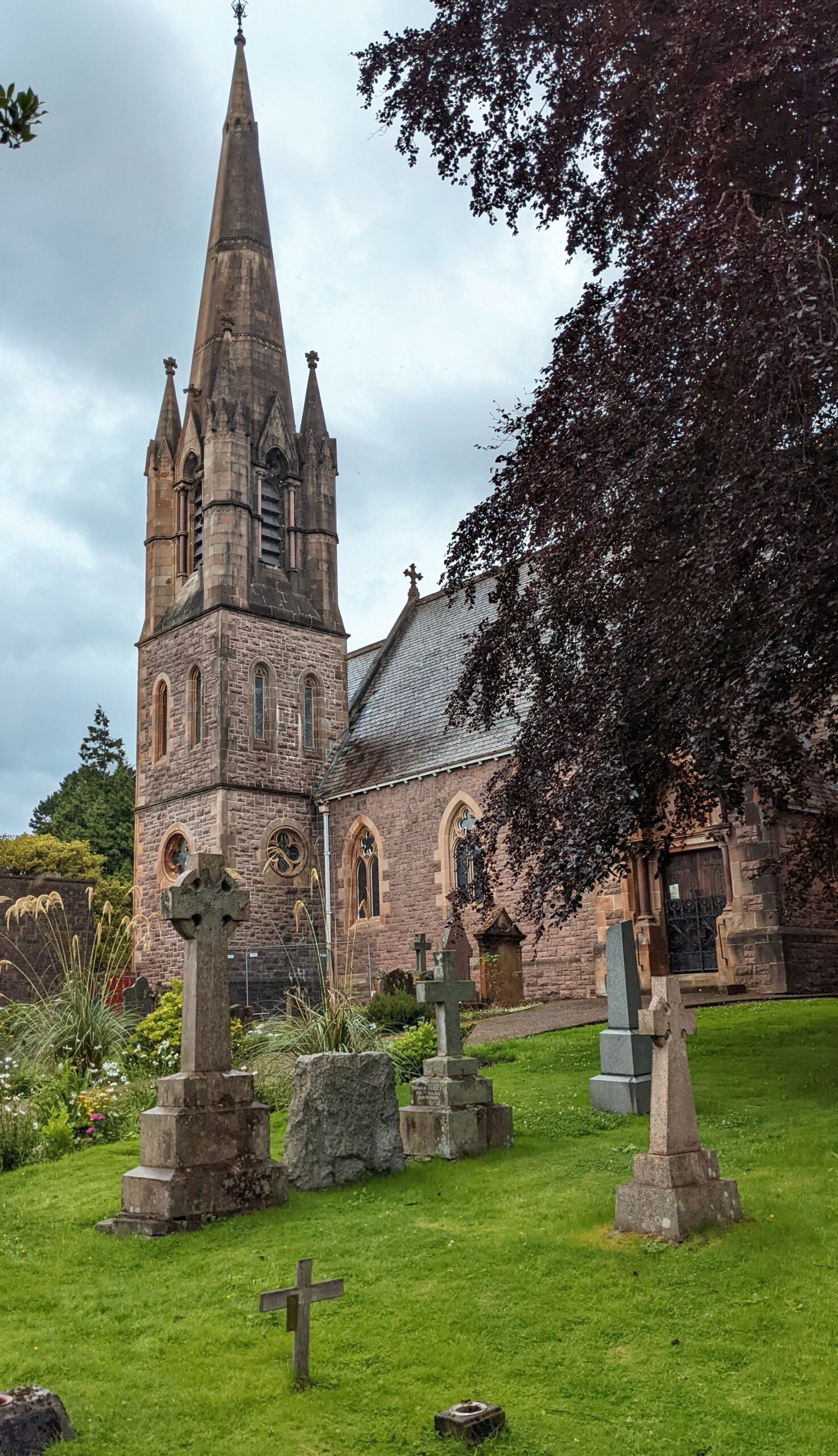
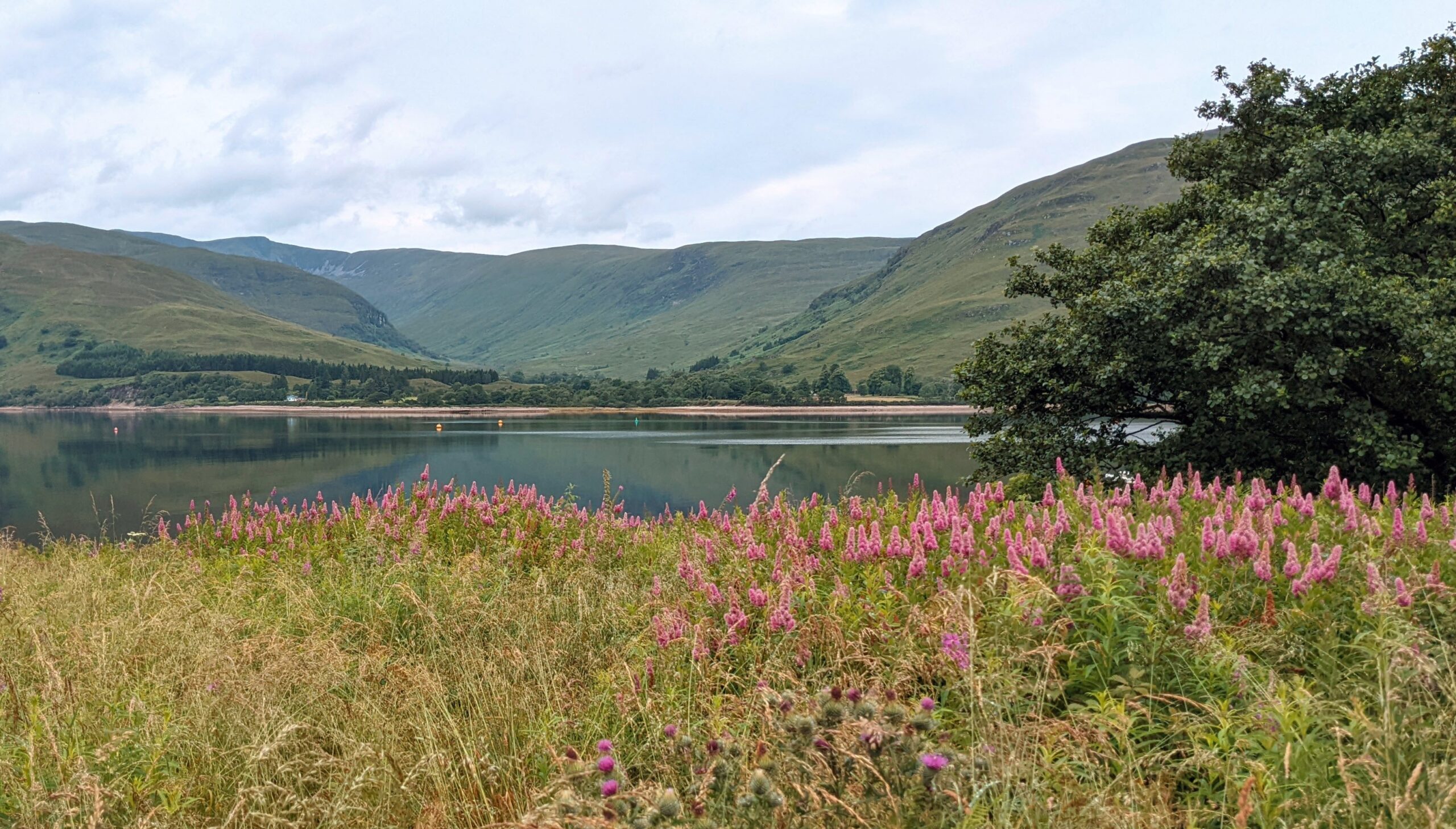
The next morning, after exploring Fort William a bit more on my own, including the missing fort, we all piled back into the car and got on the road. But we hadn’t made it a mile out of town before I jerked to a stop and ran across the highway to photograph some gorgeous wildflowers by the loch. Then a bit later, to photograph a lovely old stone church. This was to be a theme for the next few days. We were now in one of the most spectacular parts of Scotland, where the UK’s highest mountains tumble down to the sea. You’ve probably seen it, because these verdant hills and valleys have served as the backdrop for many films, including Braveheart. To try to capture all this jaw-dropping beauty, we’d be making an awful lot of abrupt stops, and sometimes even turning around—if we could only find a place to pull over!
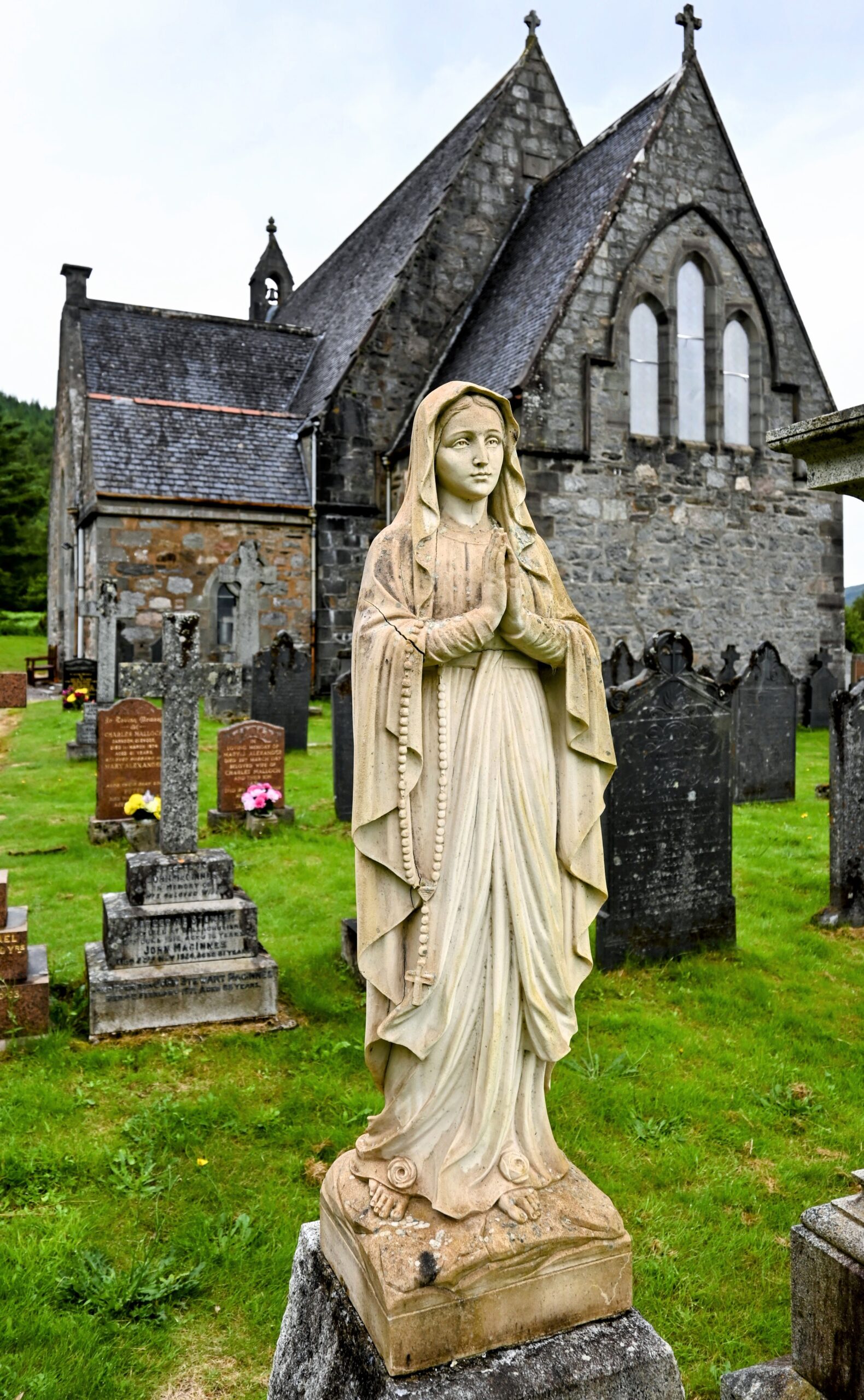
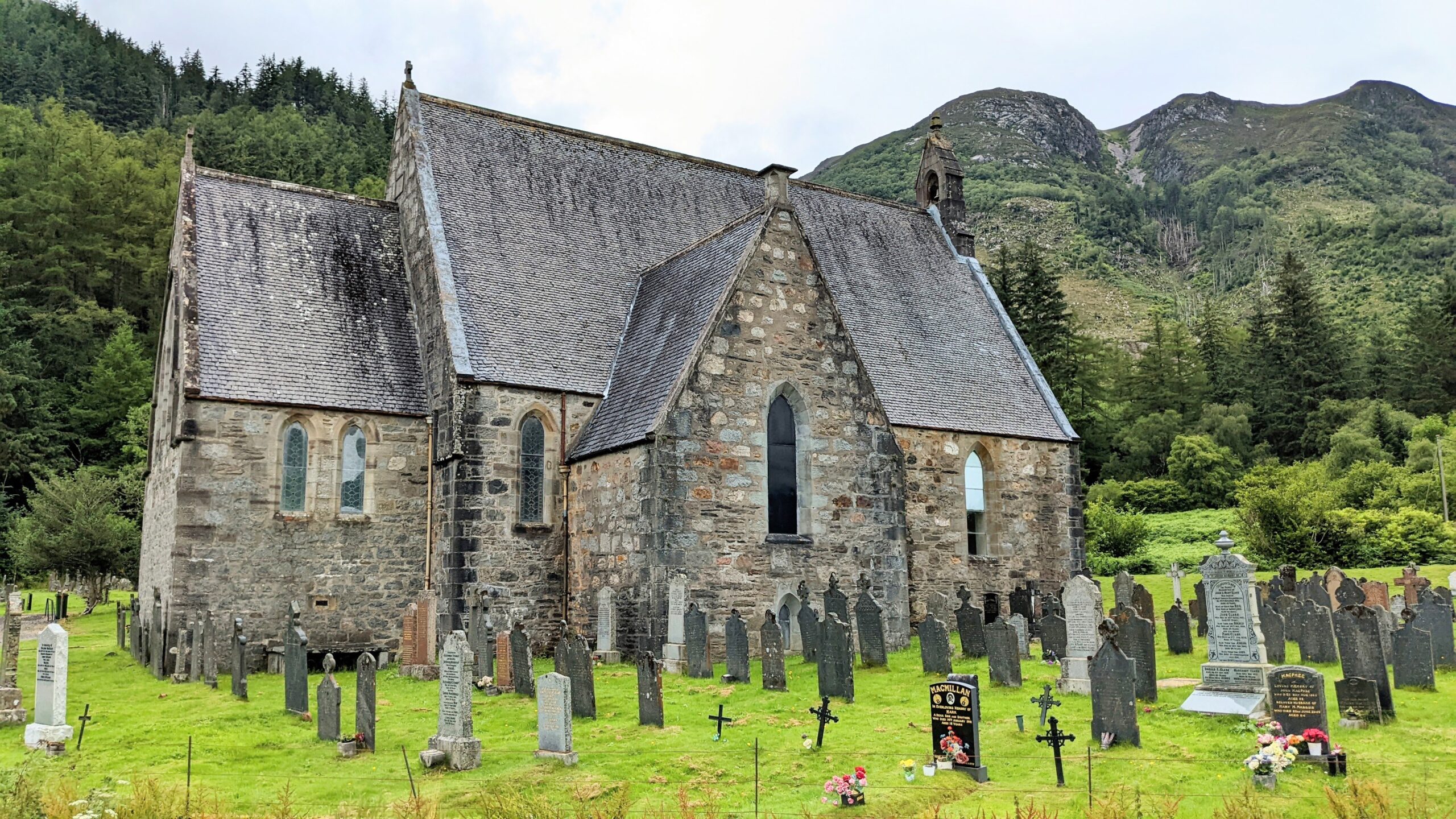
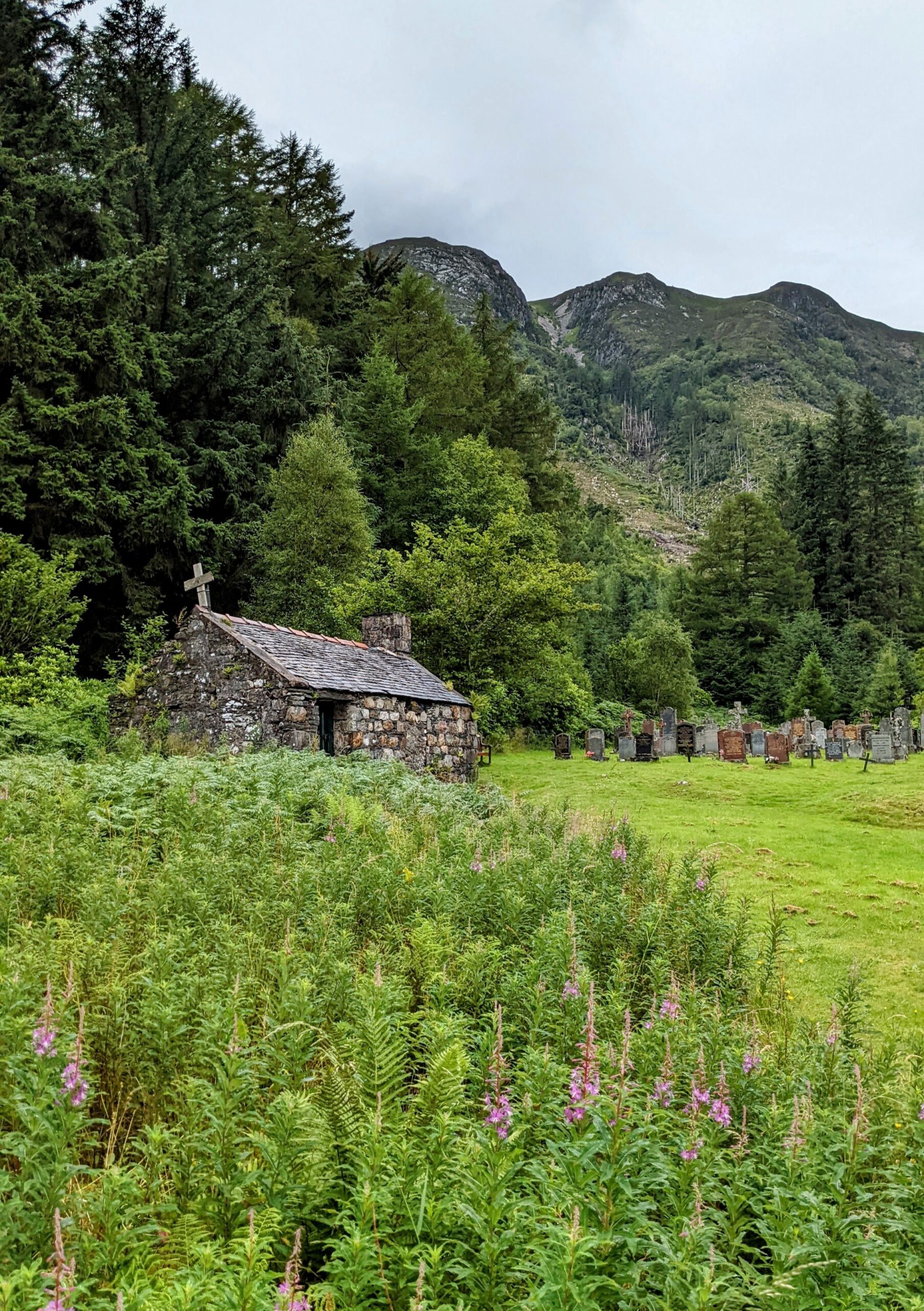
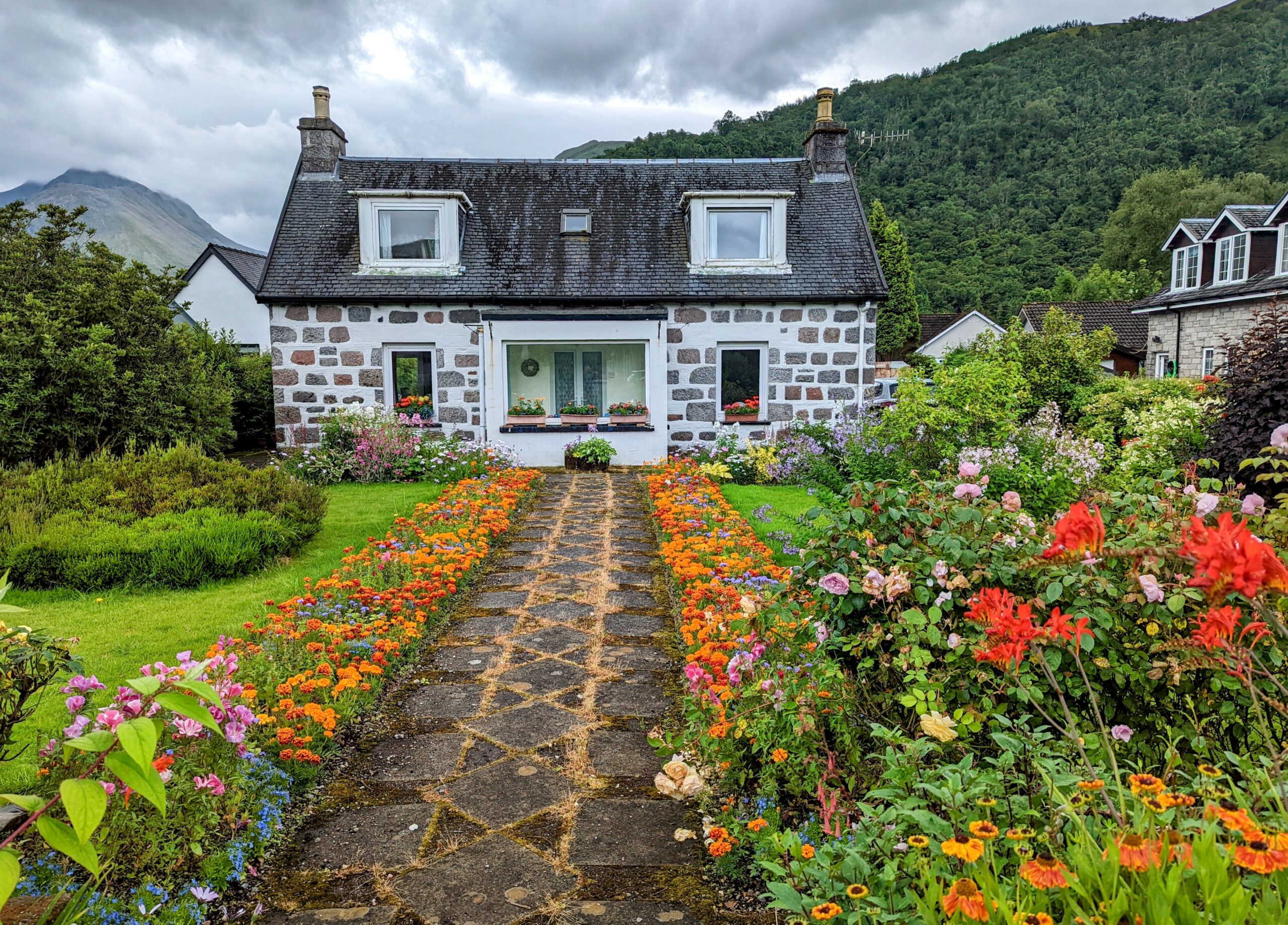
Our first planned stop that morning was the small town of Glencoe, which is known both for being exceptionally lovely and the site of a particularly sad inter-clan massacre many centuries ago. The town sits in a valley of the same name, where the River Coe flows into a narrow ocean inlet called Loch Leven, at the foot of some particularly stunning mountains. While Amy and Griffin got some coffee and snacks, I wandered along the quaint main road, admiring the old cottages, until a man beckoned me over from his yard. He looked tall and lanky, a bit disheveled, and perhaps in his sixties or seventies. Apparently he noticed the Patagonia fleece I was wearing, and got especially excited when I told him I lived in Santa Barbara—near Patagonia headquarters. The gregarious chap spent the next ten or fifteen minutes regaling me with racucous stories of his mountain climbing career, especially the time he spent with Yvon Chouniard, the founder of Patagonia and a well-known climber himself. Just in case I ran into Yvon, he told me to say hello from “Big Ian” McKesson in Glencoe. Ian bragged that he’d been featured in some of the early Patagonia catalogs, and on one memorable incident, he’d been photographed wearing a red ballcap onto which he’d hand-sewn a Patagonia patch. Yvon soon rang up to complain to Ian that Patagonia would now be forced to produce such a hat! I think Ian also bragged that he’d been the stunt double for Clint Eastwood in a climbing scene shot in Europe—from the movie The Eiger Sanction, I’m guessing, filmed the year I was born, though I can’t find him listed in the stunt credits. I have no idea if Big Ian was for real or just telling some tall tales, but regardless, he was a fascinating character, especially with his hearty Scottish brogue, and it took Amy and Griffin wandering up to finally interrupt his rambling storytelling.
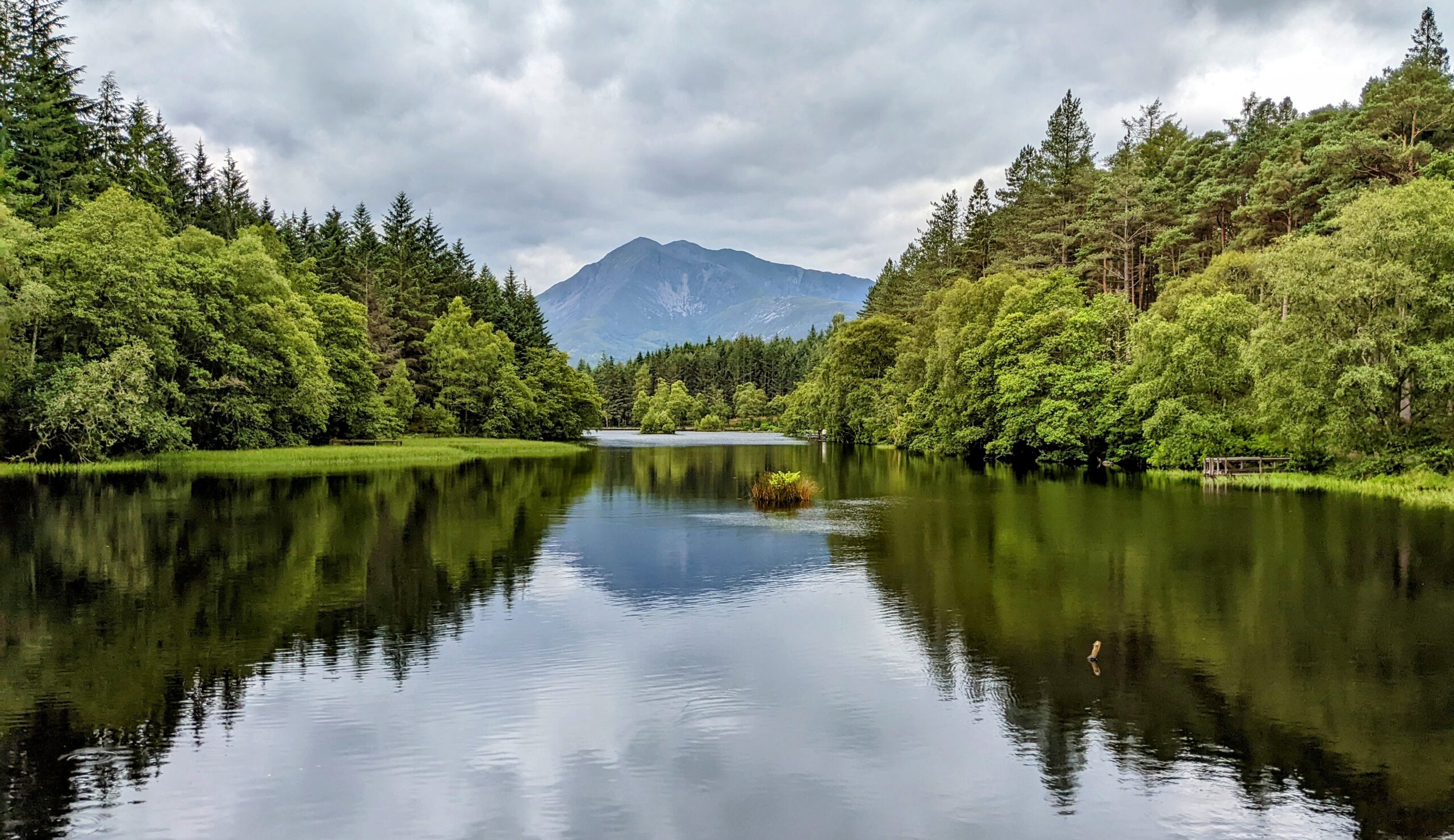
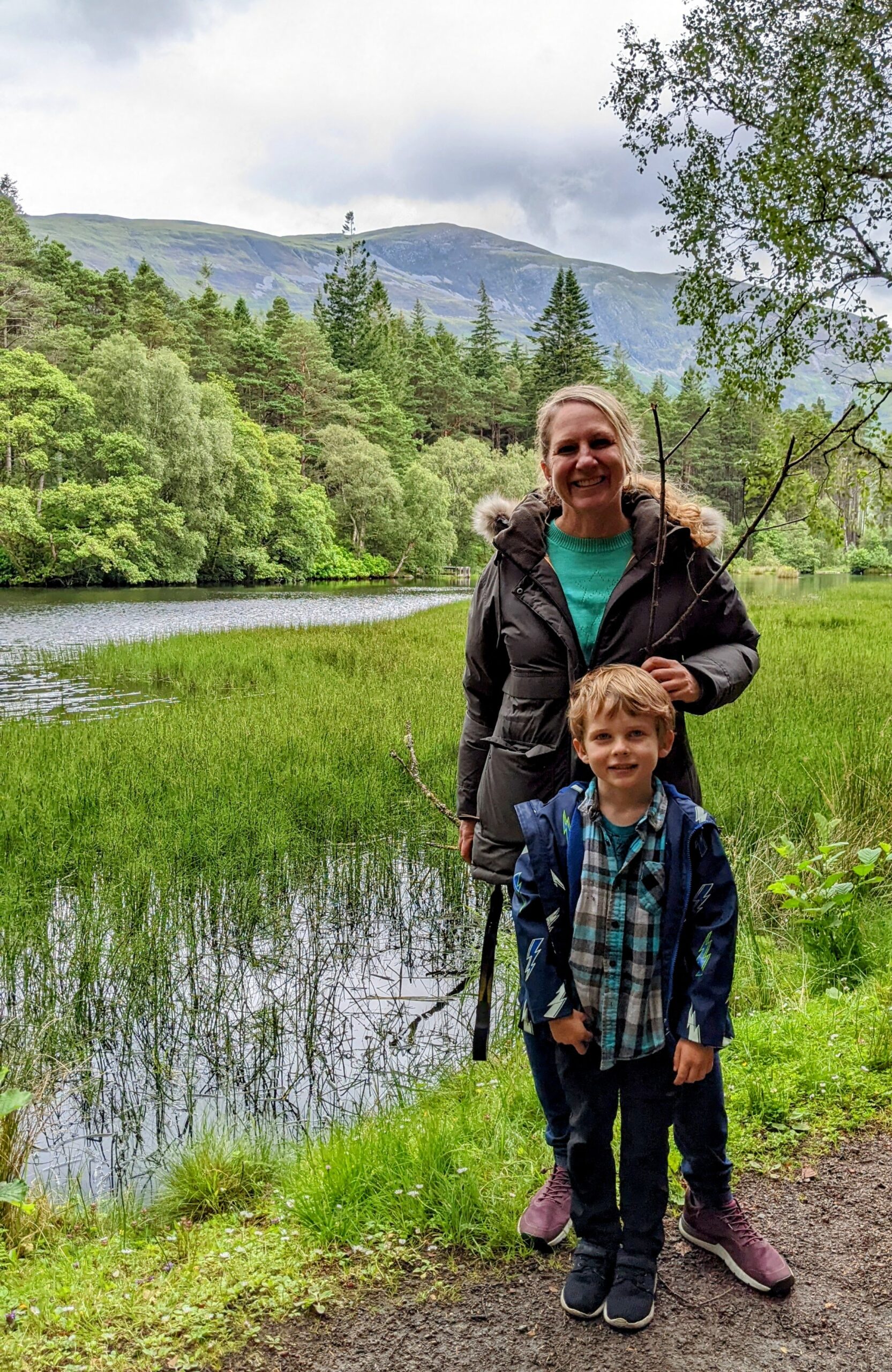
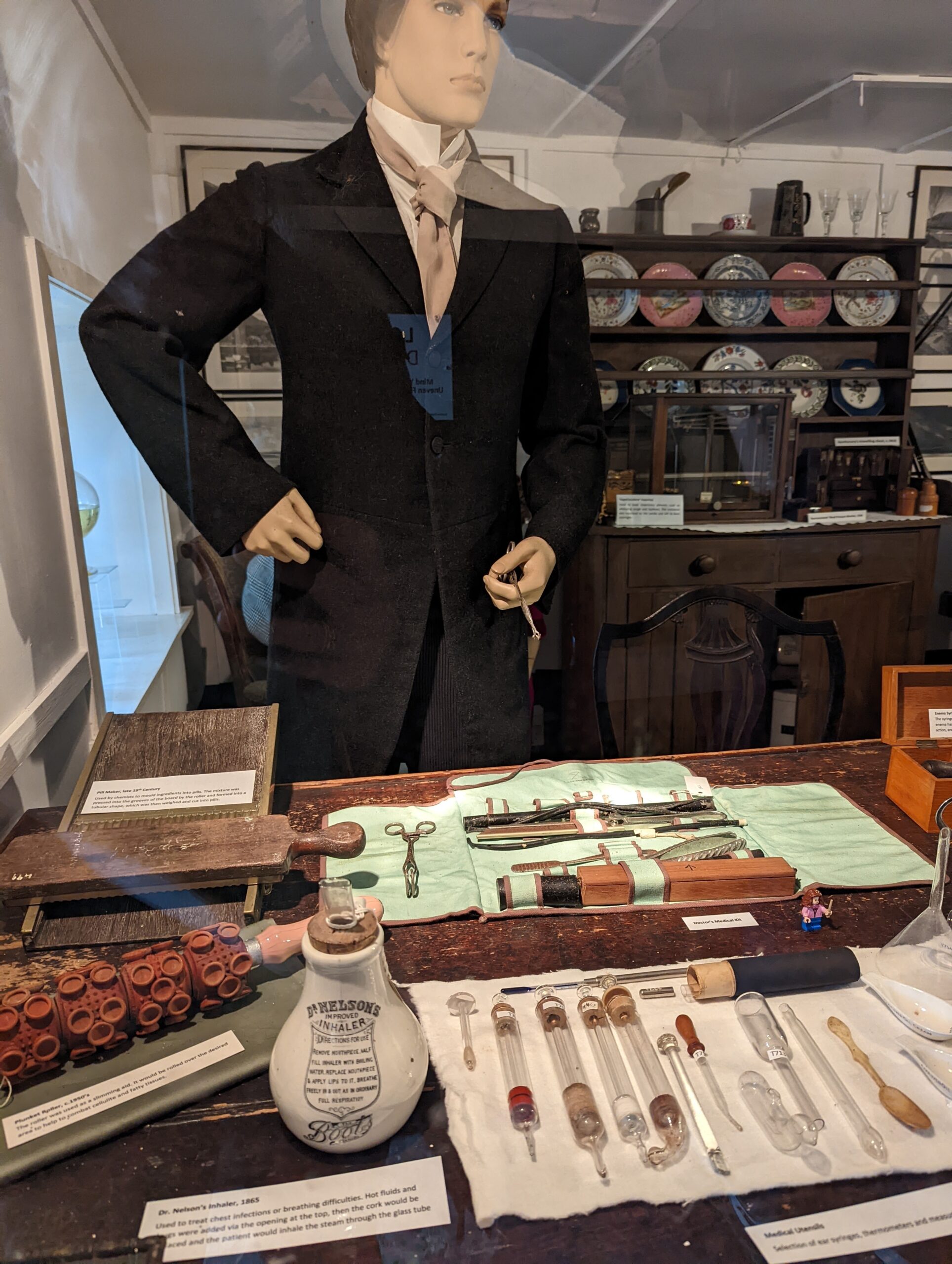
Next up was a short hike around a beautiful lake just above Glencoe. The forest that surrounds it, known as the Glencoe Lochlan, looked surprisingly familiar. That’s because it was full of North American conifers, planted by one Lord Strathcona in the 1890s, hoping to comfort his homesick Canadian wife. We were lucky enough to get a few minutes of blue skies and some decent photos of this lovely setting. Afterwards, we headed back down to Glencoe for a brisk visit to the Glencoe Folk Museum, which has a modest and somewhat random collection of items evoking life in past centuries in Glencoe, all housed in an old thatched hut with such small doorways that I had to stoop to get through them.
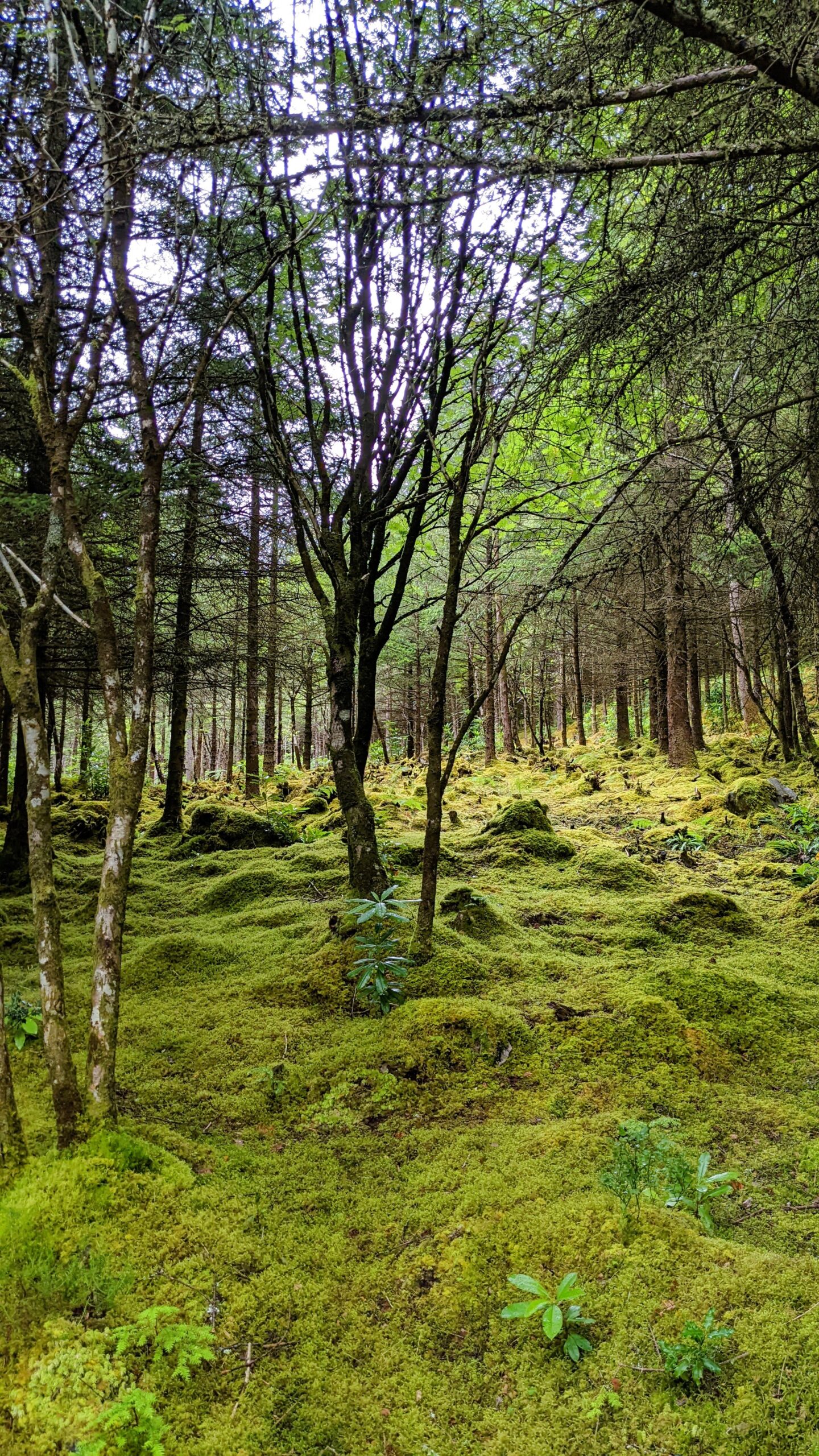
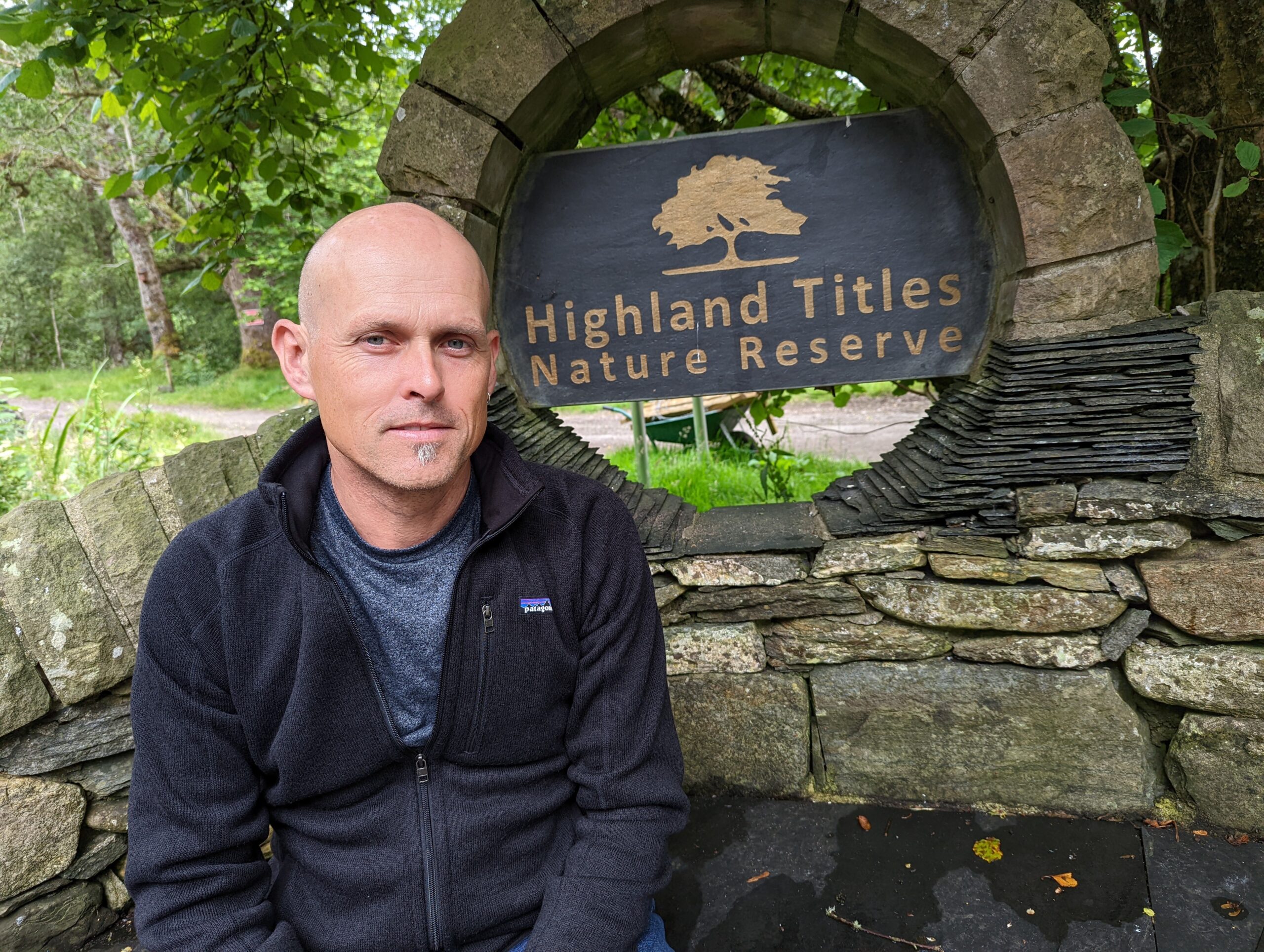
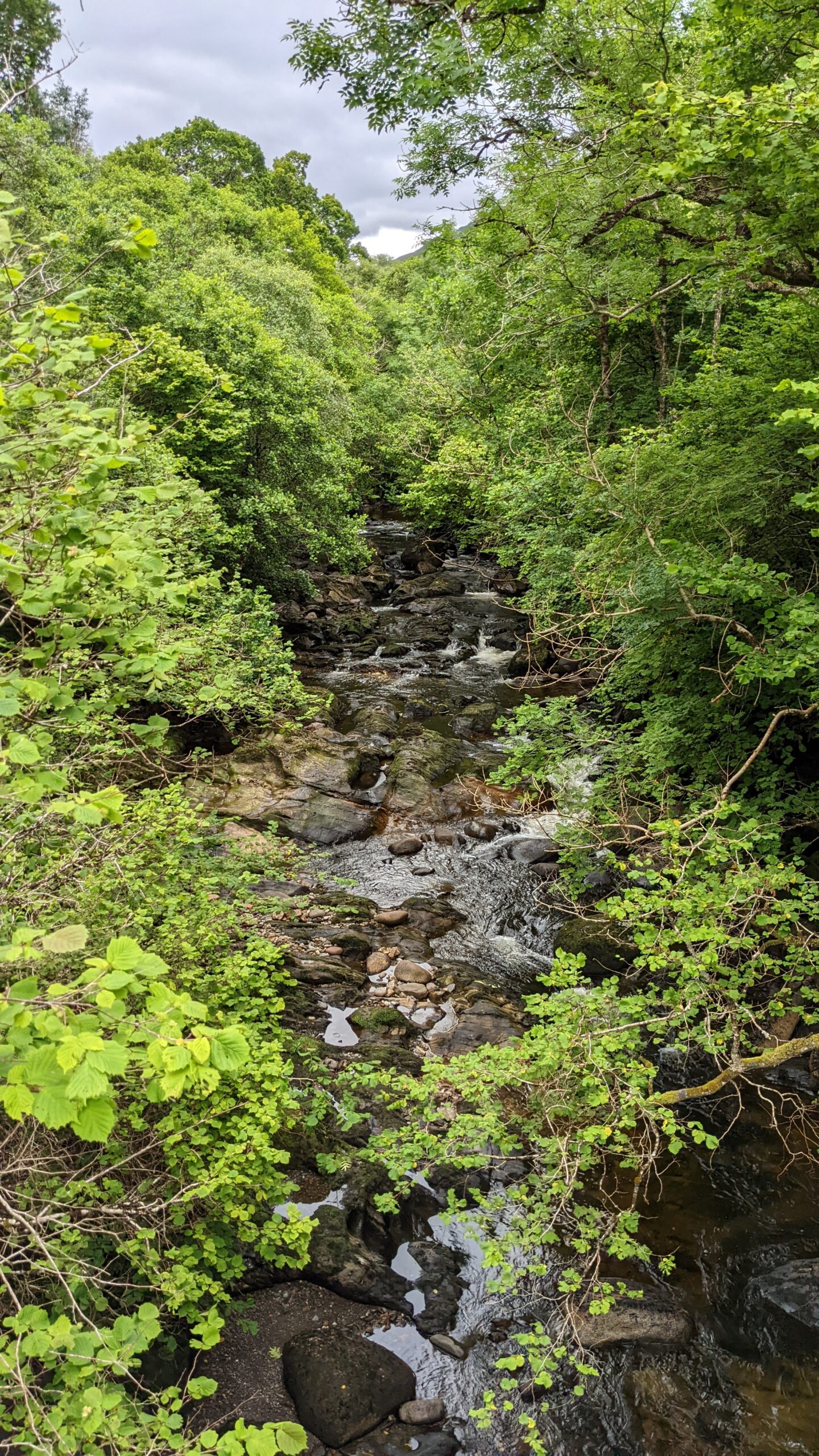
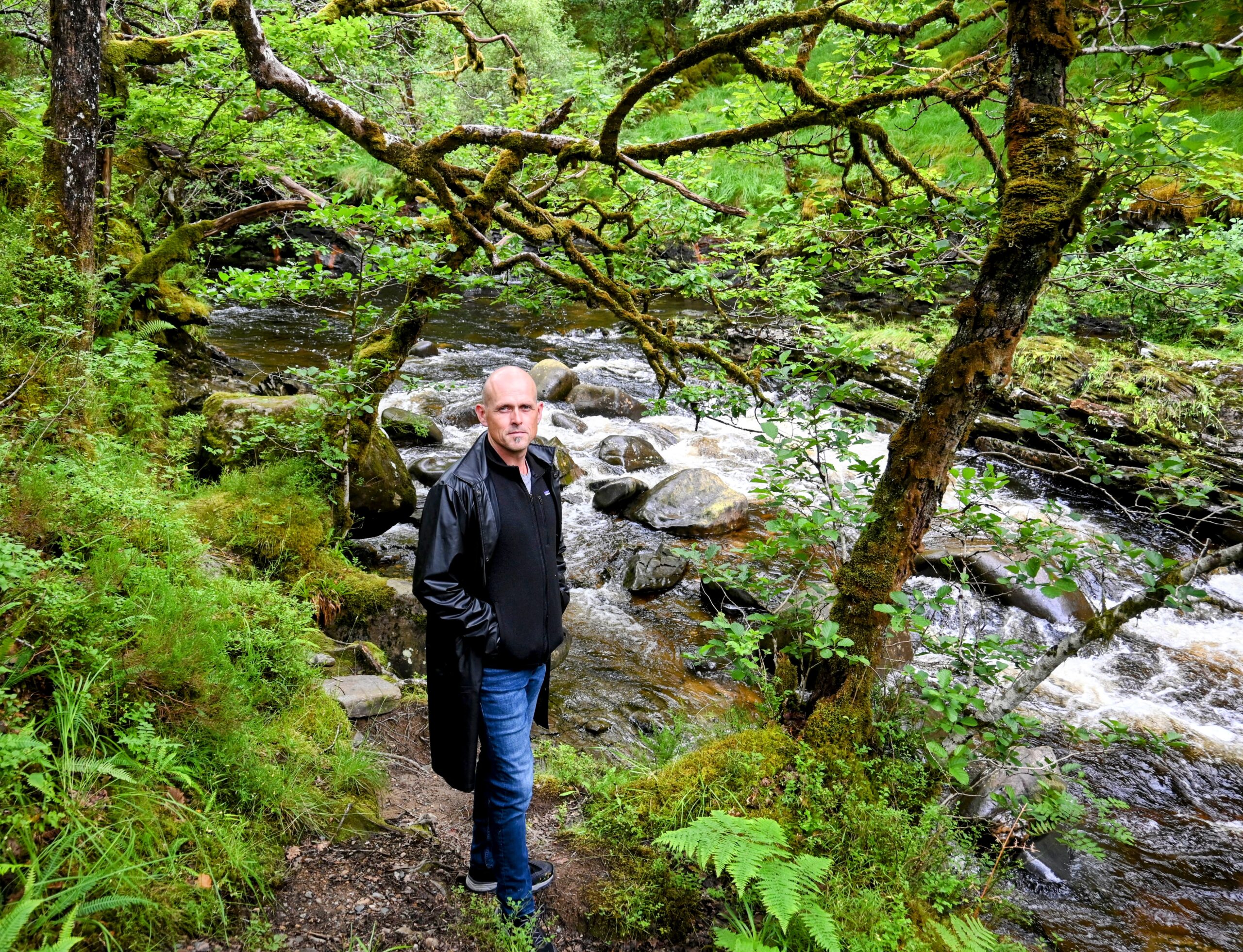
But the real reason that we’d gone somewhat out of our way to visit Glencoe was our next stop: two plots of land in the forest owned by my father and stepmother. A few years back, they announced themselves a lord and lady of Glencoe, on account of purchasing these plots—which apparently are a whopping ten square feet each. Uh huh. The story goes that some well-meaning folks became concerned about development encroaching on Glencoe Forest, and came up with a clever scheme to sell it off in tiny parcels to anyone who would buy—regardless of whether they were Scottish or resided in Scotland. In return, the buyers are bestowed with the title of a lord or lady of the land and mailed a fancy certificate to prove it. Since such tiny plots are obviously undevelopable, and it would be a nightmare for anyone to buy back enough contiguous plots to do anything useful, the forest should be preserved indefinitely. Ingenuous? Or a bit fishy? I wasn’t sure. And as we turned onto the hard-to-find dirt road leading to this Highland Titles Preserve, I wondered whether anybody had actually threatened to develop this remote and rugged forest. We soon arrived at a tiny car park and a trailer, where we found a couple of the volunteers that run this thing assisting someone to find their ten square foot plot—a free service offered to any of their lords and ladies that might happen by. My dad and stepmother never had, of course—they’d never even been to Scotland—so I was doing it for them. But we decided against going to the time and trouble of finding their actual parcels, and decided it was enough to walk through the preserve, admiring the forest and the river that cuts through it, and snap a few photographs. It is a beautiful forest. Interested in getting a piece of it and becoming a lord or lady of Glencoe yourself? You can buy as little as one square foot for just €36 (about $36).
As a light rain began to fall, we piled back into the car and backtracked a dozen miles to the Corran ferry crossing. In retrospect, I’m pretty sure I wasn’t allowed to take our rental car on a ferry, but at the time, I was much more worried about where that ferry was taking us. The crossing is probably only a kilometer across the narrowest part of Loch Linnhe, which is actually a long and narrow ocean inlet. But the other shore belongs to the remote and sparsely inhabited Morvern peninsula on the windswept west coast of Scotland. And it might as well be an island. Within a few minutes of driving off the ferry, the other cars scattered and we quickly found ourselves alone on the narrow two-lane road.
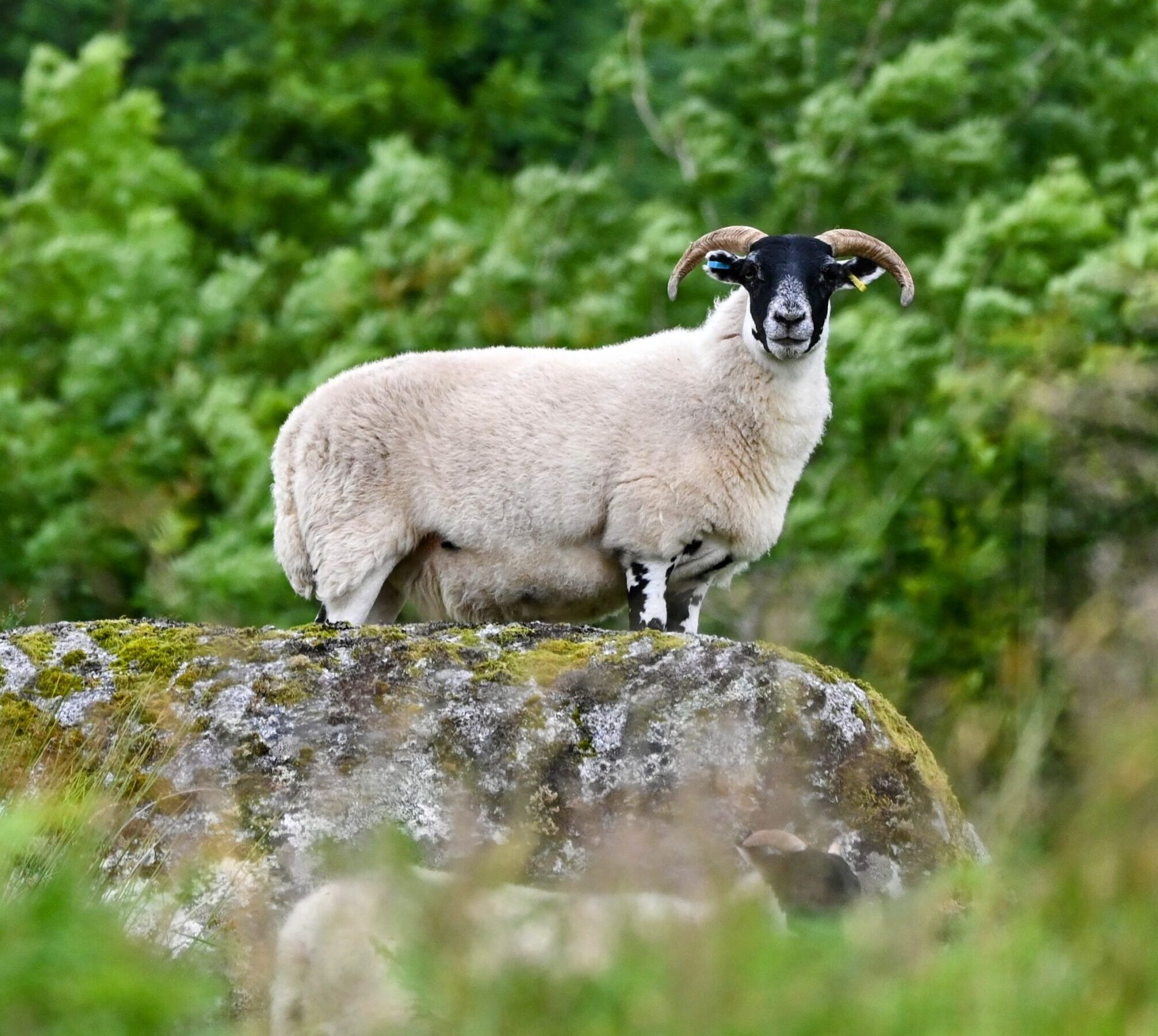
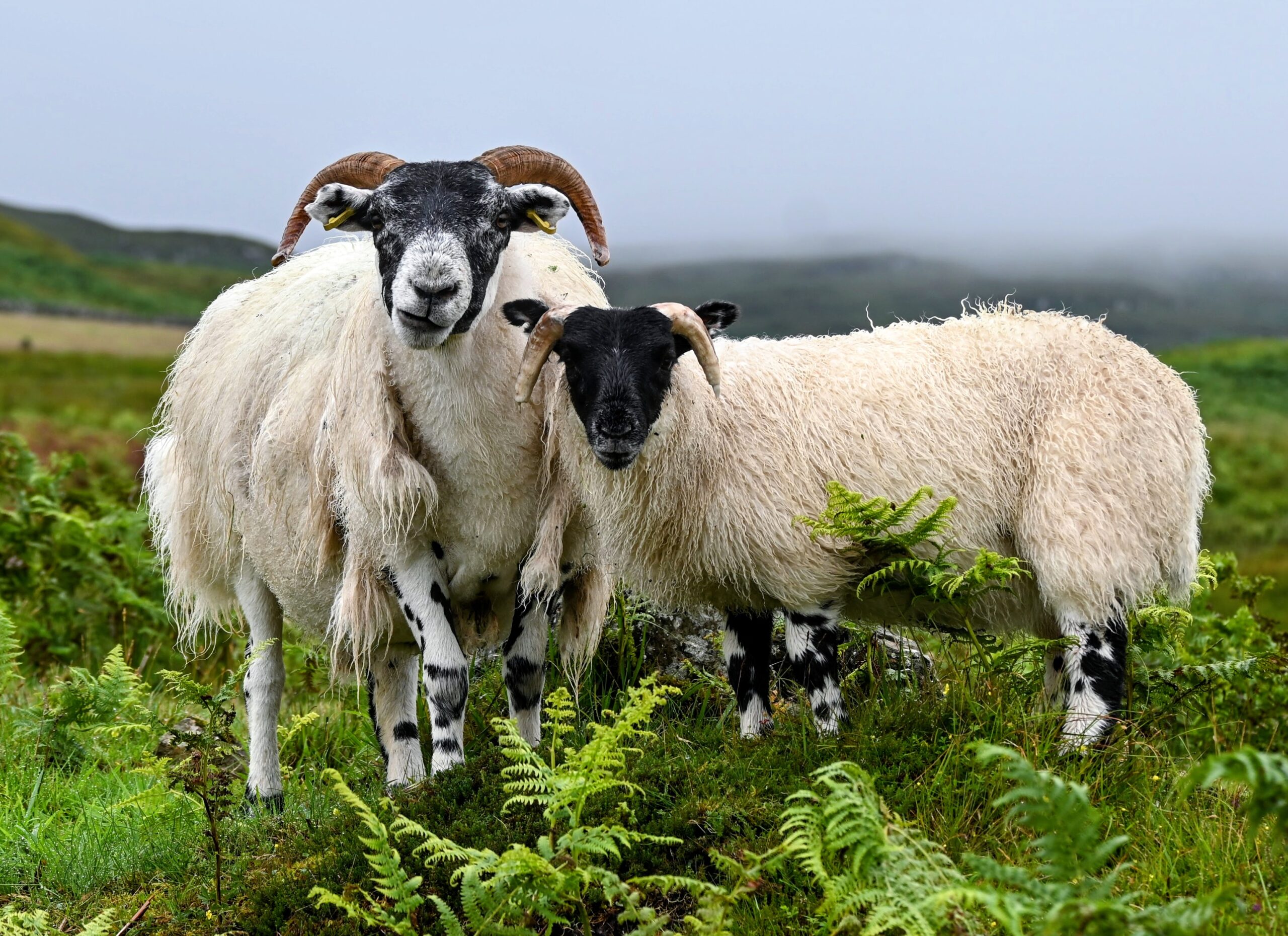
Though not for long. A herd of sheep blocked our path. But there was no shepherd—it seemed we were driving through their pasture, and our wooly friends were quite sure they had the right of way.
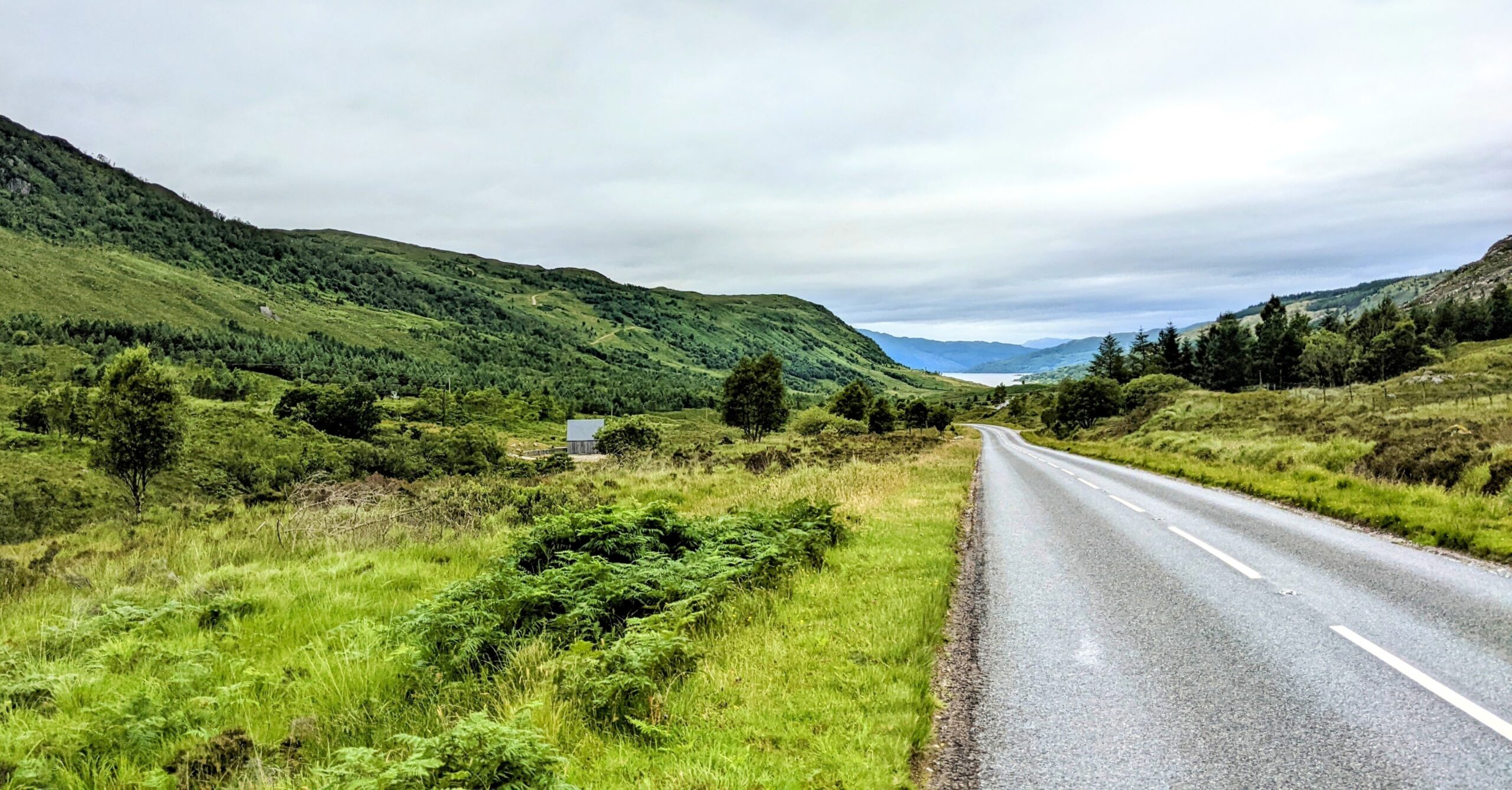
We continued west across this peninsula under a dark gray sky, following a river through a wide valley between some treeless hills. At times, only the road itself suggested that we were still in a civilized place. And then, as we turned south, the road became rougher and narrowed to a single lane, with an occasional wide spot for edging past oncoming traffic. Not that there was much of that, but every so often, a car or truck would come hurtling around a corner towards us, so I had to stay vigilant. We soon climbed to top of those treeless hills, and we should have been able to see the North Atlantic below us, except that a solid rain was coming down and we were practically in a cloud. I felt like I was about to drive off the edge of the Earth. Where the hell where we? On our way to a tiny settlement at the bottom of this peninsula, Lochaline, where I desperately hoped to find another ferry—or else we would have an awful lot of backtracking to do. Luckily, the ferry did exist, and was running right on schedule, and we made it with about five minutes to spare. It was coming down in buckets as the ferry pulled away from the shore and out into the sea.
When we planned our tour of Scotland, Amy said that the one place she wanted to visit was the Isle of Skye. Why? ‘Cause it’s one of the few places in Scotland that she’d heard of, and it just sounds, well, magical. Doesn’t it? Skye, just off the west coast, is legendary for its rugged beauty, apparently pretty jaw-dropping even by Scottish standards. Which, unfortunately, means it’s also apparently rather overrun with tourists, especially this time of year. So on the advice of one Scottish blogger, I was heading to another goregous west coast island with a slightly less magical name: Mull. Heard of it? I didn’t think so. Though it’s almost 350 square miles, the Isle of Mull has only 3,000 residents and one real town, Tobermory, 15 miles from where the ferry would drop us.
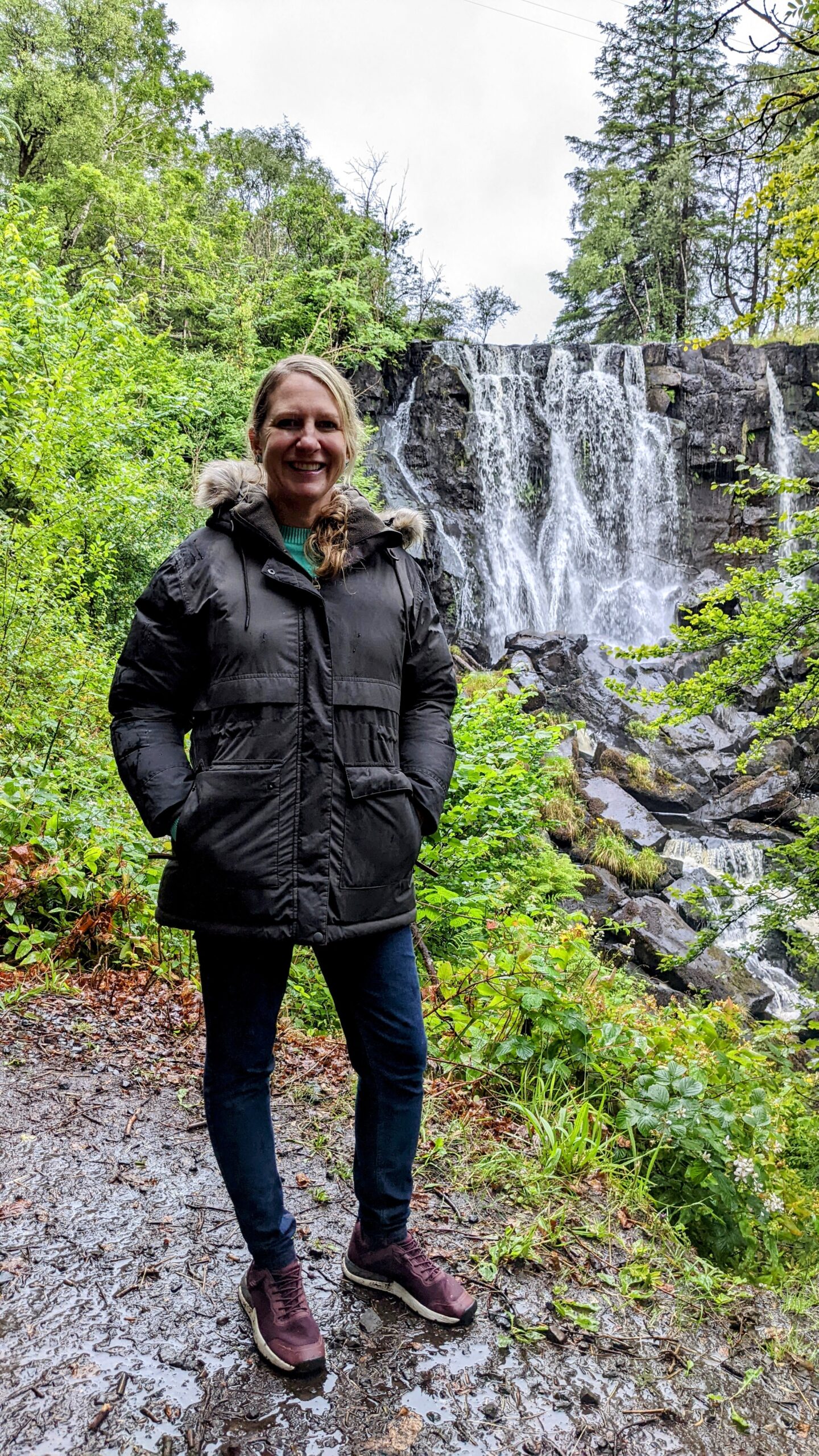
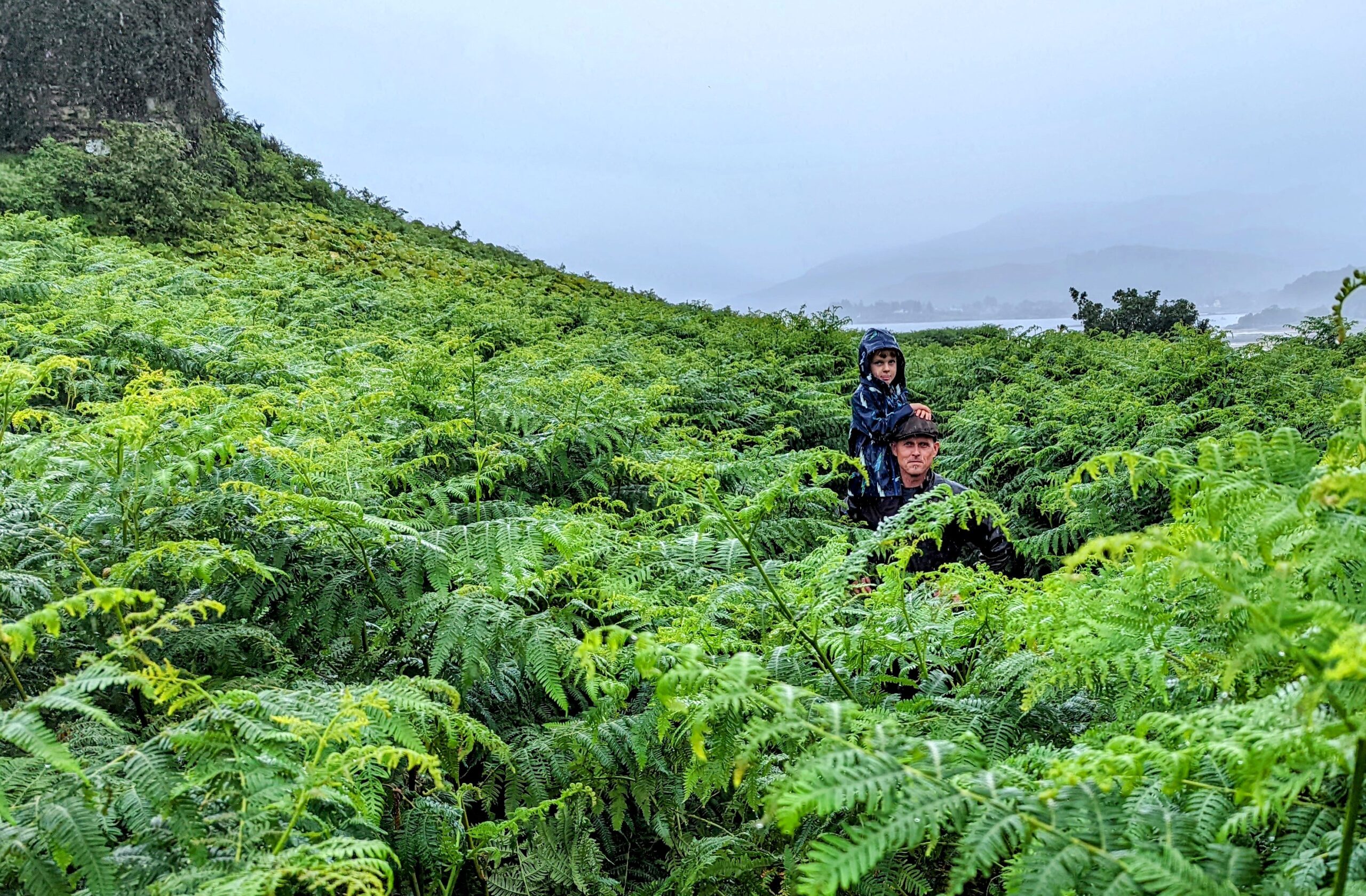
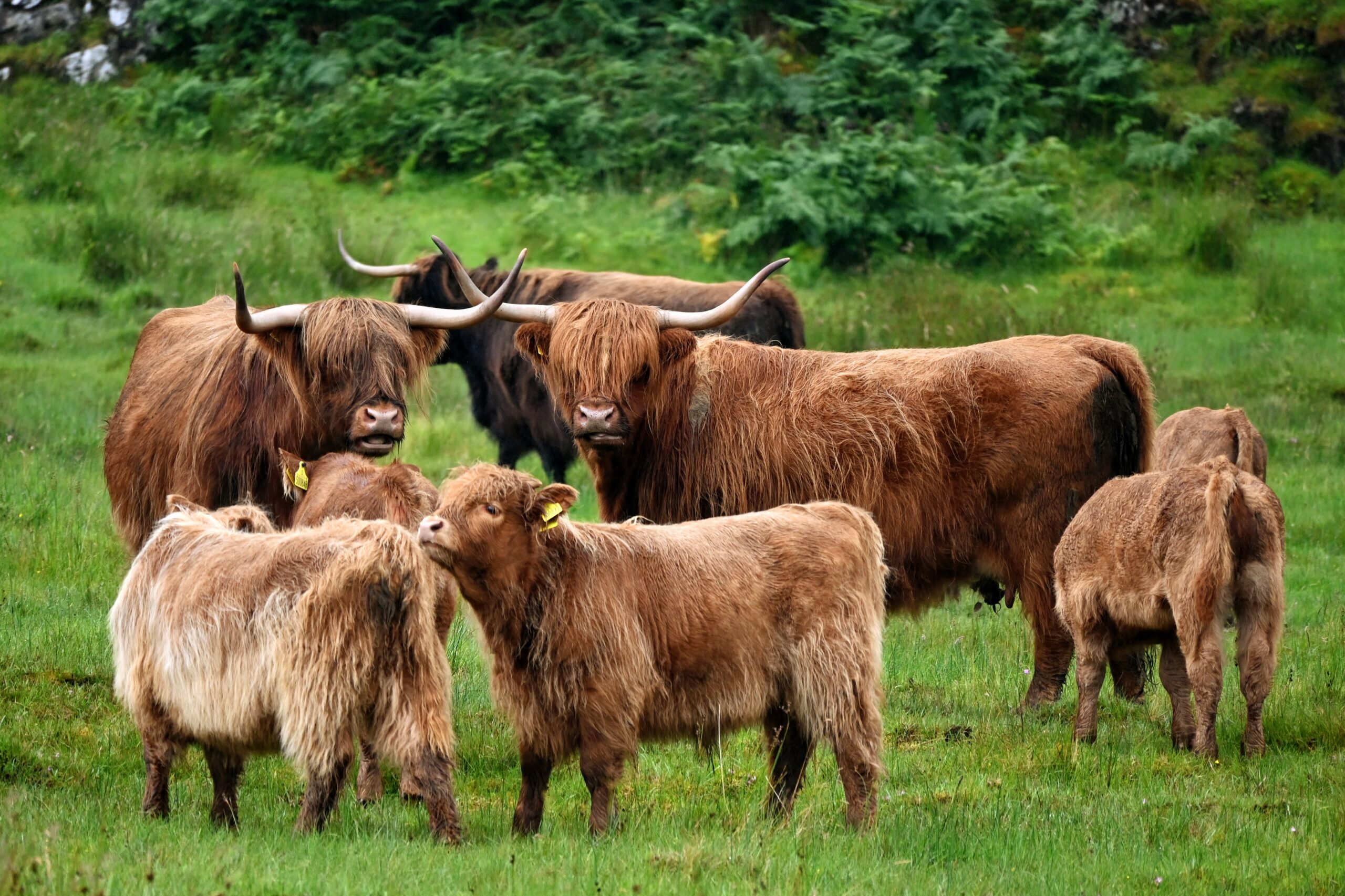
We needed to get there by nightfall, because there ain’t nowhere else to stay on this island. But I still made time to for some quick stops, including a hike to a waterfall, a photo session with a bedraggled bunch of hairy coos, and a very muddy and futile attempt to hike through thick ferns taller than myself and a heavy rain to a ruined cliffside castle.
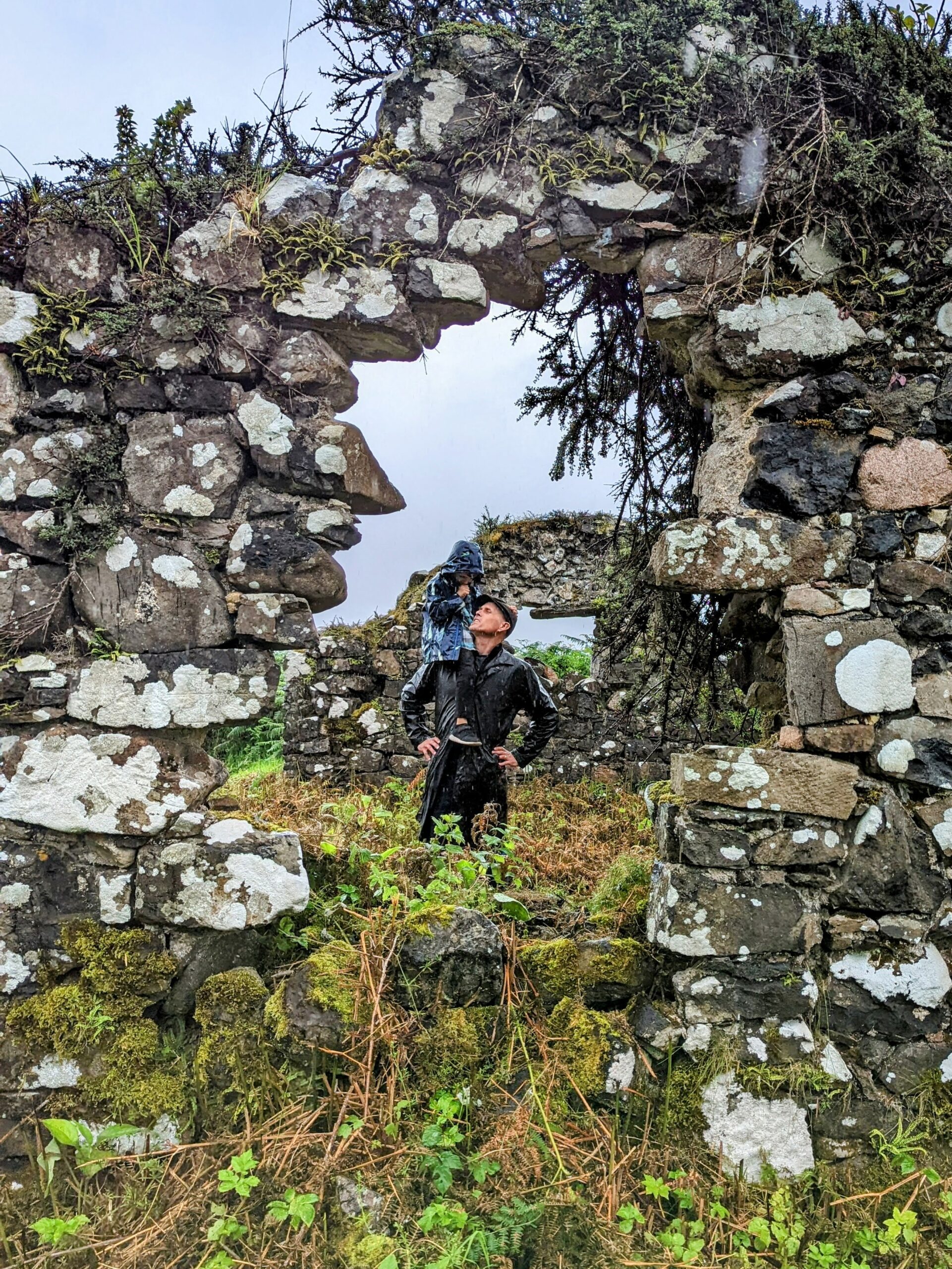
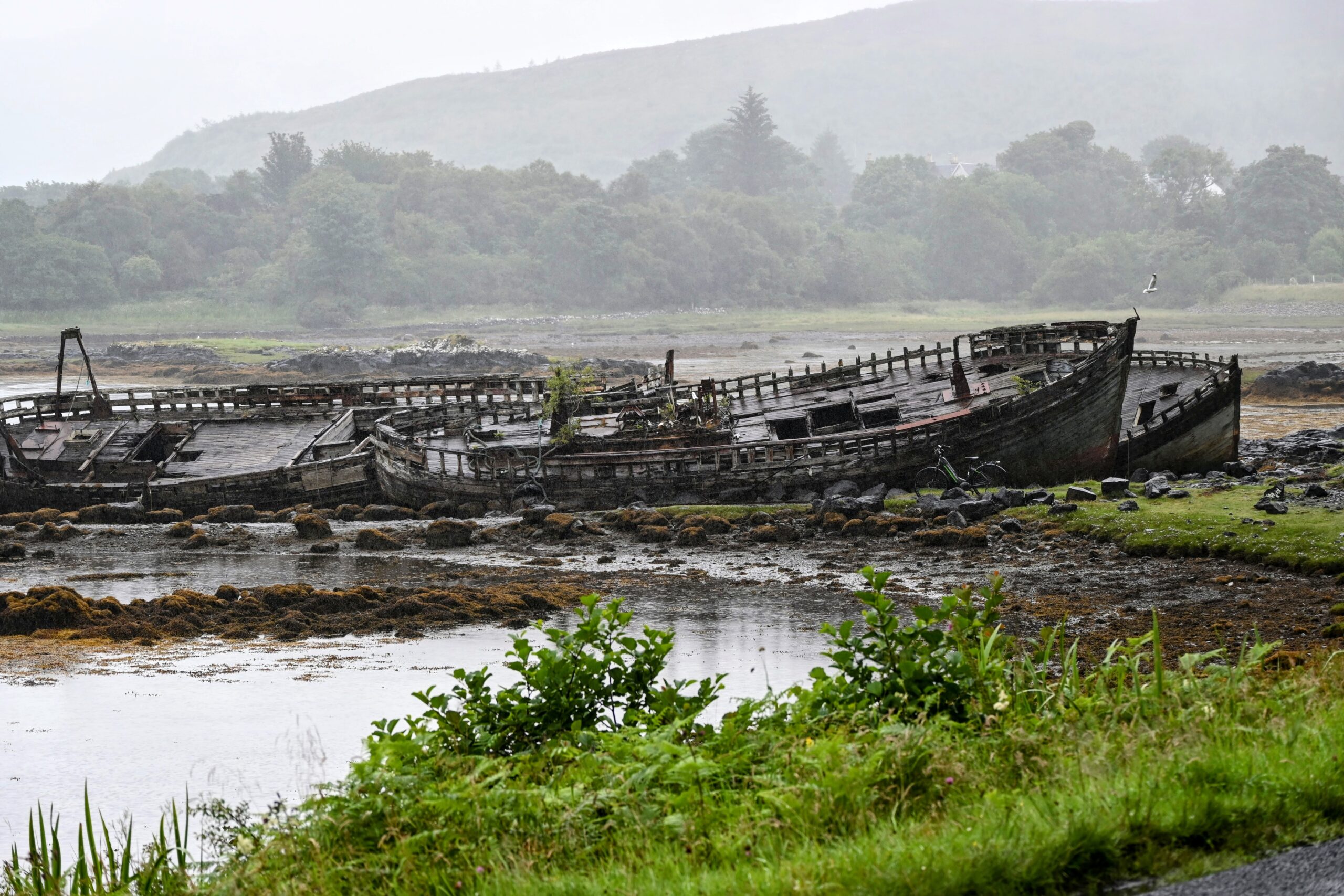
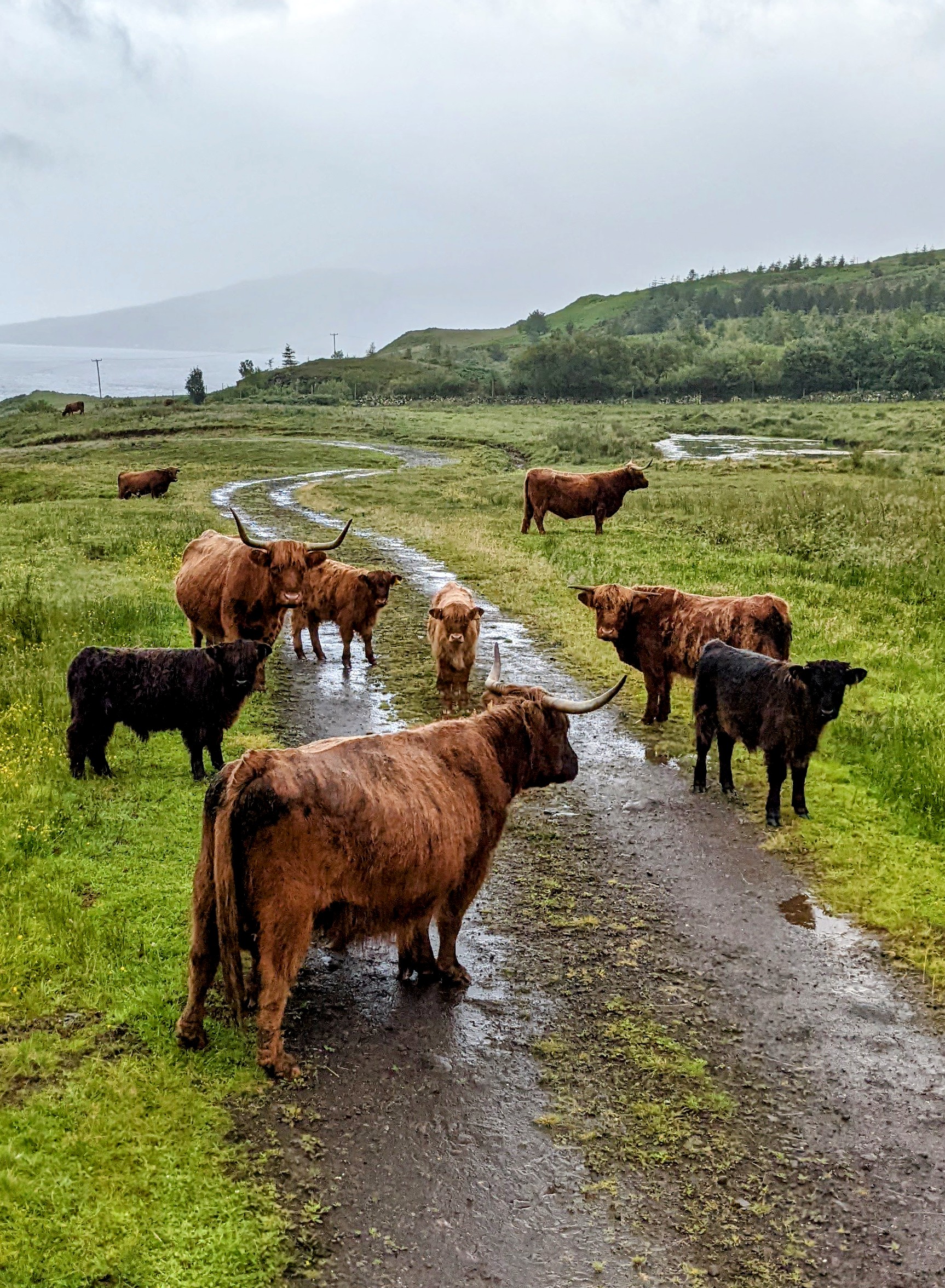
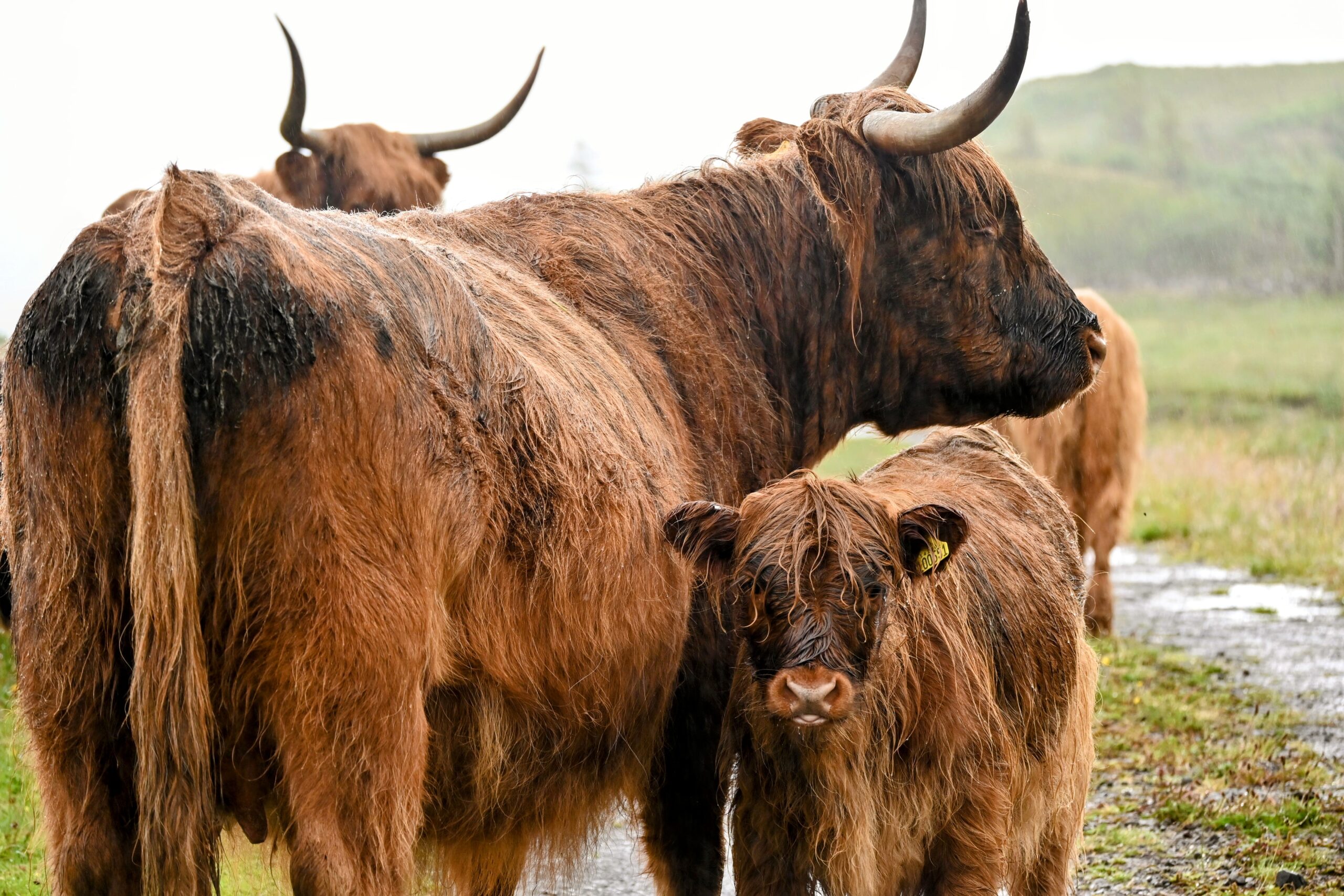
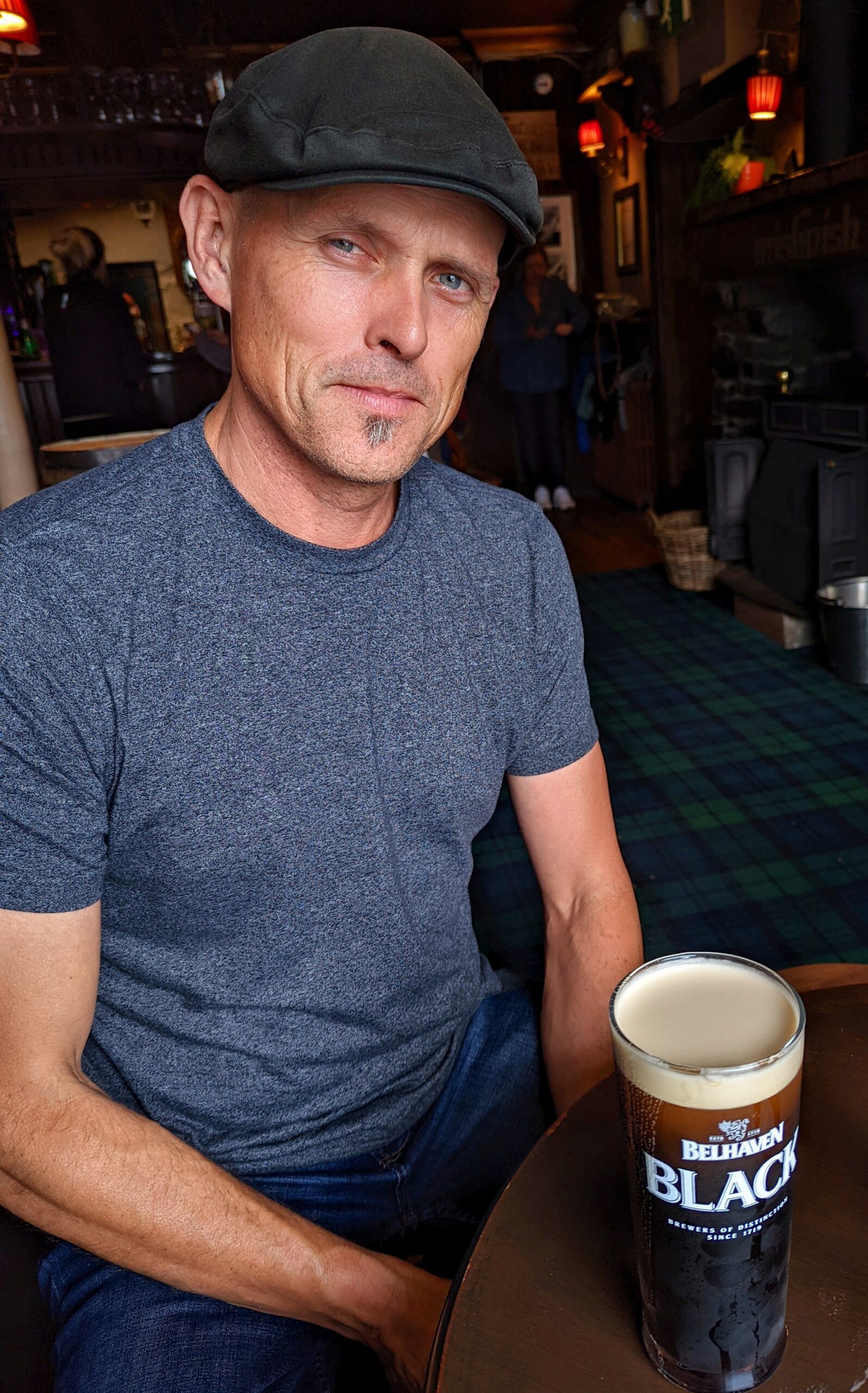
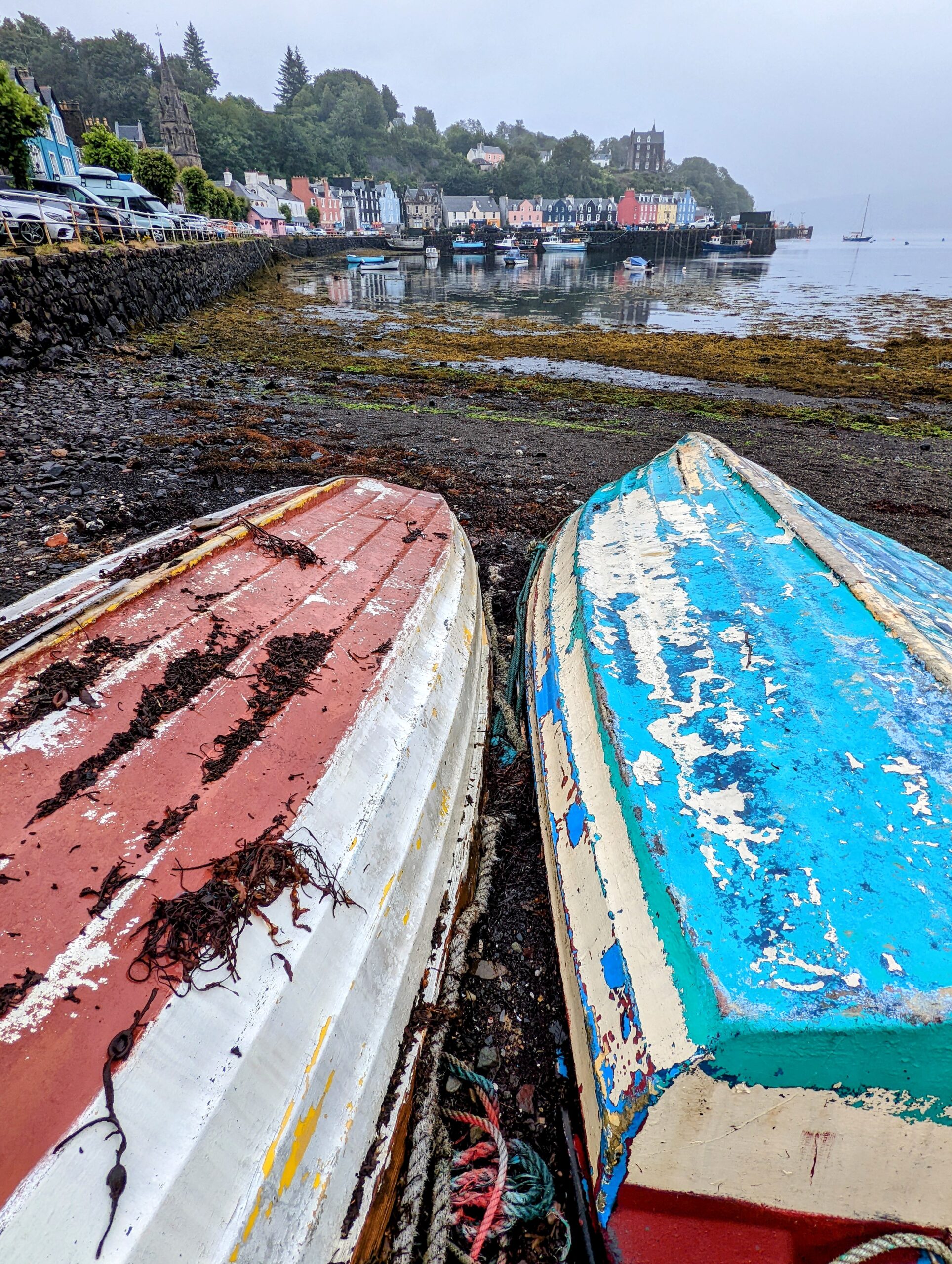
What a relief it was to finally arrive in the charming seaside town of Tobermory. With a row of colorfully-painted buildings wrapped around a bay, it’s a pretty sight. We parked and walked past the shops and the town’s own whiskey distillery (unfortunately already closed for the day, as it would be the next day too) until we found a lively pub called Mishnish, where we enjoyed some dinner and a few pints.

Photo from VisitScotland
Then we headed to the small B&B I had managed to book. In the traditional style, it’s actually the private home of an older couple, who had added on a wing of four rooms to host visitors like us. Well, maybe not exactly like us, because they seemed rather put out when they saw Griffin—somehow the reservation only listed two adults. We ignored the cool reception and enjoyed the immaculate room they provided us, with spectacular views over a golf course—Mull has a golf course?!—and the bay, which was beautiful even on this gray day.
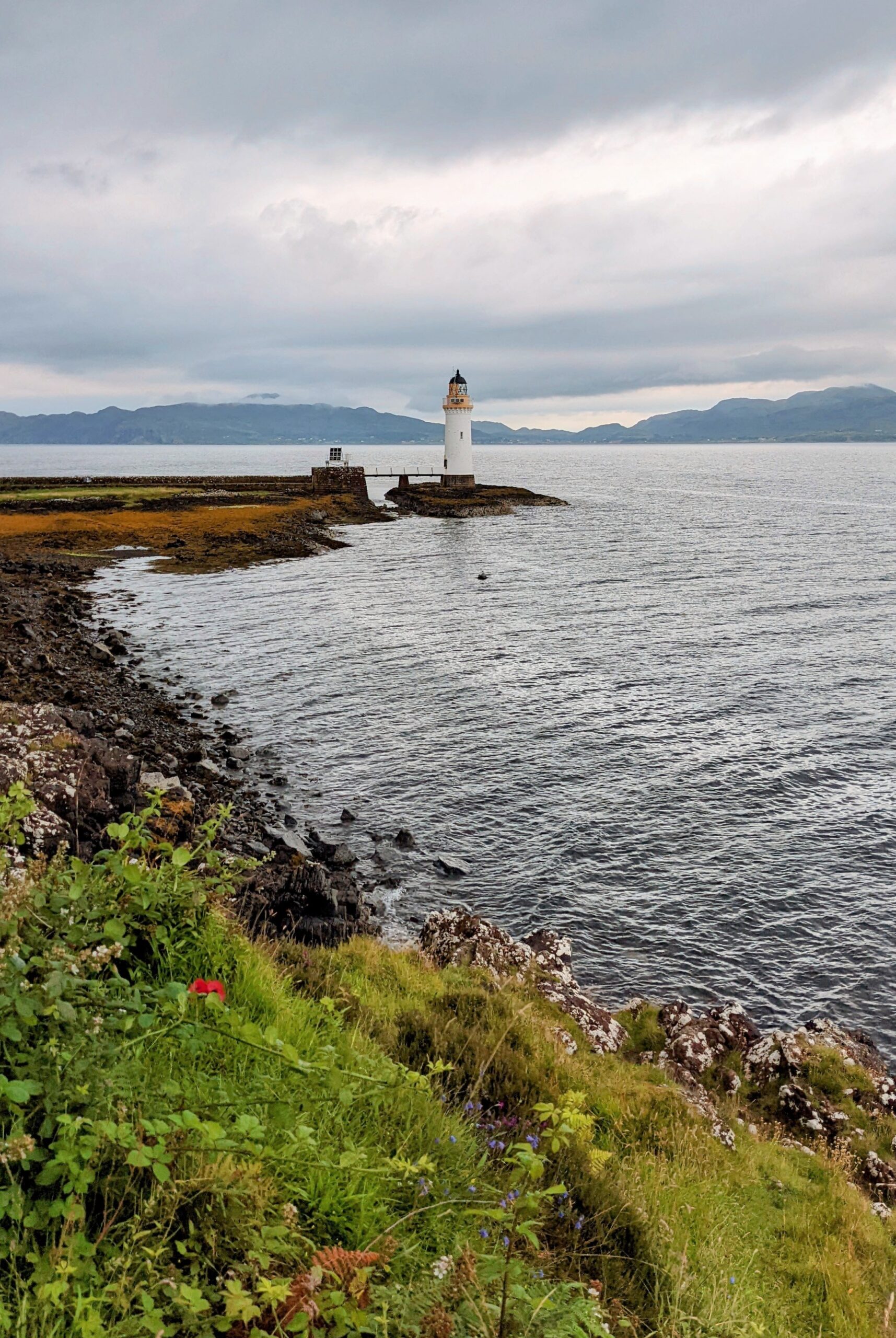
It was now 7:30 pm, and Amy and Griffin decided to stay in and make silly movies with, um, blueberries. But we still had 3 hours of daylight, so I decided to head out into the drizzle to do a little more exploring on my own. I strolled through the middle of the empty golf course, hopped a livestock fence, threaded my way through a small marsh, and started following cow trails. I was pretty sure I was trespassing, and I wondered if it was really smart to be out here on my own like this so late in the evening. Then I stumbled across a trail. It led down the hill to an even wider one, which cut through a dense forest hugging the coastline. I passed a few other folks out on a stroll, so I figured I wasn’t too far off the map. I followed this trail out to a lighthouse at the very north end of the island, which looked out over the wild North Atlantic. With the exception of another smaller island several miles out, which I could not see, I knew the next landmass was…Newfoundland, some 2,000 miles west. It was a moody and almost foreboding scene, with the dark gray clouds draining almost everything else of color too. But it was also quite possibly the most serene spot I’ve ever been, with the sound of the gentle lapping of wavess and gentle breeze.
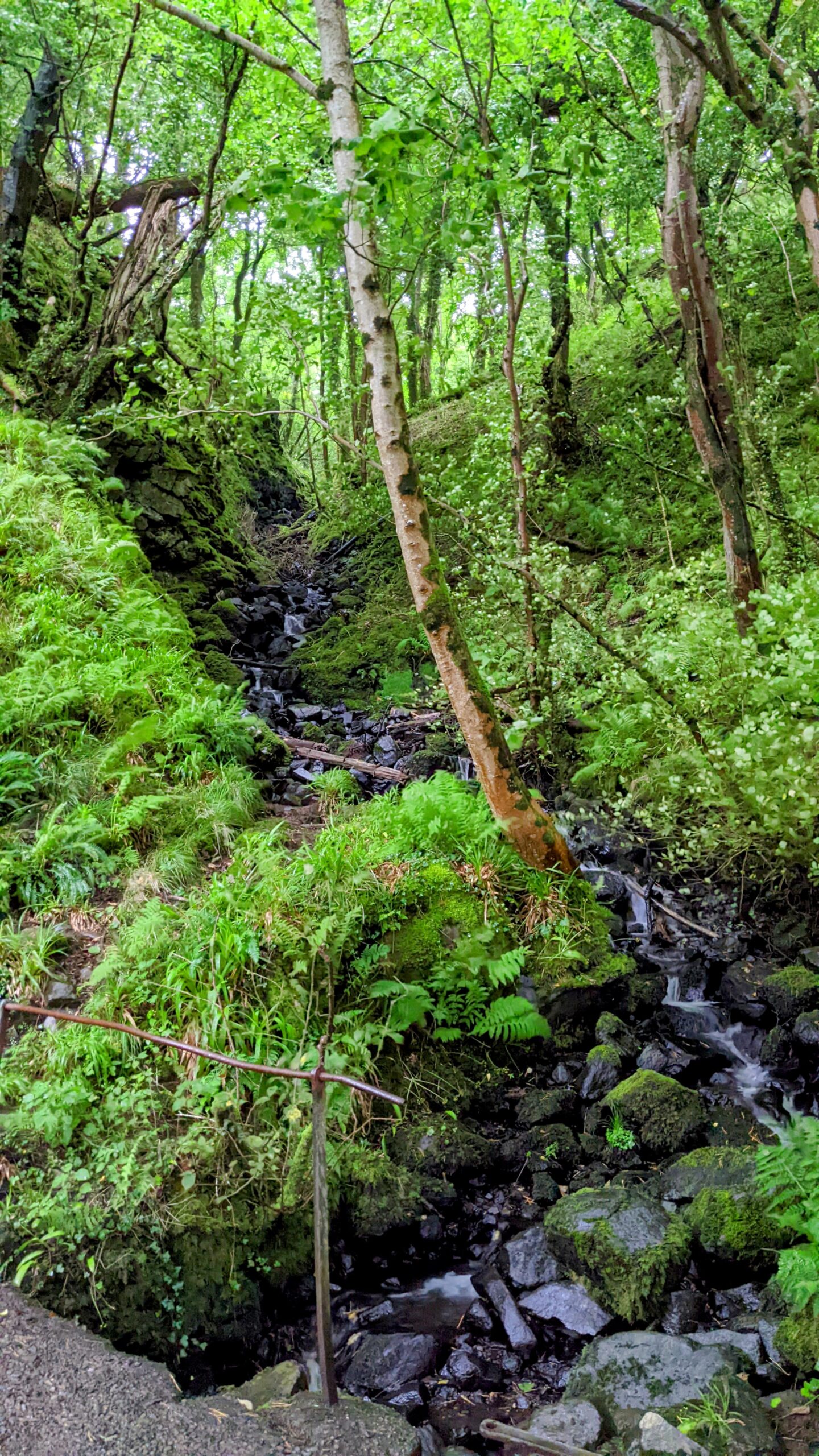
It was now getting genuinely late and starting to rain, so I hustled back along the trail towards to town, looking for some better way to get back up the hill to our B&B. I finally clambered up a steep & muddy creek, grabbing onto tree branches to keep from sliding back down the ravine, hopped a fence, and found myself on the golf course a few hundred feet from our room. Whew! No search parties required tonight for this imprudent hiker.
Tobermory to Oban
The next morning, we packed up fairly early and headed out from our B&B to an old church in town that had been converted into a café and art gallery, including a chapel that had become an immersive audio-visual experience. Tobermory is a lot cooler than we thought! But after some coffee and cake, we bid adieu to the little town and pointed our little SUV towards the even more remote and sparsely inhabited west side of the island. The plan was to circumnavigate the top half, but unfortunately, the weather forecasts had for once been right, and it was pouring rain—not the best conditions for sightseeing. I thought seriously about nixing our tour. But would my Scottish ancestors have been put off by a little rain? Of course not. Neither would I. So off we went, bumping down the rough one-lane road, knowing that we once we started, we either had to complete the whole loop or double-back.
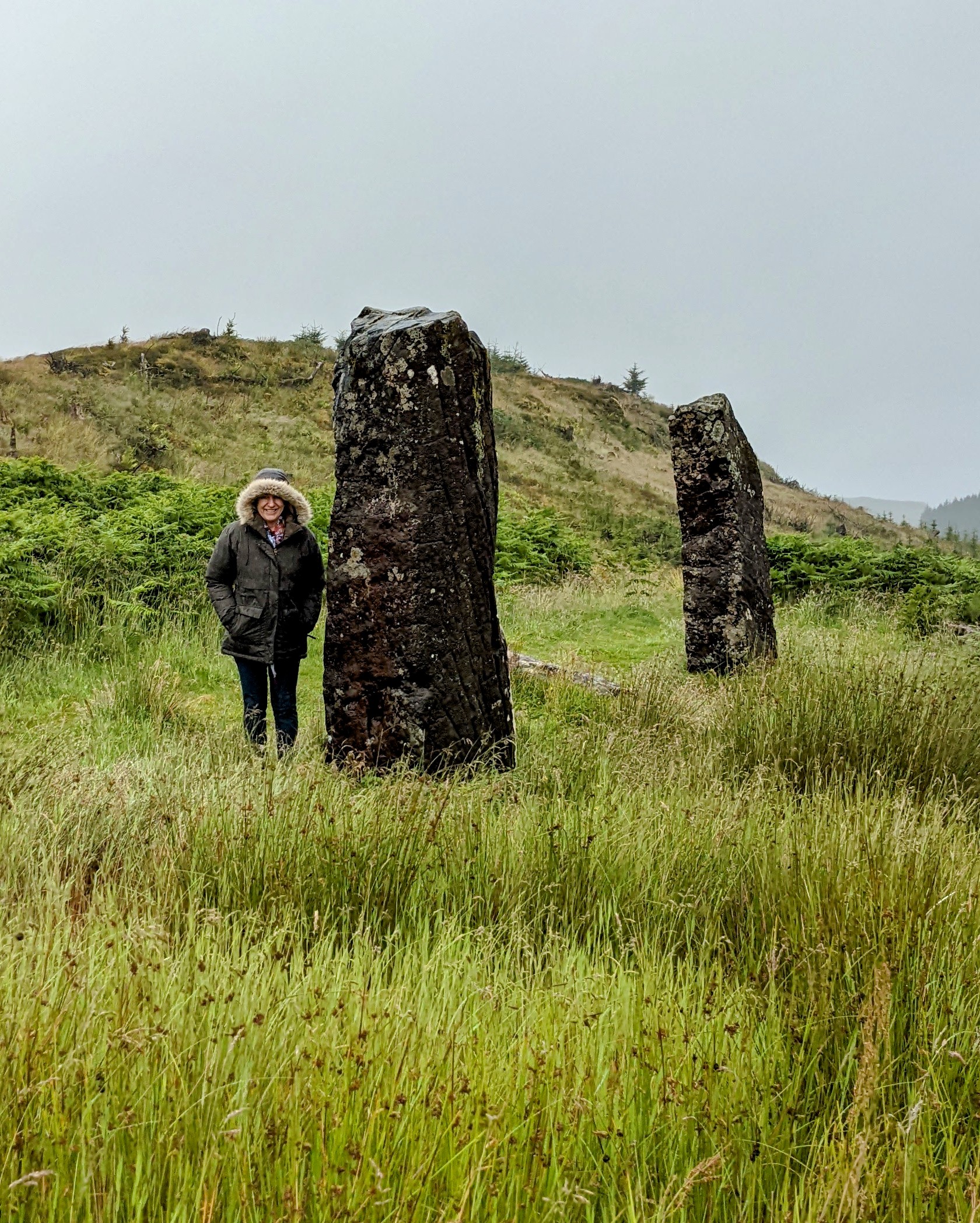
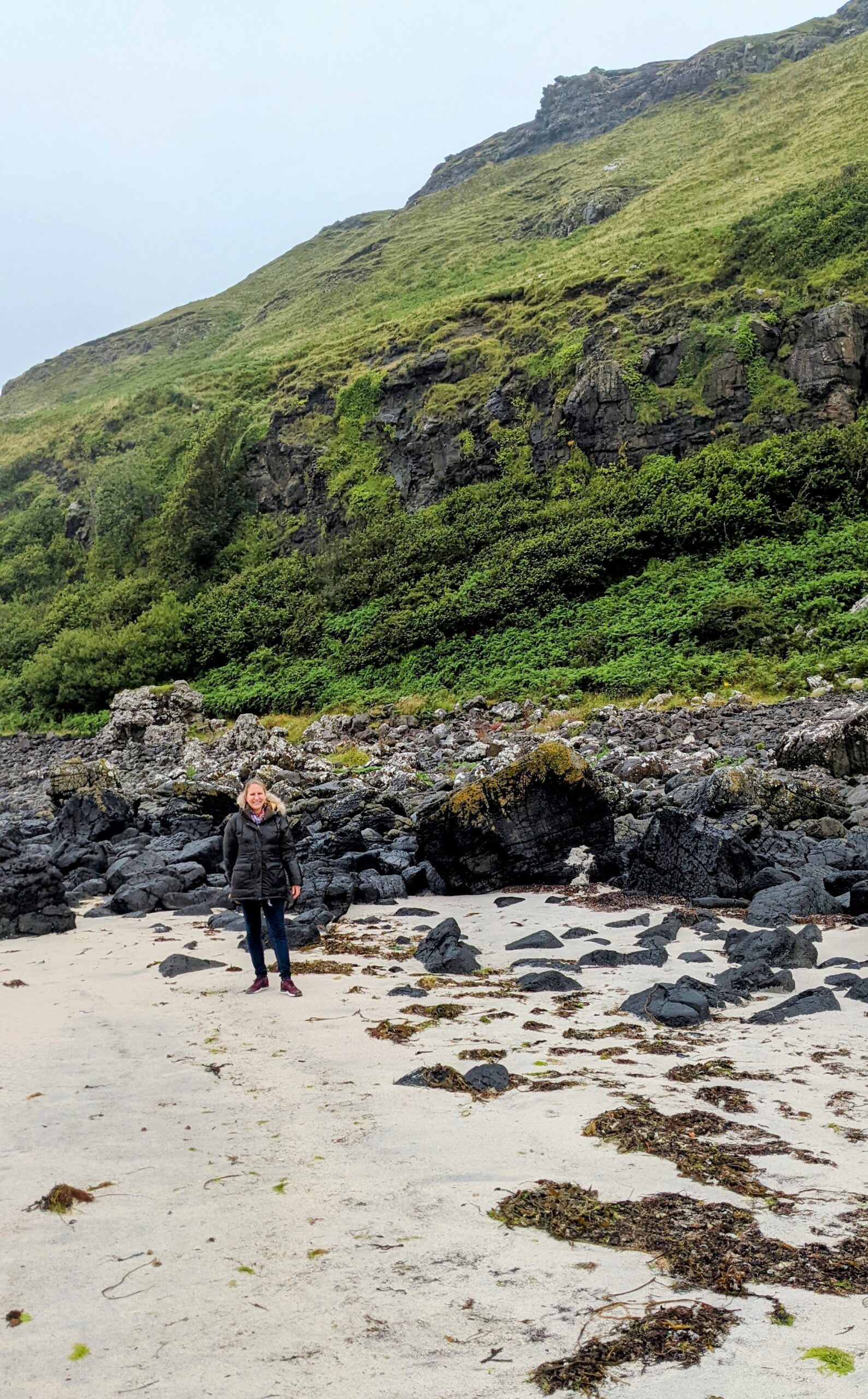
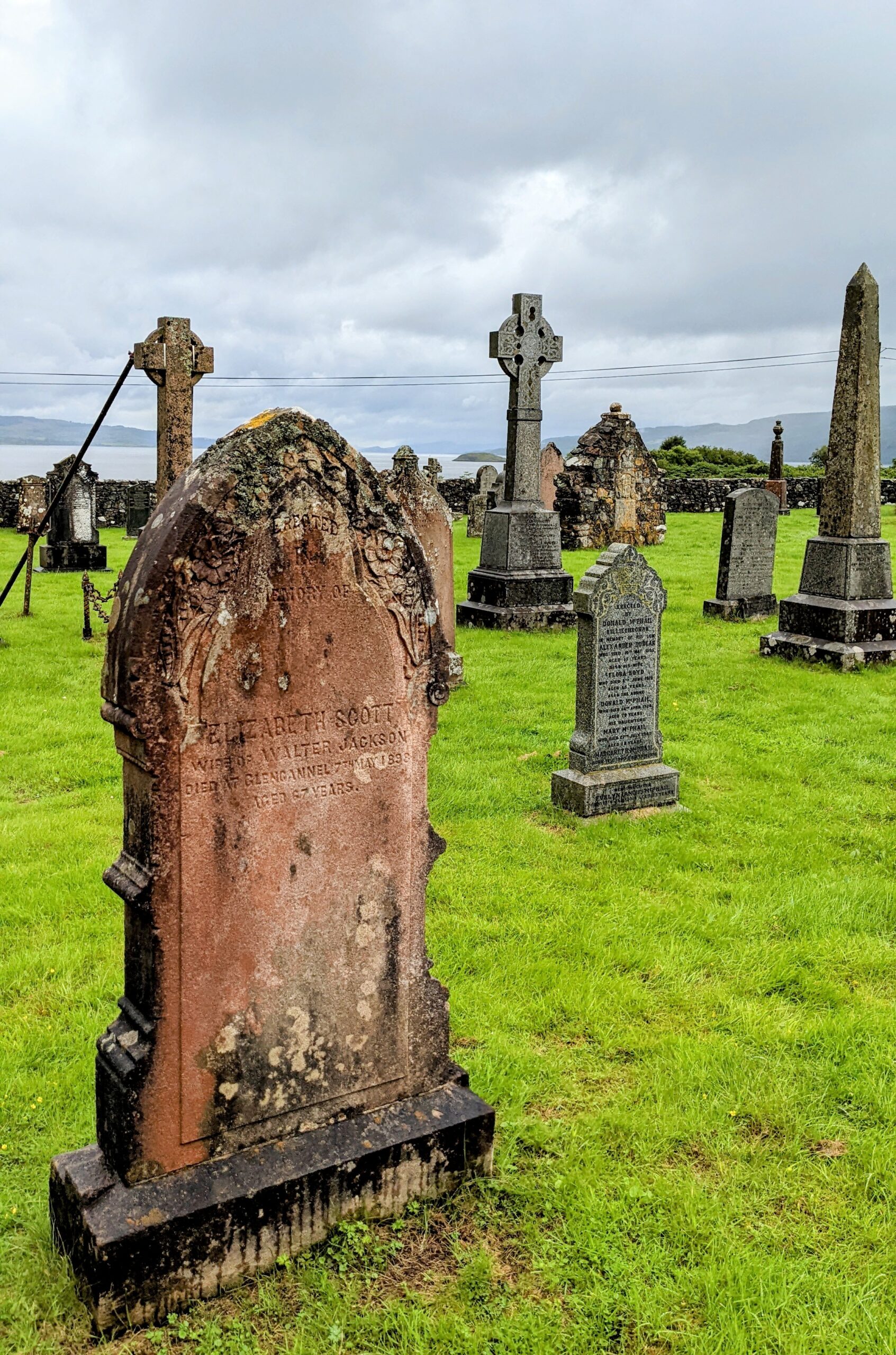
Over the next few hours, as it alternately drizzled and poured, we hiked out to the remains of some ancient standing stones; found a very remote little art gallery; wandered around a lonely beach called Calgary overlooked by an old mansion; and had to push our way through another gang of cheeky sheep. We were amazed to find that no matter how far out we got, there was still an occasional house—and incredibly, a few advertising as B&Bs. And we thought we were adventurous overnighting in Tobermory!
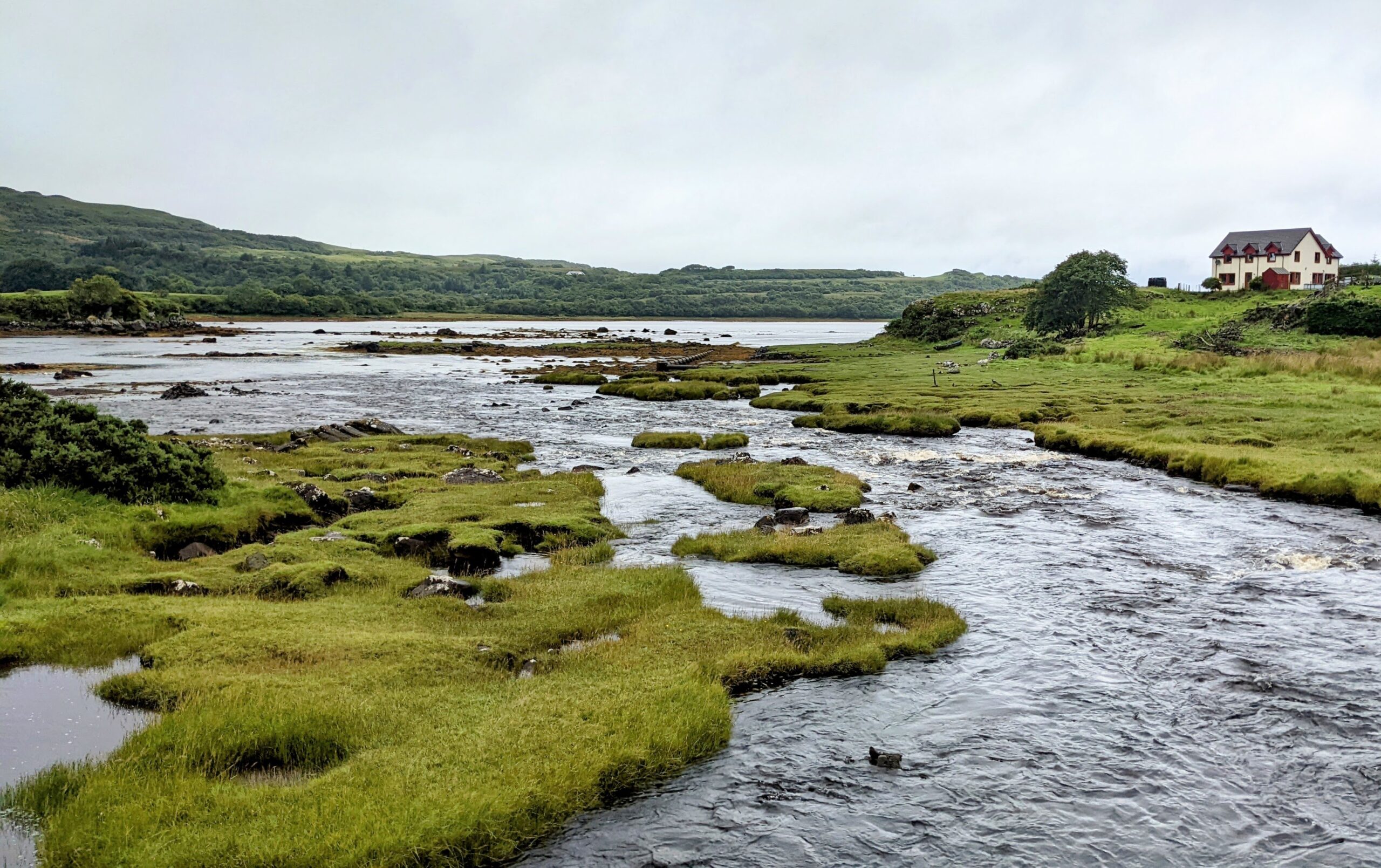
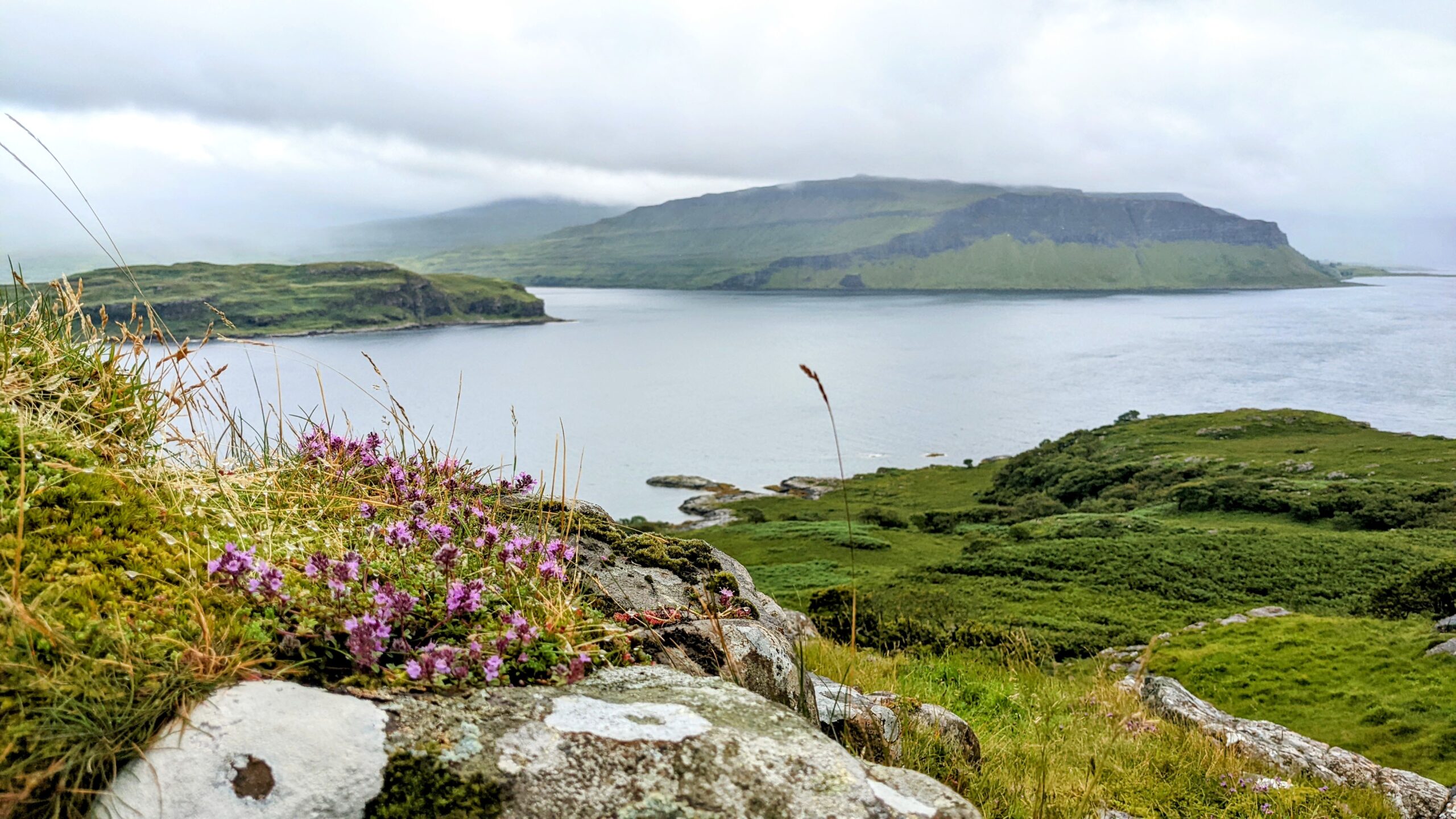
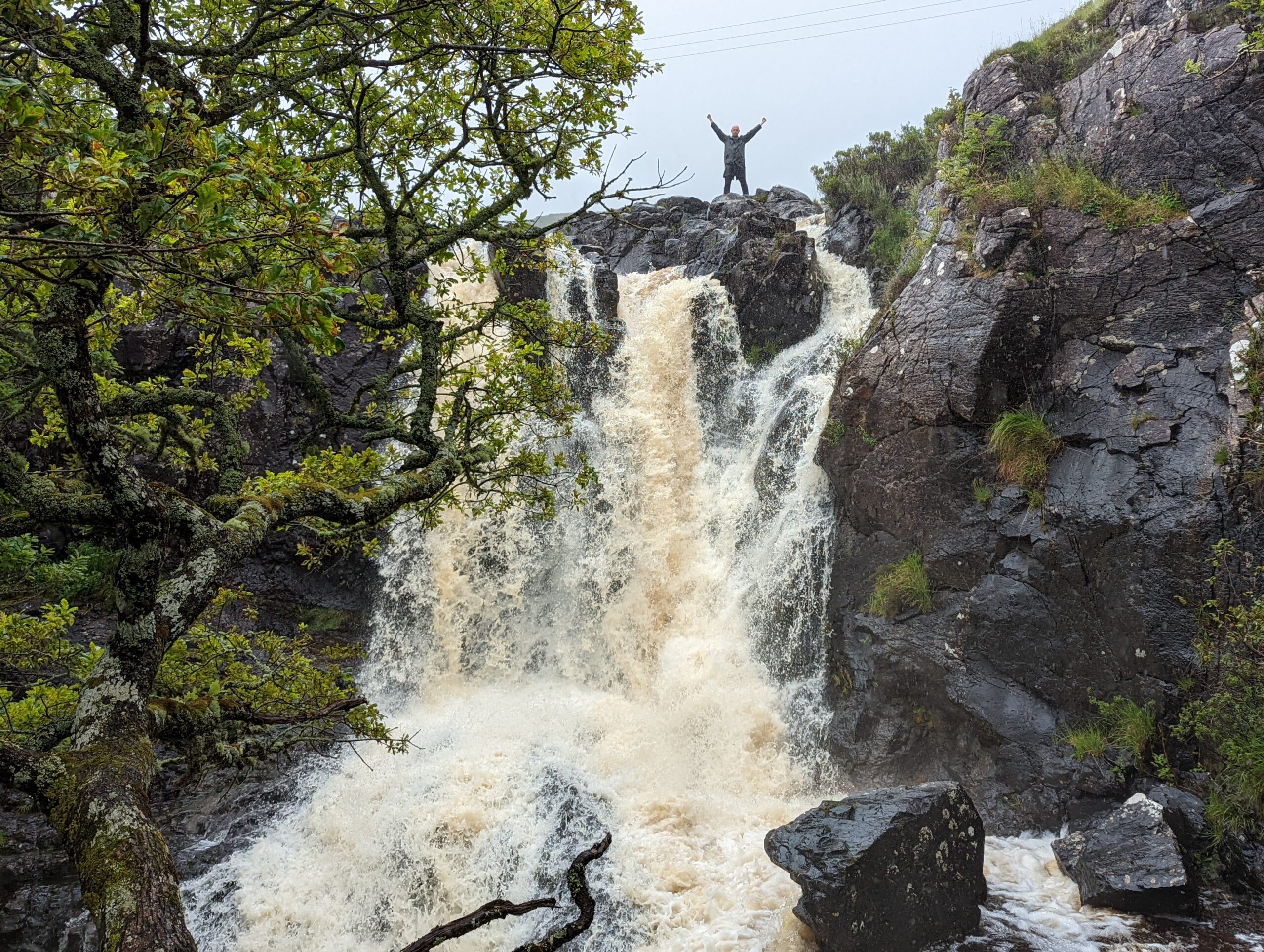
Our favorite stop was a waterfall right next to the road called Eas Fors, an exhilirating, muddy torrent thanks to all the rain. Griffin and I couldn’t resist scrambling up the muddy hill in our raincoats so that we could see it from the top. We were well past the halfway mark of our loop by now, and the road actually started to get better…suggesting that we were approaching civilization once again. I wish I could say that the views along our drive had been stunning, but much of the time, we seemed to be driving through a cloud. Luckily, things finally cleared up enough for us to get a jaw-dropping view across Loch Na Keal, a large inlet that nearly slices the island in half, with a backdrop of Ben More, the island’s tallest mountain at over 3,000 ft. Wow. So this is the scenery that made Mull famous. And surely even more spectacular on a nice day.
It was quite a relief to finally make it back to the main road on the east side of the island. We celebrated by stopping for a late lunch at an adorable little cafe in the tiny settlement at the junction. Our last stop on Mull was a brief hike that turned out to be a wash—literally. I had hoped to stroll along a small forested stream, but the forest around it had recently been felled for timber, and it started raining so hard that we gave up and ran back to the car. Waterlogged and exhausted from all the white-knuckled driving, I decided to skip our last stop, Castle Duart (though in retrospect, I sorta wish we’d dropped by).
This put us ahead of schedule for once, as our ferry off the island didn’t depart for another hour, but I drove to the small roadside terminal anyway to see if we might catch an earlier one. Before we could even ask, they waved us onto a waiting boat, closed the gate behind us, and moments later, we were on our way. This was a much larger and nicer ferry than any we had been on so far, and we were directed to exit our car and spend the forty minute journey in a spacious but crowded upstairs seating area. About the only thing I remember from that journey was sitting across from a pair of boys and their father. At one point, the youngest one pointed at my chin and asked in the most adorabe Scottish brogue you ever heard: Daddy, why does that man have such a tiny beard?
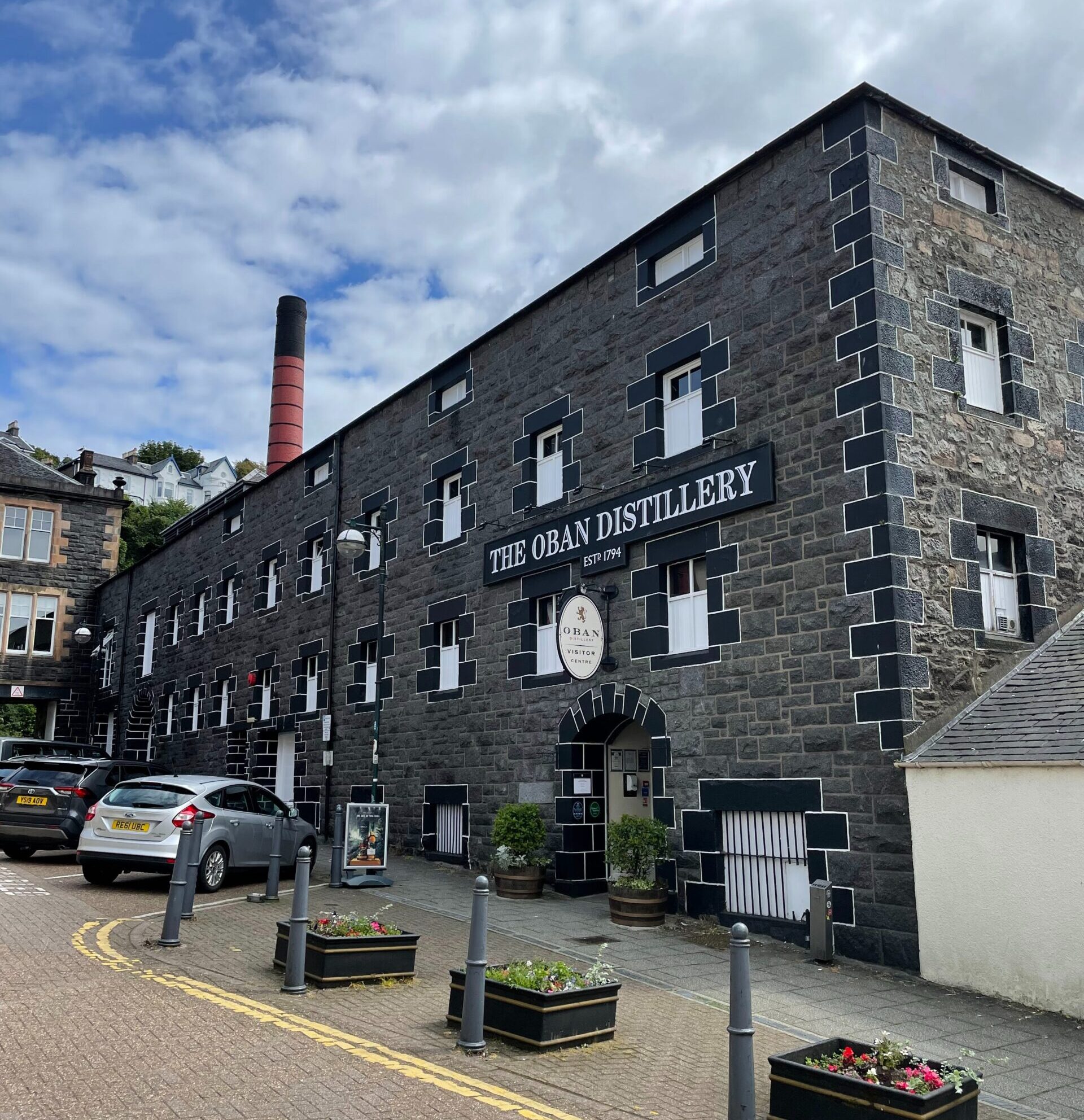
Even though the sun was still high in the sky, it seemed much later than 4:30 when our ferry pulled into Oban. It’s a small town on the southwest coast of the Scottish mainland, home to some 8,500 souls. But as the main ferry port for the Inner and Outer Hebrides Islands, of which Mull is one, Oban doesn’t feel as sleepy as a town this size should. I knew it as the home of the Oban Distillery, maker of one of my favorite single malts. Of course, once again, I had been too late to book a distillery tour, and it was already closed for the day when we popped by. I was getting tired of this routine!

Photo by Ray in Manila on Pixabay
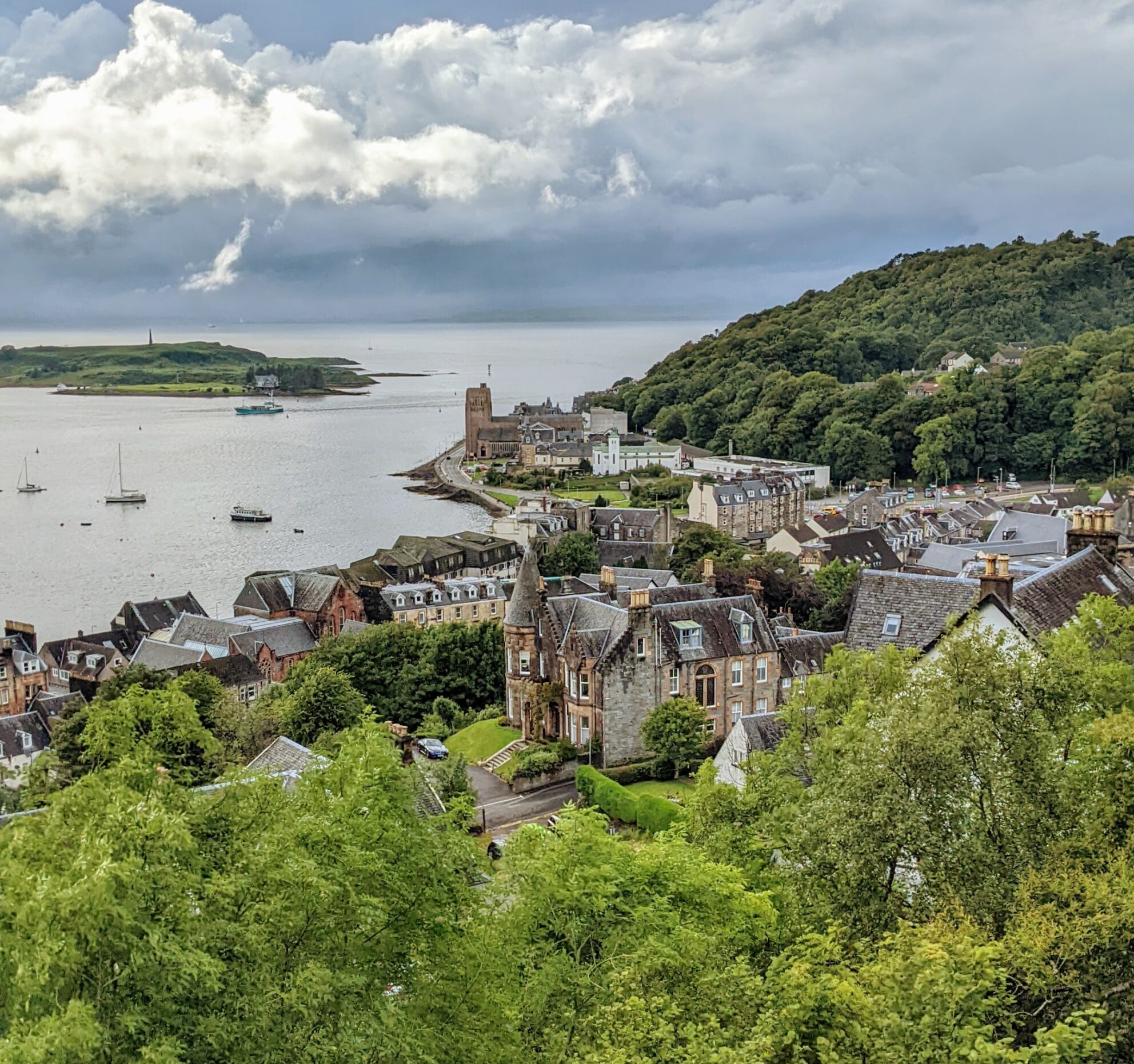
After checking into our rather shabby apartment (again, the only thing I could find), we spent a couple hours wandering around the charming old Victorian downtown, Griffin and Amy mostly playing by the sea while I hiked up to one of the city’s landmarks, McCaig’s Tower. For dinner, we made our first trip to a fish & chip joint, where I felt compelled to try their vegan haggis. What is haggis, you ask? An iconic Scottish delicacy consisting of a sheep’s stomach stuffed with its heart, liver, and lungs, plus some suet, onions, oatmeal, and spices, of course. A rather resourceful dish, and (most) Scots insist (almost convincingly) that it’s delicious. Whatever the vegan version was made from (all I could identify were the oats), it was a bit bland. But the chips were good.
Oban to Glasgow
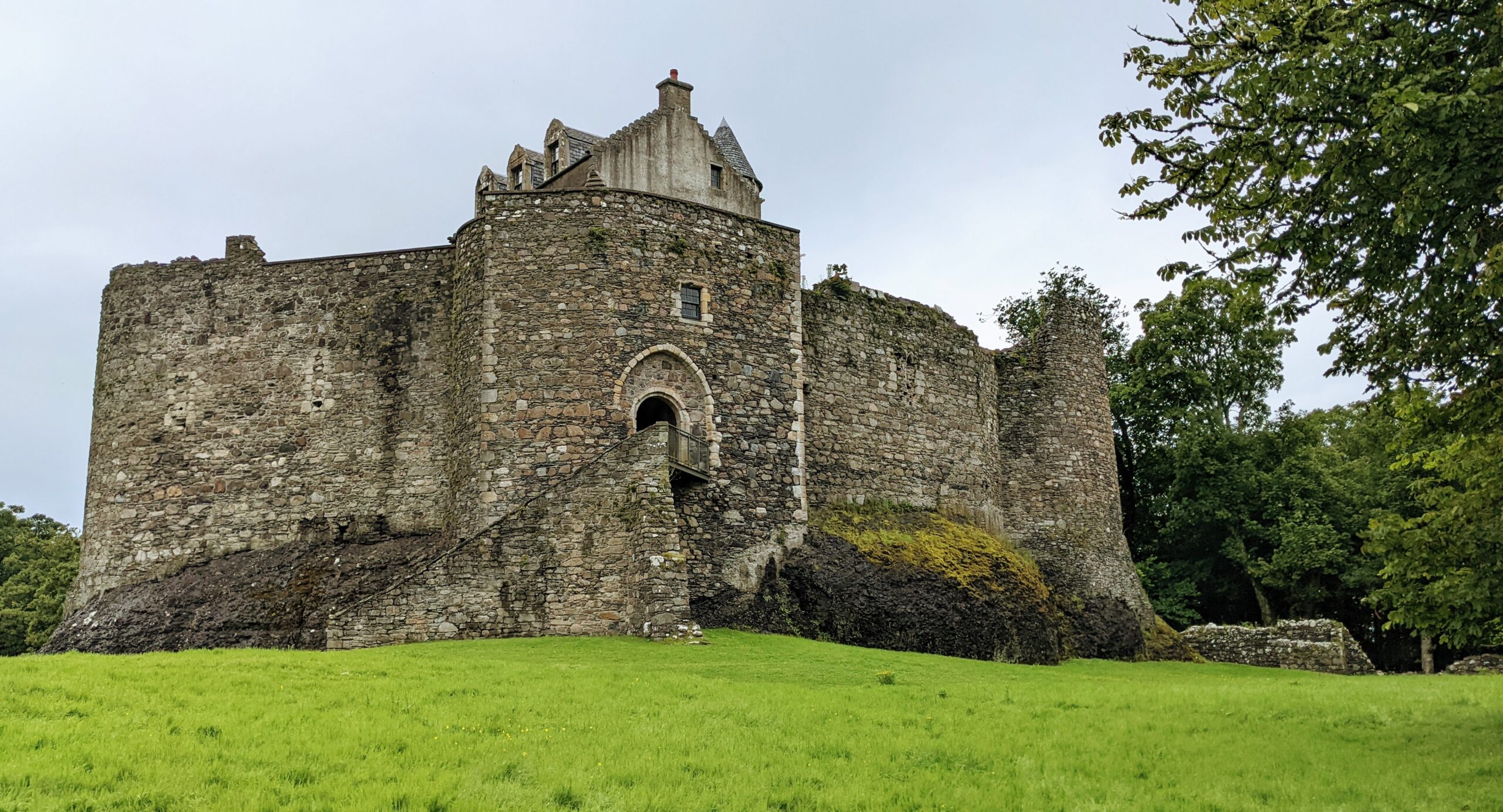
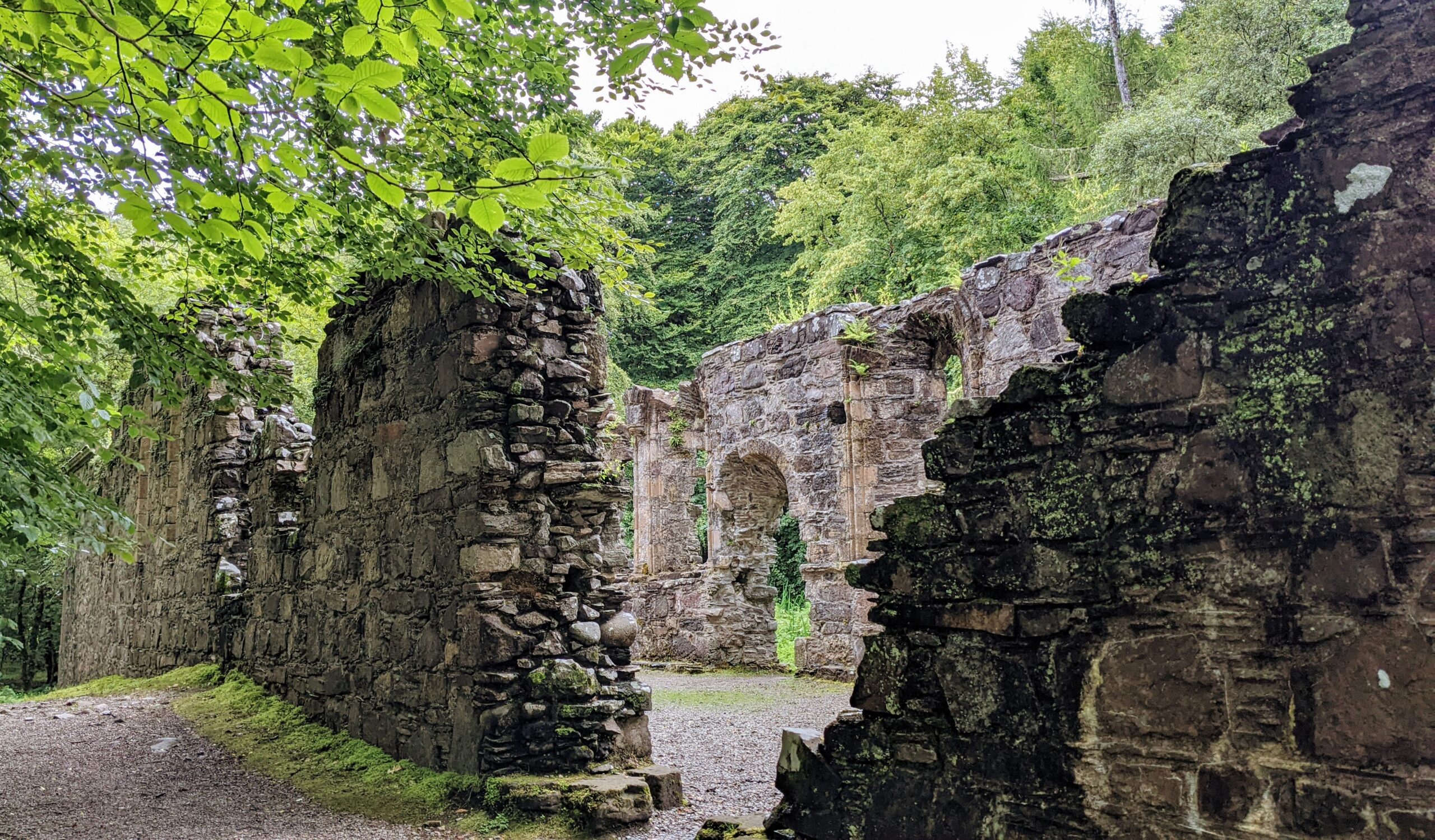
We were down to the last day of our marathon driving tour, and I had planned an itinerary as ambitious as any yet. We decided not to linger in Oban and headed north to one of Scotland’s oldest and most well-known castles, Dunstaffnage. Built in the 13th century atop a large rock at the entrance to Loch Etive, it was once a fearsome fortress. The builders, Clan McDougall, were descendants of Vikings, but after choosing the wrong side in some important conflicts, the castle soon ended up in the hands of powerful Clan Campbell, who owned it until 1958. Today, most of the outer wall stll stands, as does a three-story residential tower inside, but not much else. Interestingly, the only entrance is a couple stories above ground level, accessed by a long stone ramp wrapping around the walls. We spent a good long while at Dunstaffnage (too long!), walking along the top of the walls as sentries once did, and checking out some of the interactive exhibits inside. These including some foam rubber “stones” from which you could construct your own Roman arch (upon which all of these castles heavily rely) and a cauldron, pot, and some stuffed fabric “food” so you could practice medieval slow-cooking techniques.

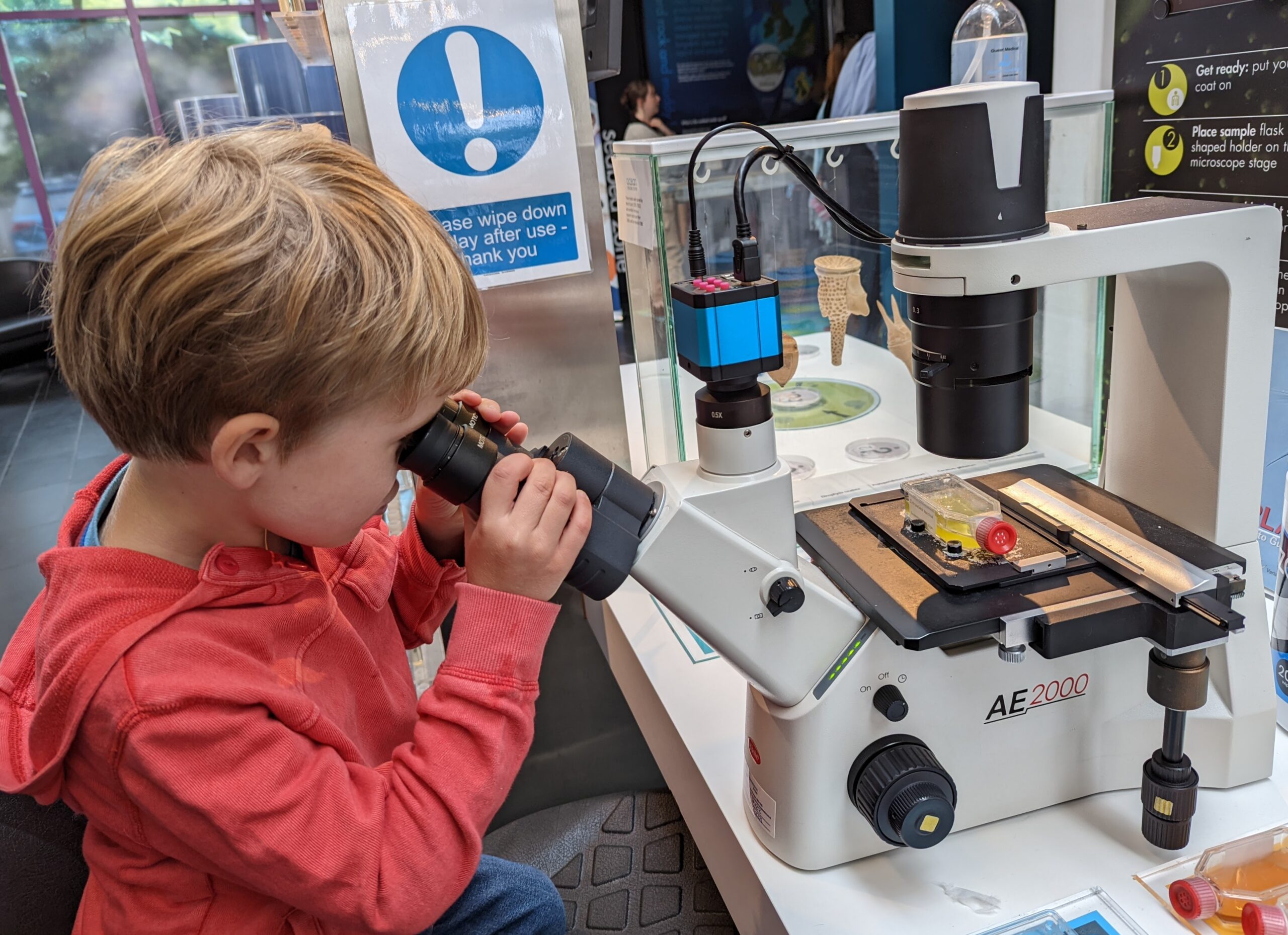
Afterwards, as it started to rain lightly, I hiked through the forest to the castle’s ruined chapel. Meanwhile, Amy and Griffin headed to a small but surprisingly high-tech “Ocean Explorer Center” nearby, where Griffin got to examine algae under a microscope and learn about ocean conservation.
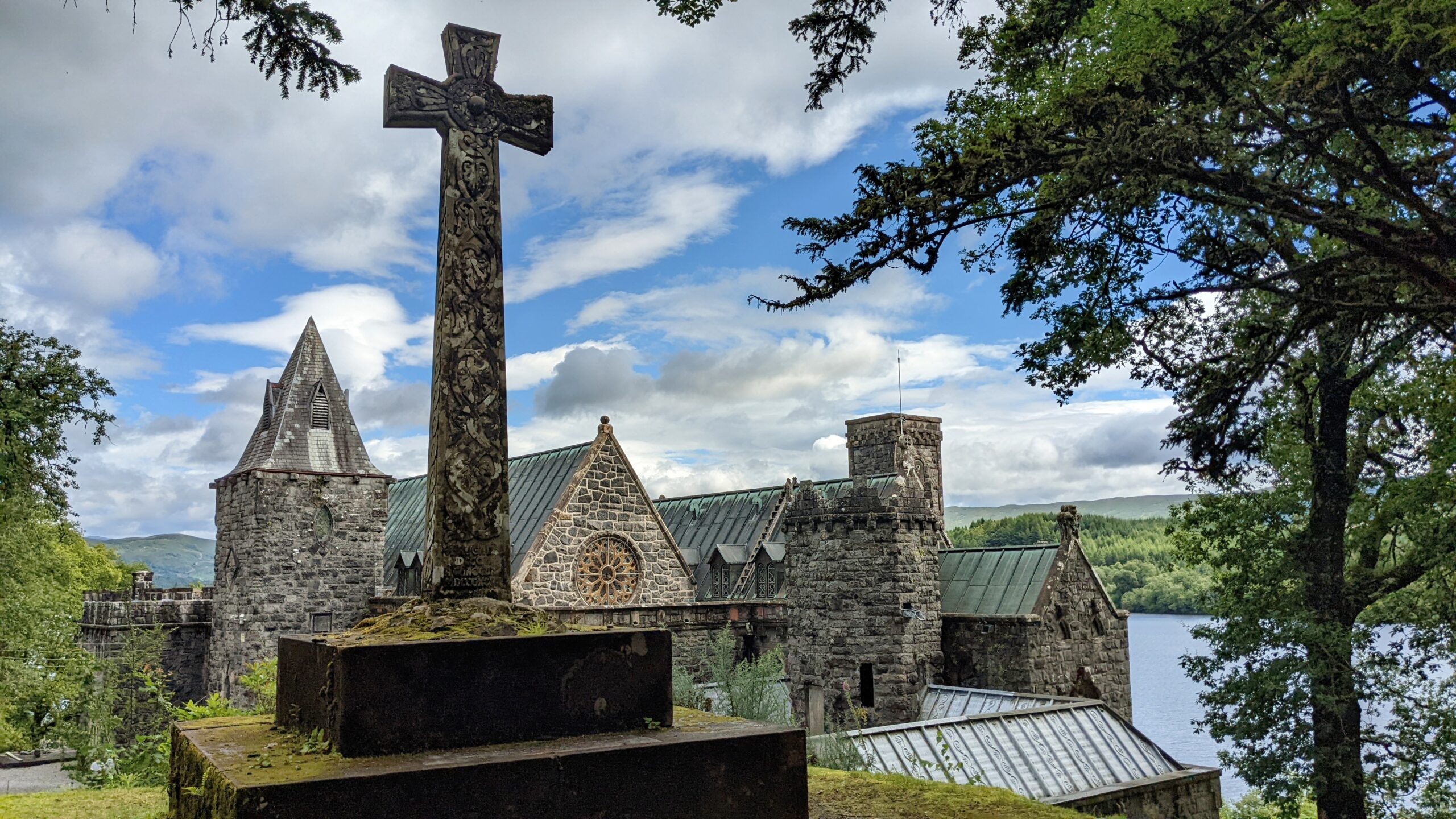
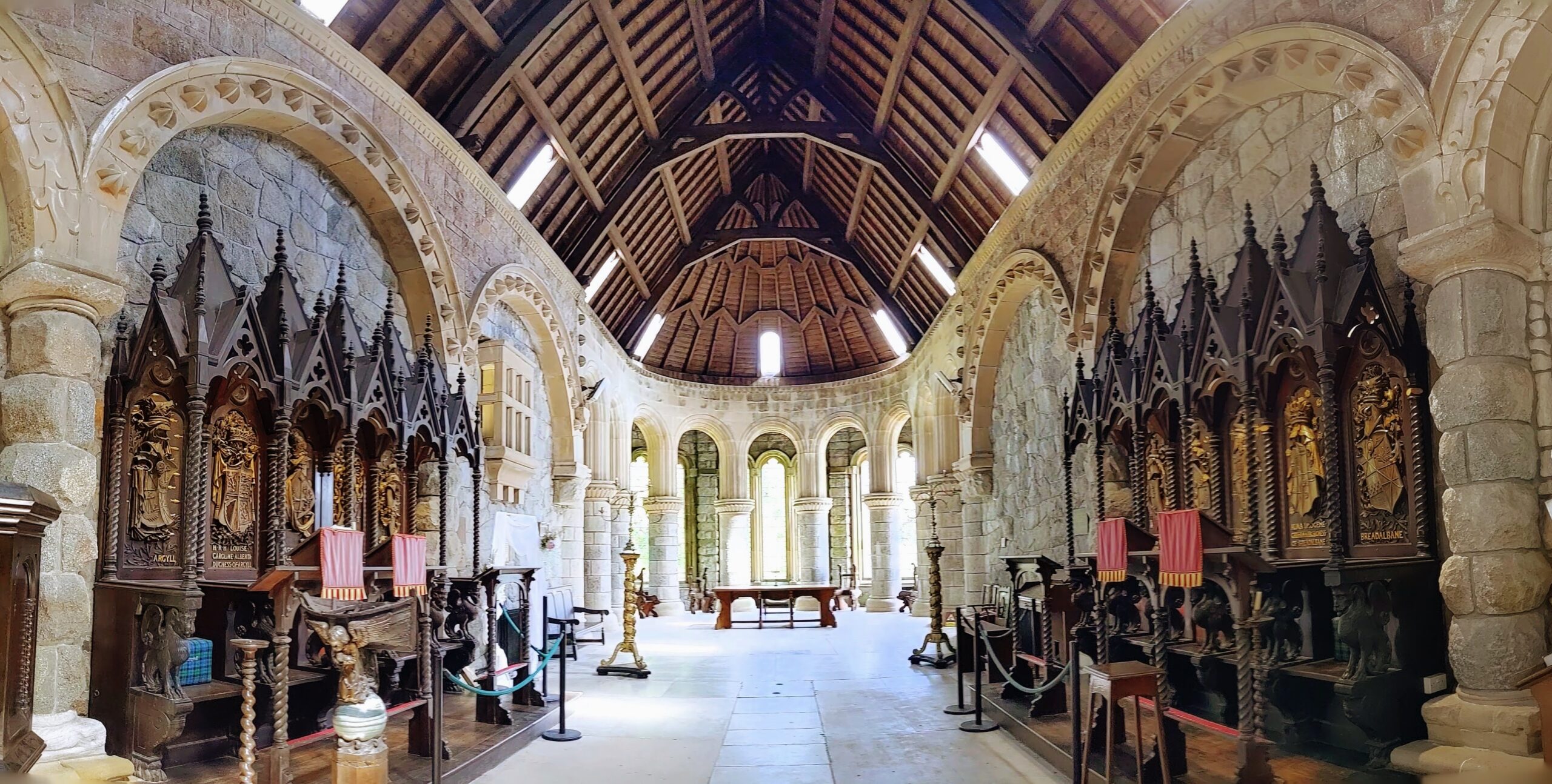
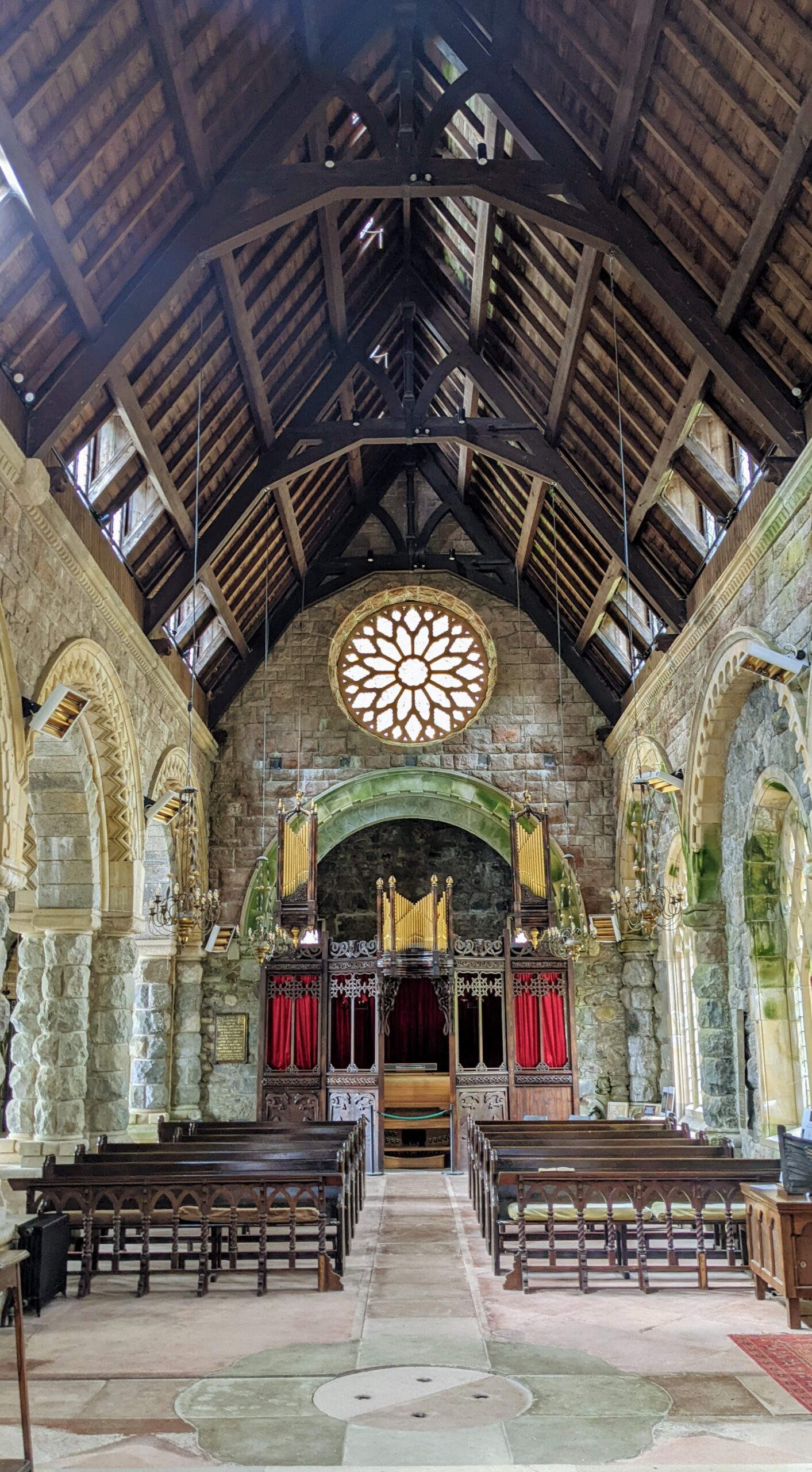
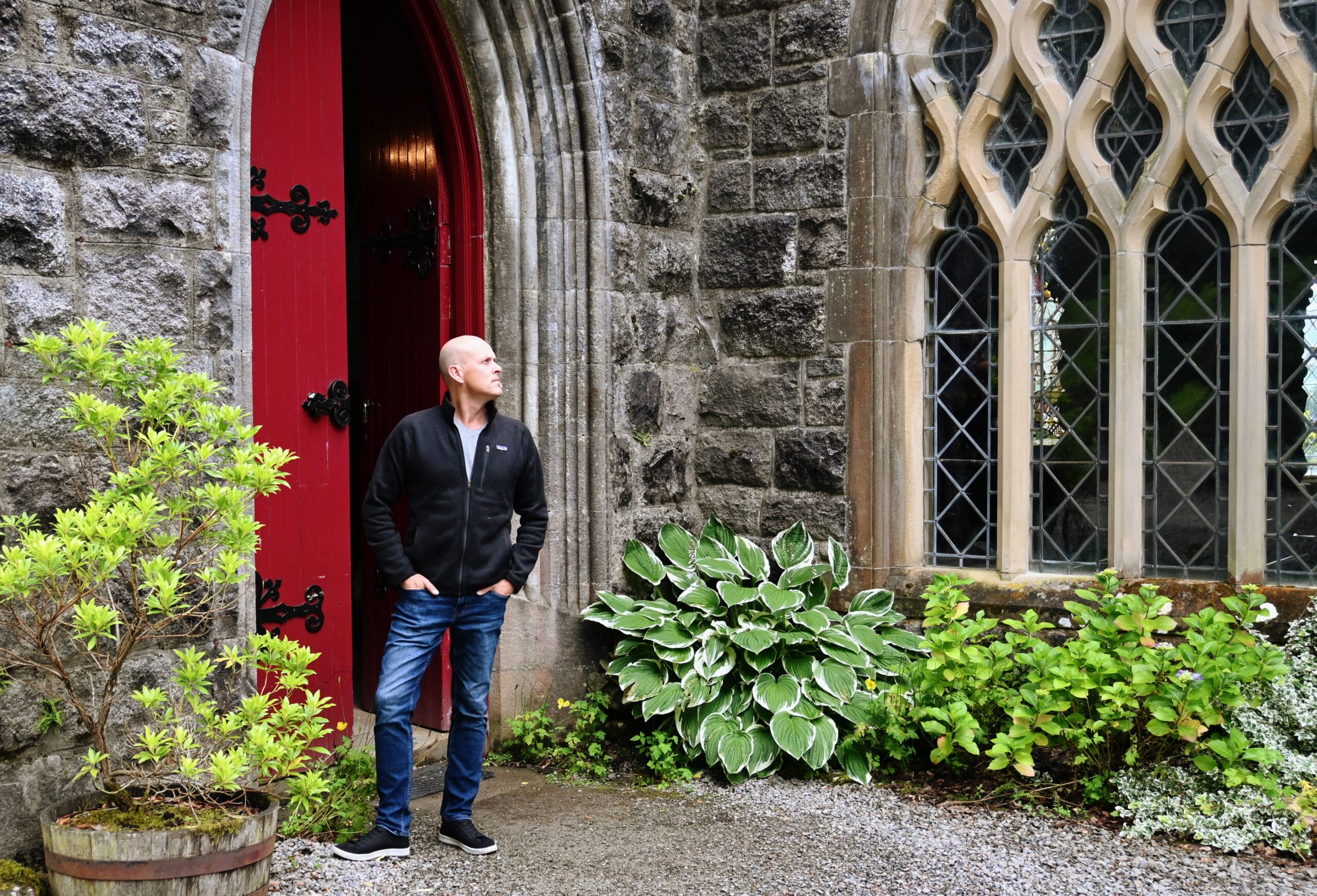
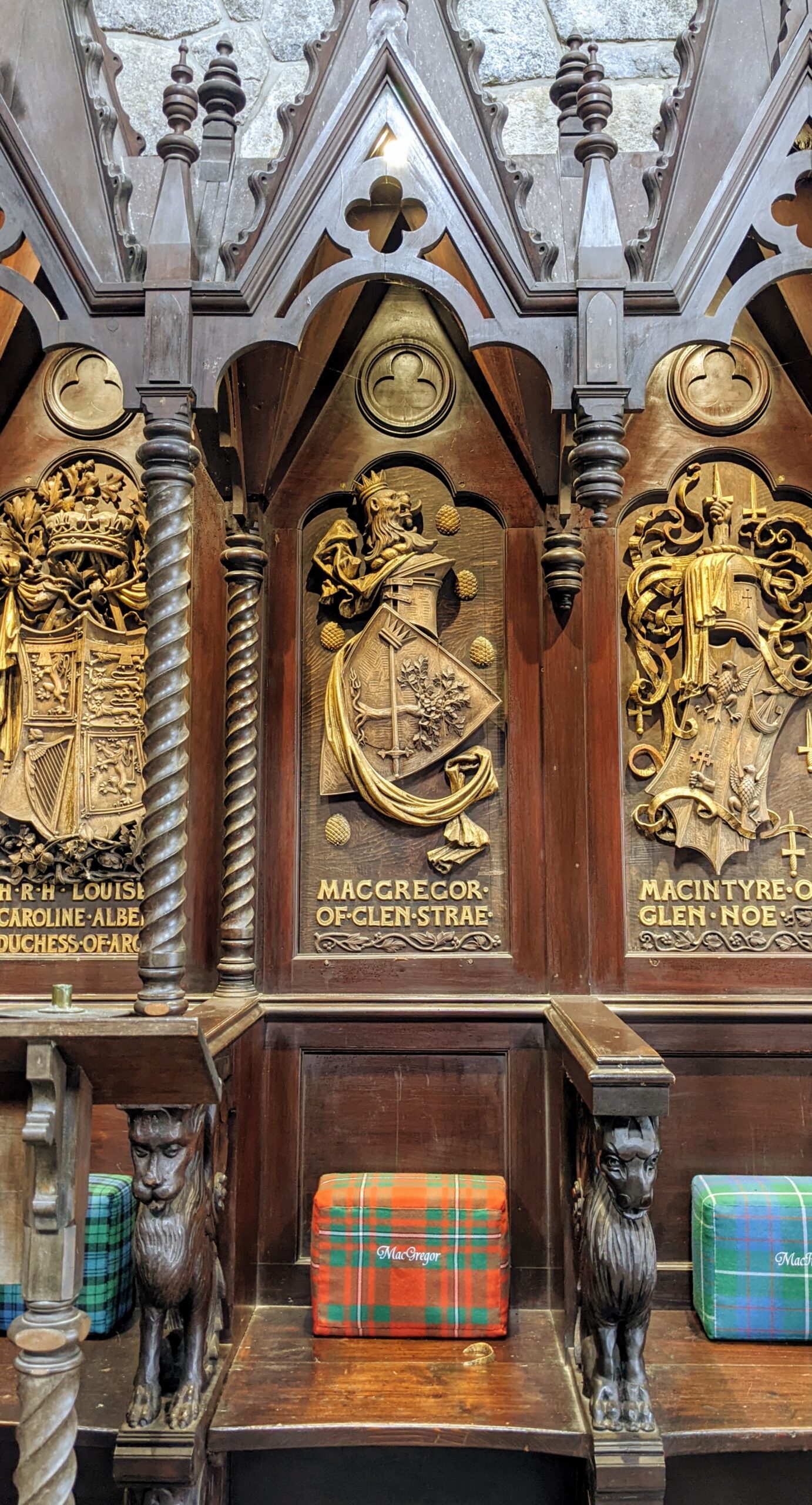
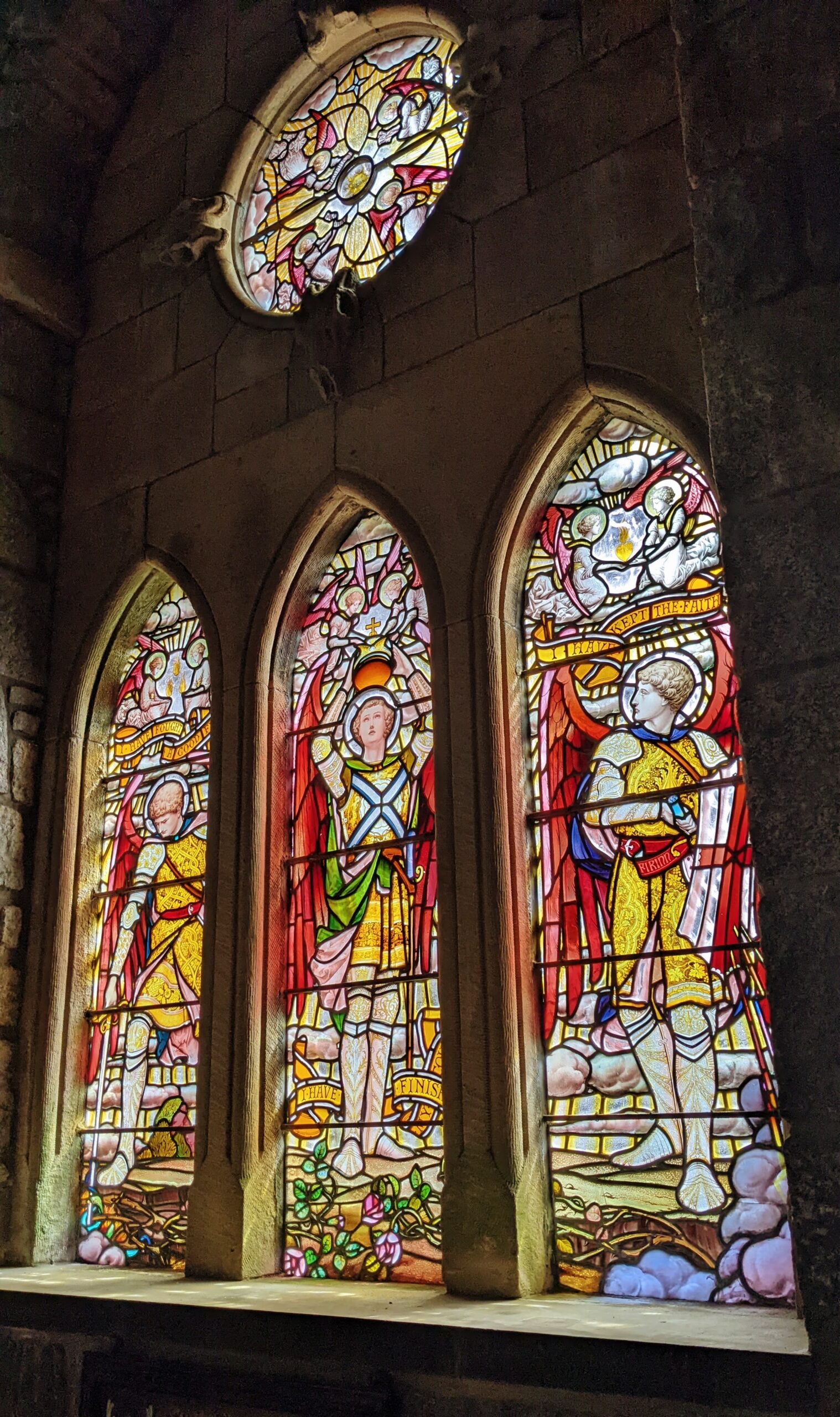
We were back on the road by noon, and now headed inland. We followed the aptly named River Awe through a narrow canyon, in the shadow of Ben Cruachan, the tallest mountain in this part of Scotland. Suddenly, the river and canyon opened up to reveal the stunning Loch Awe. We were still in Campbell country, and our first stop was at a gorgeous church built by that clan, St. Conan’s Kirk, set in a forest on the edge of the lake. Though it looked much older, we learned that it had only been started in 1881, then extended in 1914…making it almost new by Scottish standards. We’ve seen some stupendous churches and cathedrals over the past few months, but something about this intimate stone chapel was very endearing, and Amy has since declared it her favorite of the entire trip. Inside, dappled light poured through the stained glass windows, creating a serene setting. As we wandered through it, we stumbled across something remarkable: intricately carved wooden “chancel stalls” against the walls, each bearing the crest of a neighboring clan—including the MacGregors of Glen Strae. This was surprising, as the Campbells and MacGregors had been mortal enemies since at least the 16th century (though my ancestor Rob Roy had a Campbell for a mother, and used that surname when the MacGregor one was banned). But I suppose things were quite a bit more civil by the time this place was built. Regardless, this was the first indication that we were near the ancestral home of my Scottish forebears—or perhaps already in it?
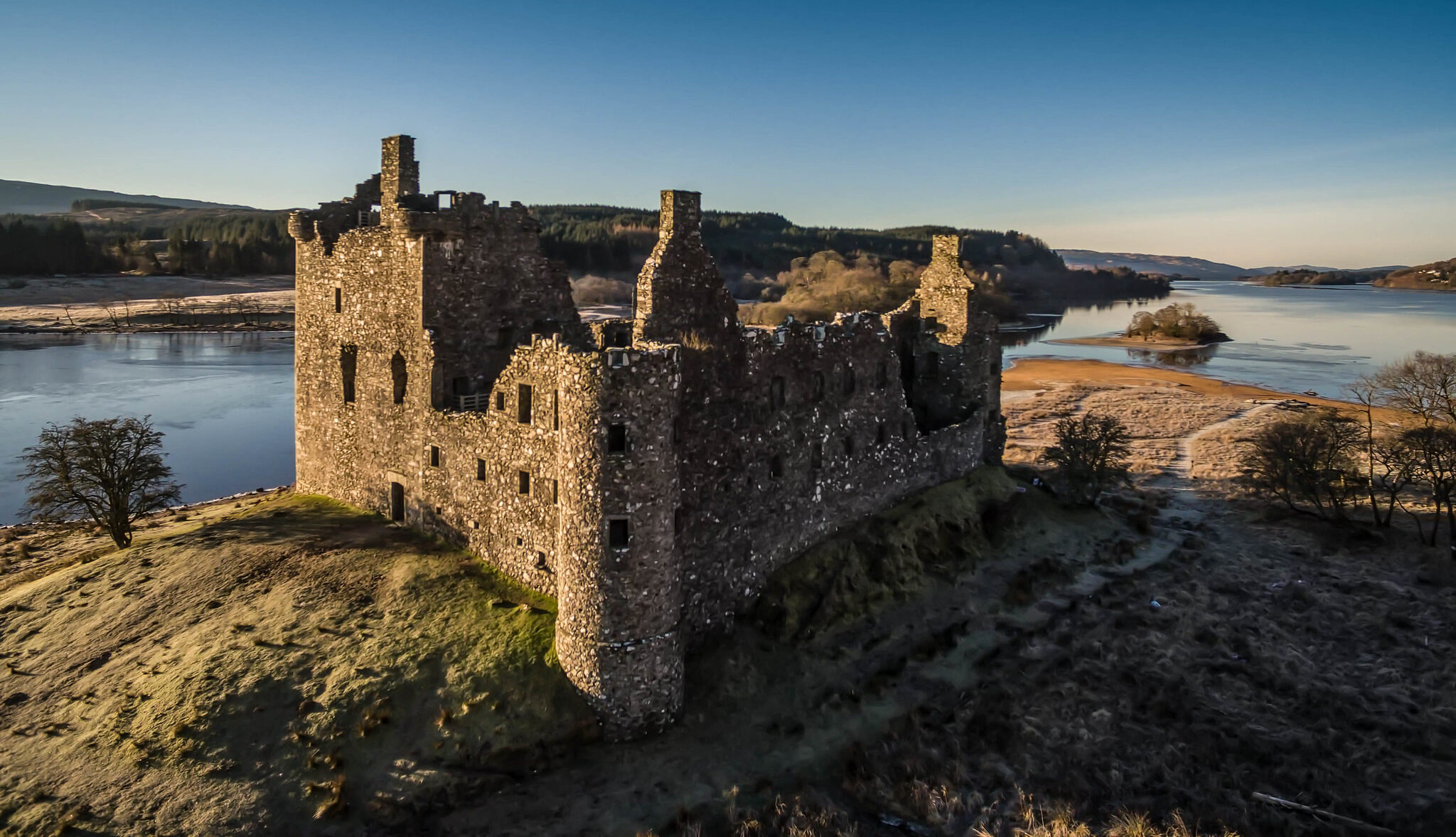
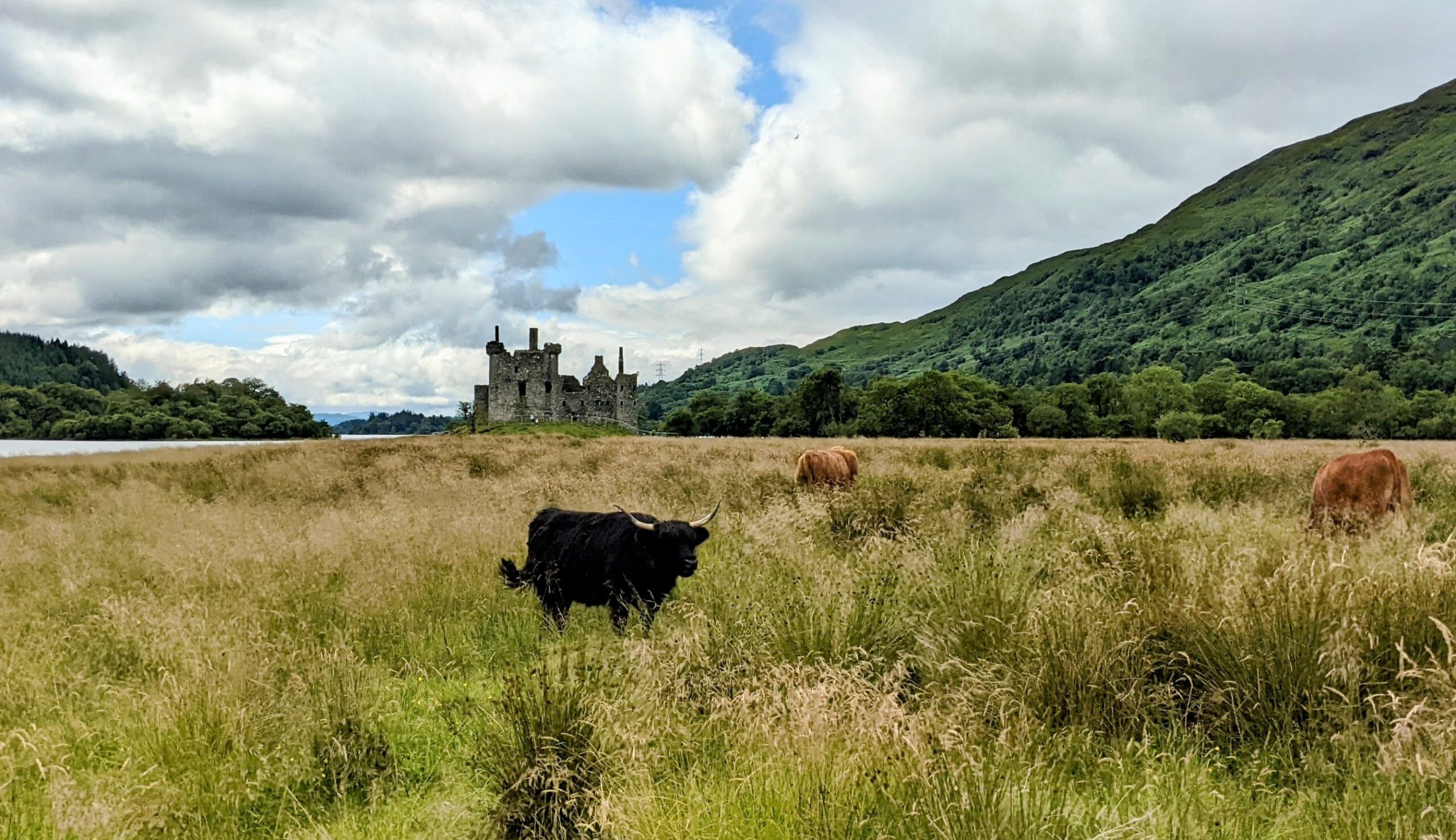
Our next stop was only a couple miles down the road: Kilchurn Castle. This was a Campbell stronghold for centuries, though some sources (including Sir Walter Scott’s epic poem The MacGregors Gathering, where it is called Coalchuirn) suggest it was originally built by the MacGregors before they were driven out of the area. Of course, we had already explored one castle that morning, and I almost skipped these ruins, especially since Google Maps says that they’re closed. But we found a large dirt car park with a few dozen cars, so we parked there too, then followed some folks along a dirt path under a railway bridge. Suddenly, there it was. Kilchurn sits proudly in the center of a broad green valley, presiding over the north end of Loch Awe. Above it, tall hills rise up into the clouds, riddled with a web of streams like you see below an alpine snowmelt. You’d be hard pressed to find a more photogenic (or photographed) fortress anywhere. It turned out to be farther away than it looked, through a field past some handsome cows who were doing a terrible job of guarding the place. Once we got closer, we found that it was in fact closed, hemmed in by some temporary fencing to prevent anybody from climbing on the dangerous ruins. Not that we had time for that anyway!

Photo by Connor Mollison on Unsplash
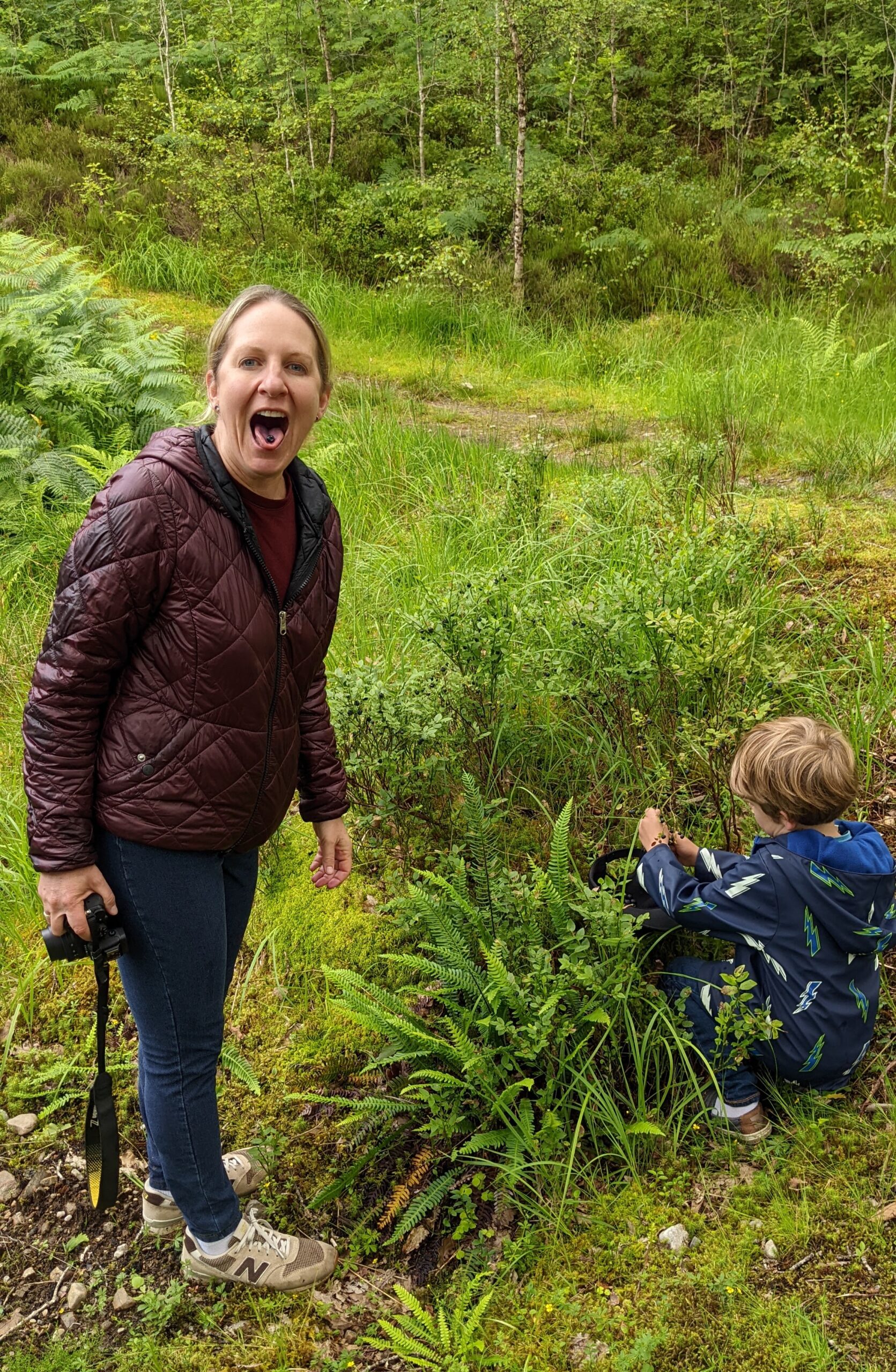
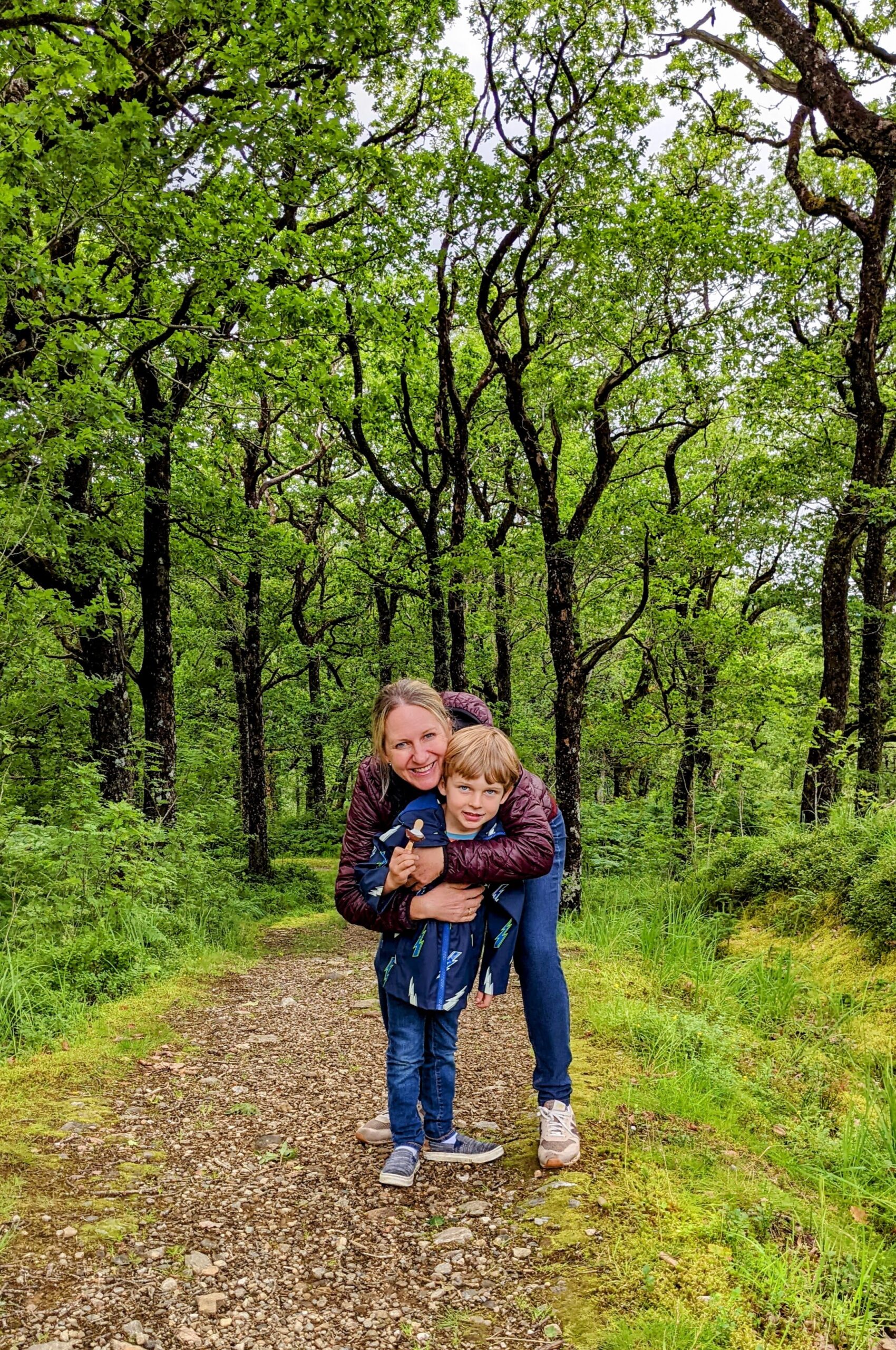
We backtracked a few miles to a classy little restaurant for an unusually delicious lunch (including a yummy pea soup), then continued down the highway. As we started climbing out of the valley into the trees, I found our next stop: an empty and nondescript forestry service car park (Strone Hill). I figured we should get in at least a little hike today, especially since the weather had gotten much nicer. As we trotted off down the forest trail, it was Griffin (ever observant, but also with a lower vantage point) that noticed that amongst the ferns all around us were bushes covered with fat berries. They were everywhere! A quick Google search convinced us they were bilberries (known as blaeberries in these parts), and we decided to try some. They were delicious, and as no convulsions ensued, we picked a bunch more to take home. Who knew the Scottish forest was so generous—and edible? Meanwhile, we soon found our way down to the River Lochy—a lovely, vigorous little stream which cuts through the forest and eventually empties into Loch Awe.
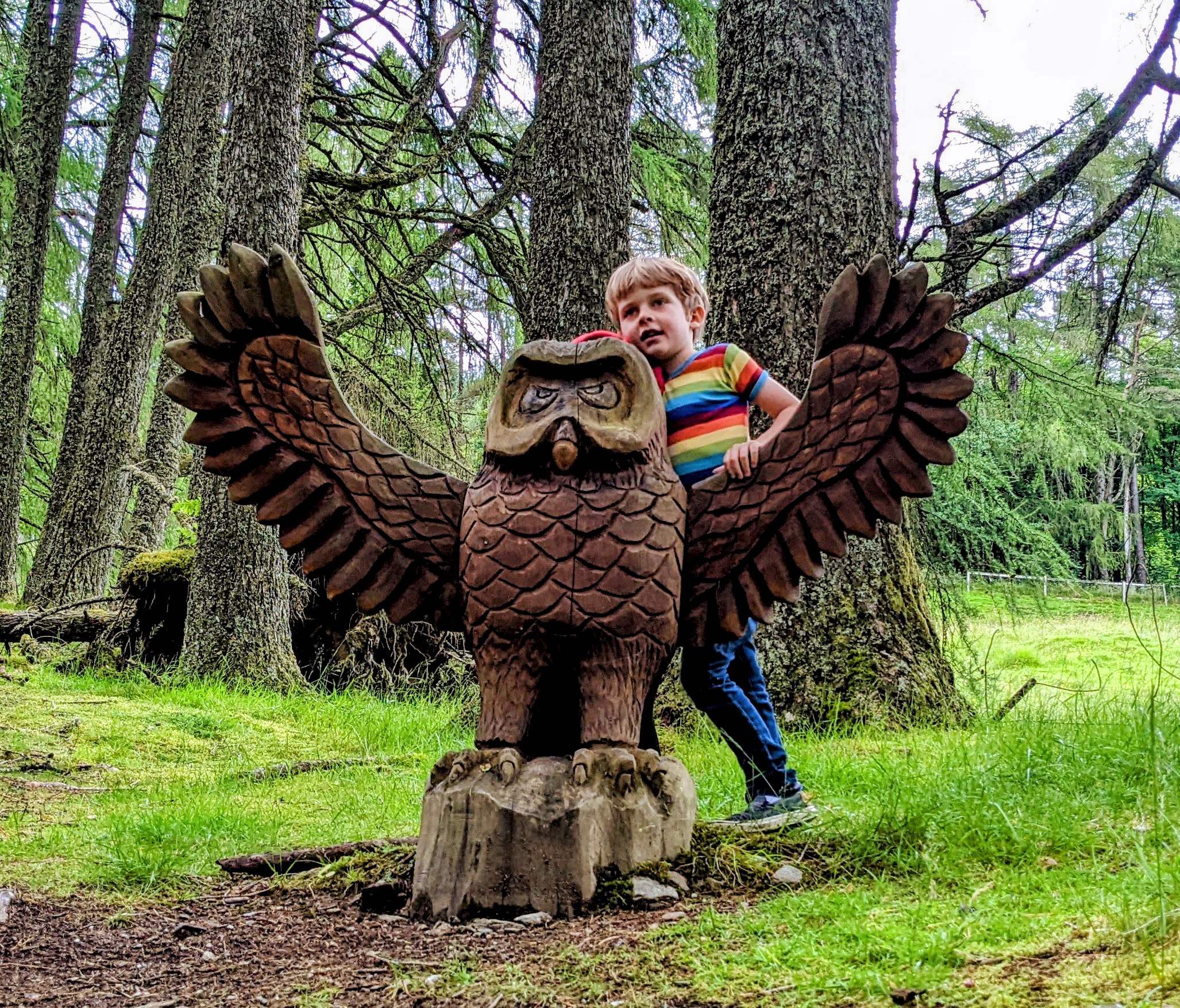
Back in the car, we followed that river and the railway higher and higher to a bit of a mountain pass, then descended into a unremarkable little town called Tyndrum. Here I pulled off again to try to find something obscure I had noticed on the map: the Tyndrum Gruffalo Trail. Most anybody with kids knows the adorable Gruffalo book series, which has also been made into some equally adorable animated films (with the voices of James Corden, Helena Bonham Carter, Robbie Coltrane, John Hurt & Tom Wilkinson). They’re some of Griffin’s favorites. Well, seems that someone up in Tyndrum is a fan too, and they’ve gone to a rather incredible amount of work to carve life-size wooden models of the characters from these stories, which we found scattered along a small forested trail a little ways off the road. But we couldn’t linger long, because the Scottish weather had once again turned and it was starting to pour.
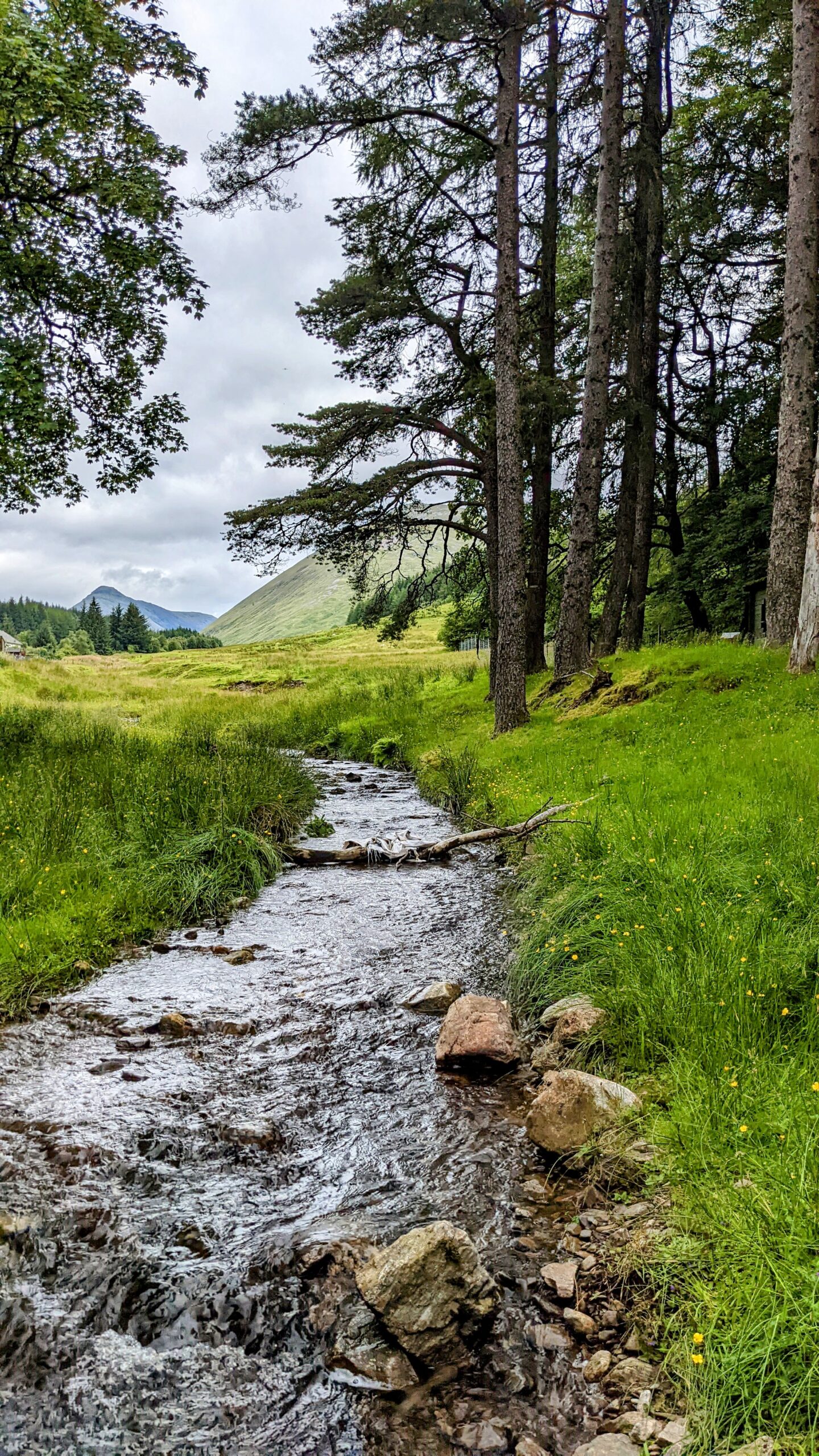
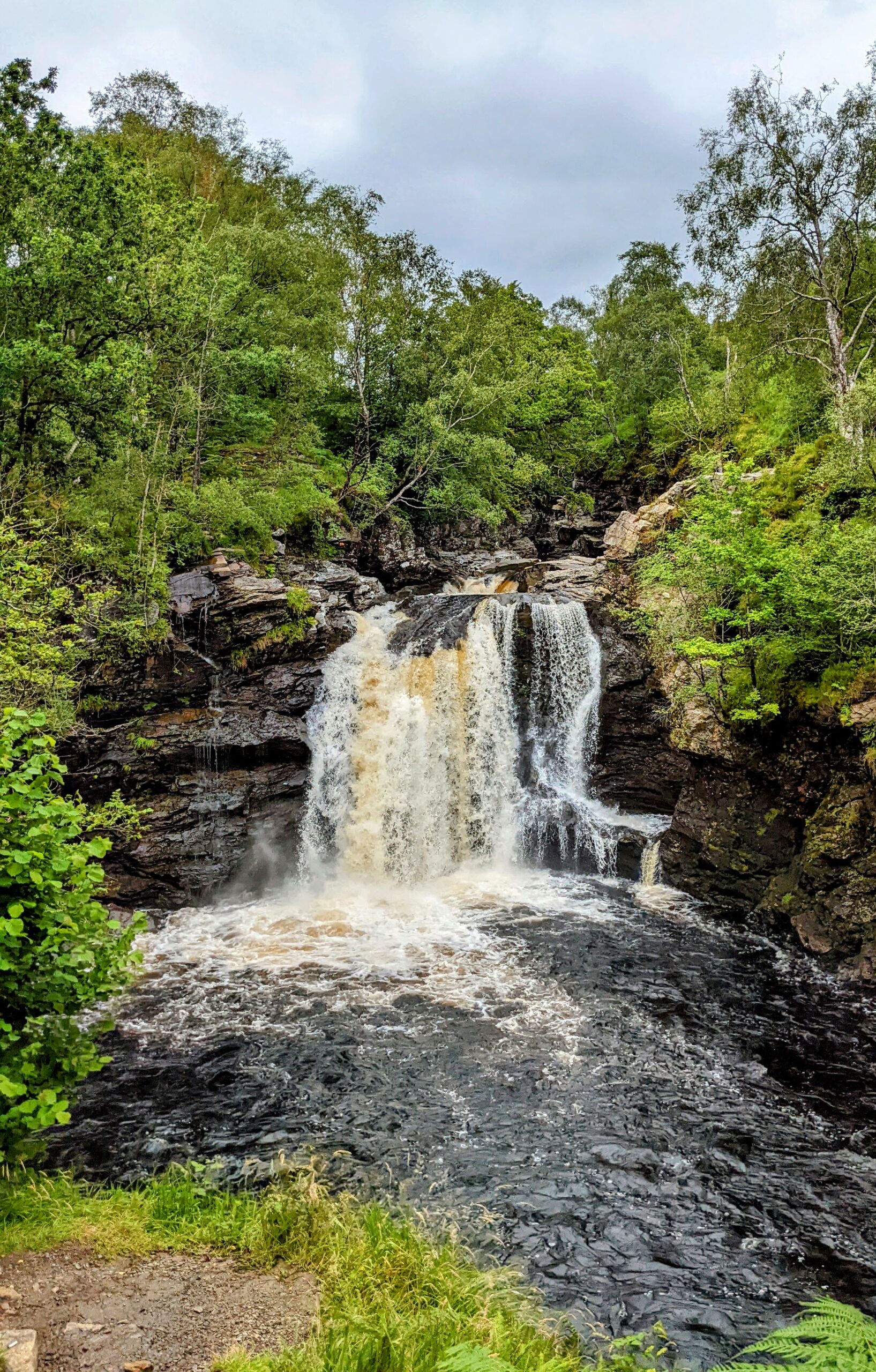
We had just entered the northern end of Scotland’s first national park, Loch Lomond and The Trossachs, a rugged and scenic area that also marks the southwestern edge of the Scottish Highlands. The scenery didn’t disappoint. But by now, we were well behind schedule (oh, my ambitious schedule) and Amy and Griffin were getting tired and cranky, so I had to pick up the pace. When I tried to stop at a small waterfall just off the road (the Falls of Falloch), Griffin wouldn’t even get out of the car, so we locked him in there while we hiked a few minutes to the waterfall and snapped some photos. (Amy suddenly decided he’d been kidnapped and ran all the way back!)
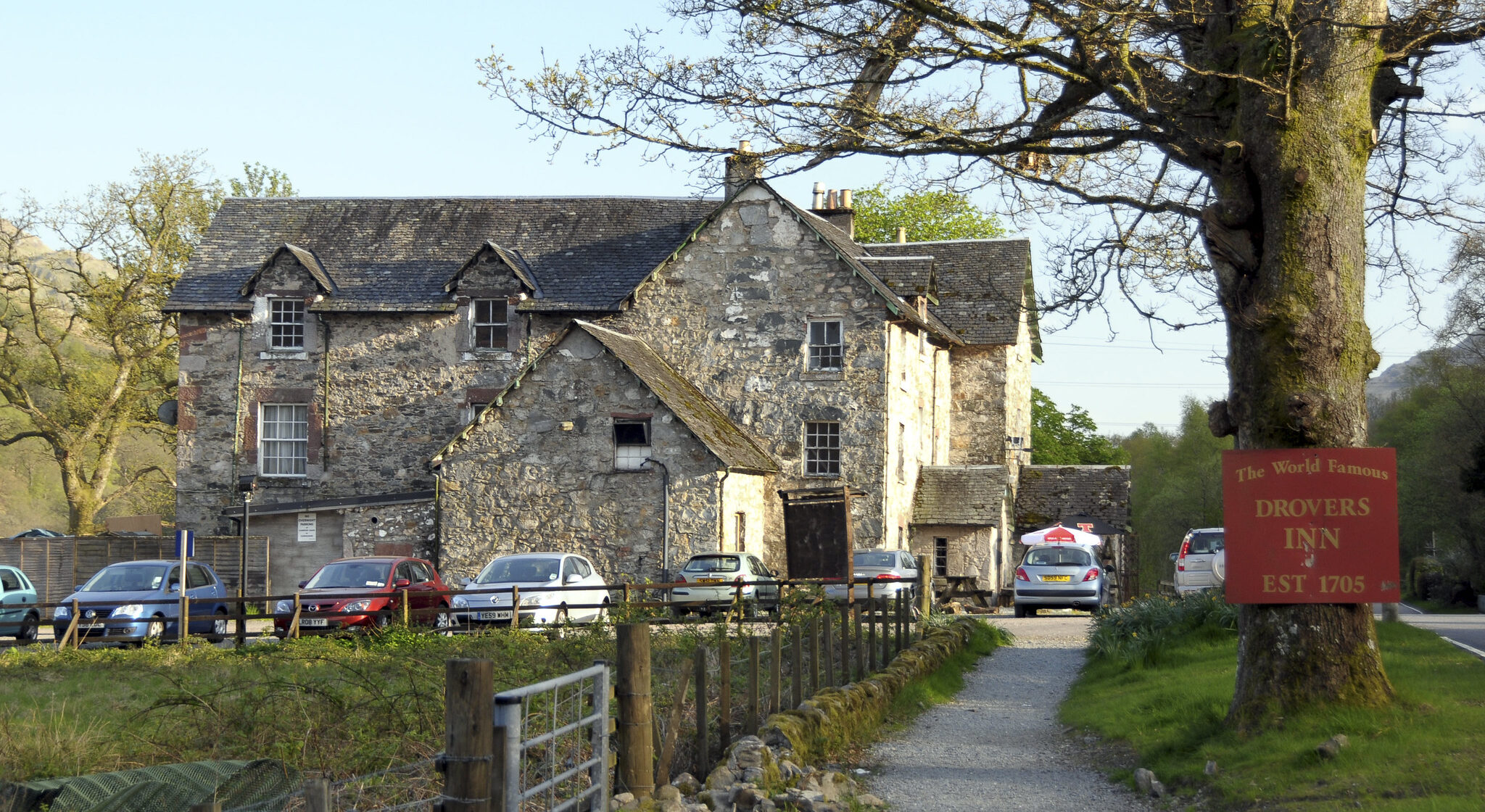
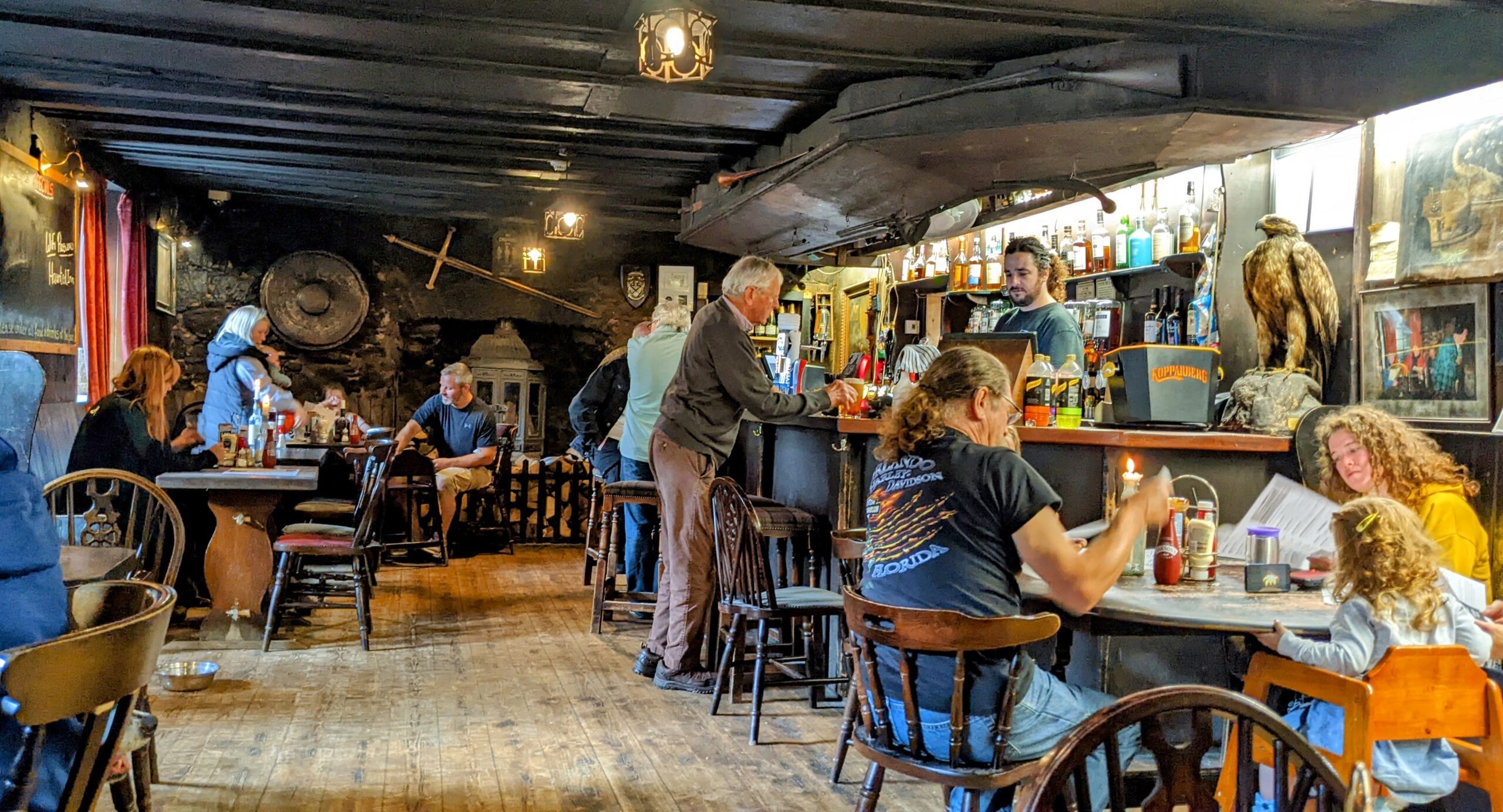
But our last stop was non-negotiable. Set right on the road in the middle of nowhere, the old Drover’s Inn is a bit of a landmark. It dates from 1705, and the old two-story stone structure doesn’t look like it’s seen many improvements since then. Inside, it’s even more rustic. The walls are covered in a jumble of taxidermied animals and other curiosities. In the bar, the ceiling is so low that I almost had to duck, and the walls look like they have several centuries of soot and grime on them. But on one of those walls, I found a small frame containing a faded photocopy that spoke to why this inn is famous: my ancestor Rob Roy had once stayed here. Three hundred years later, it’s still their claim to fame (that, and being one of Scotland’s most haunted pubs). Perhaps the place is even named after Rob, the most famous of Scotland’s highland cattle “drovers”. So I couldn’t simply drive by without popping in for a drink. I was a little disappointed that the bartender didn’t know what a “Rob Roy” was, nor could he make any mixed drinks. Beer, cider, and straight whiskey were the only options. I had the latter. A lively group of locals filled the bar and a fire filled the wood stove. But after soaking up the vibe and whiskey for a few minutes, we decided to move on.
The last hour of our road trip was mostly spent winding along the west shore of Loch Lomond, the largest lake in Great Britain (by surface area, and the 2nd largest by volume). As the centerpiece of the national park, it’s a beautiful spot that has drawn tourists and outdoorsy types for at least a couple centuries. A favorite excursion for Victorian city-dwellers was to take a steamship across this lake, then catch a steam train to Oban, following the exact route we had just driven that day in reverse.
On the opposite side of the lake, the Highlands rise dramatically out of the water, and the map indicated that there are few roads or settlements over that side. But I did spot one proud white building perched on the lake’s edge, either a mansion or a hotel (it had actually been both). What I didn’t know then was that this was all that remained of the village of Inversnaid, of which Rob Roy had once been laird. What I did know was that somewhere else on that shore, there was a famous cave in which Rob Roy had hidden with his family when he was an outlaw. (Next to it, some overly helpful person has painted “CAVE” in large white letters to ensure you can find it.) But with no steamships handy, getting to that side of the lake was not easy, and anyway exploring such places was not on today’s itinerary. For now, I had a weary family that just wanted to get the Glasgow for the night. After circumnavigating Scotland in only a week with me as the whip-cracking tour director, I could hardly blame them!

Photo from National Parks UK
Stay tuned for our adventures in Glasgow, Edinburgh, and Macgregor country.